When you need Other Ways to Say “You Went Through My Stuff”, choose wording that clearly expresses privacy concerns without escalating tension.
A calm and direct approach can help explain that someone checked your belongings, such as your phone, bag, or drawers, without permission. Saying that they looked through your things can reinforce personal boundaries and make it clear that your space and items are yours.
In sensitive situations, softer alternatives may work better with a friend, partner, family member, roommate, or coworker, depending on the situation. Expressions such as “You searched through my things,” “You checked my belongings,” or “You went through my stuff” can communicate surprise, frustration, or concern while keeping the conversation natural and specific.
What Does “You Went Through My Stuff” Mean?
“You went through my stuff” means that someone looked through, searched, or handled your personal belongings, usually without your permission. The phrase can refer to anything from opening a bag or drawer to checking through personal papers, clothing, a phone, or other possessions. In everyday English, it often communicates discomfort or frustration because the speaker feels that their privacy or personal space was not respected. The exact seriousness depends on the situation and the relationship between the people involved.
Common Situations Where “You Went Through My Stuff” Is Used
People commonly use this phrase during personal disagreements when they discover that someone has searched their belongings. You might say it to a roommate who opened your drawer, a partner who looked through your bag, or a family member who searched your room. It can also appear in text messages when you want to address the issue without having an immediate face-to-face conversation.
The wording can sound fairly direct, so an alternative may be useful when you want to explain the problem more calmly. For example, “You looked through my things” focuses on what happened, while “You invaded my privacy” emphasizes how the action affected you. Choosing the right expression allows you to be clear without automatically escalating the disagreement.
Is It Professional or Polite to Say “You Went Through My Stuff”?
“You went through my stuff” is casual and direct rather than formal. It is natural in personal conversations, especially when speaking with someone you know well. However, “stuff” is informal, so it may not be the best wording for a workplace, customer complaint, or formal written message. In those settings, expressions such as “You looked through my belongings” or “My personal items were searched without my permission” can sound clearer and more measured.
The phrase itself is not necessarily rude, but it can carry an accusatory tone depending on how it is said. If you want to keep the conversation calm, you can describe the action first and explain your concern afterward.
Advantages and Disadvantages of Saying “You Went Through My Stuff”
Advantages
The biggest advantage is clarity. The phrase immediately communicates that someone searched or looked through your belongings. It is also short and natural, making it easy to use in conversation or a text message. Because “stuff” is broad, the phrase works even when you do not want to list every item the person touched.
Disadvantages
The phrase can sound confrontational, especially when spoken angrily. “Stuff” is also quite informal and may feel too vague when the situation requires precise wording. If your main concern is privacy, trust, or permission, a more specific expression can communicate that feeling more effectively.
Synonyms for “You Went Through My Stuff”
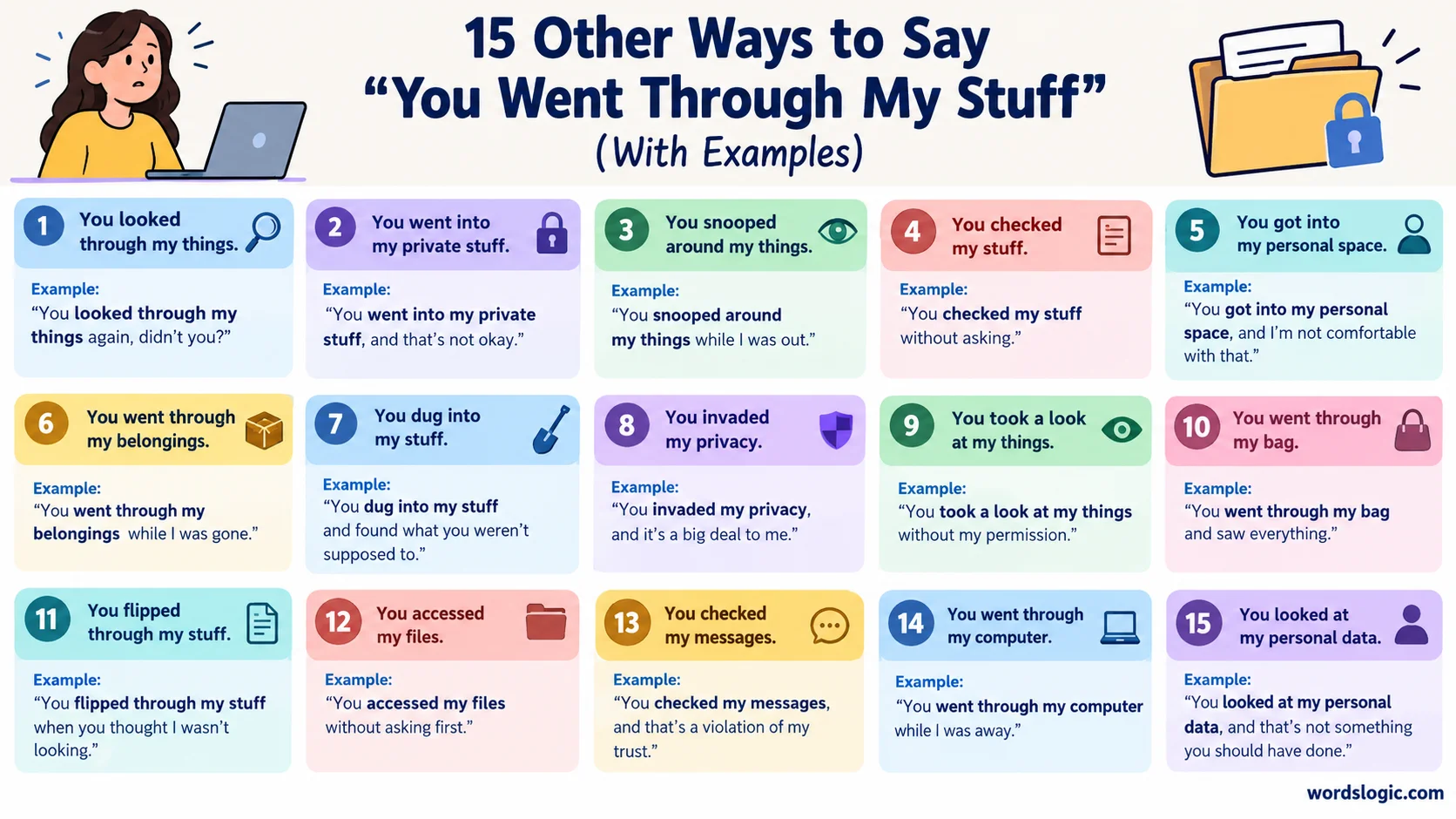
- You looked through my things.
- You went through my belongings.
- You searched my things.
- You looked through my personal belongings.
- You went through my personal things.
- You looked through my private things.
- You searched through my belongings.
- You went through my room.
- You looked through my bag.
- You checked through my things.
- You were looking through my stuff.
- You went through my personal items.
- You looked through my things without asking.
- You invaded my privacy.
- You crossed a boundary by going through my things.
1. You Looked Through My Things
Meaning
“You looked through my things” means someone examined or searched your belongings. It is a natural alternative when you want to describe what happened without sounding overly dramatic.
Definition
A direct statement saying that someone examined your personal possessions.
Detailed Explanation
This expression is slightly softer than “You went through my stuff” because “things” can sound more neutral than “stuff.” It focuses mainly on the action rather than immediately accusing the person of violating your privacy. It works well when you want to start a calm conversation about what happened.
Scenario Examples
Scenario: Your roommate opened your desk drawer while you were away.
Example: “I noticed you looked through my things earlier. Was there something you needed?”
Scenario: A friend borrowed your bag and checked its contents.
Example: “I’m not upset, but I’d rather you didn’t look through my things without asking.”
Best Use
Best for casual conversations, texting, roommates, friends, and family.
Tone
Tone: Calm, direct, and conversational. It describes the action without immediately emphasizing blame.
2. You Went Through My Belongings
Meaning
This means someone searched or examined your possessions, particularly things that belong to you.
Definition
A more precise way to say that someone searched your personal possessions.
Detailed Explanation
“Belongings” sounds more specific and mature than “stuff.” It can refer to clothing, bags, documents, household items, or other possessions. This wording is useful when you want to sound serious without using especially emotional language.
Scenario Examples
Scenario: Someone searched your bedroom while you were away.
Example: “I found some things moved around after you went through my belongings.”
Scenario: You want to address the issue calmly with a family member.
Example: “I’d appreciate it if you asked before going through my belongings.”
Best Use
Best for serious personal conversations and respectful discussions.
Tone
Tone: Neutral, respectful, and slightly formal. “Belongings” makes the statement sound more measured.
3. You Searched My Things
Meaning
“You searched my things” suggests that the person actively looked for something among your possessions.
Definition
A direct statement that someone searched through your belongings for an item or information.
Detailed Explanation
This phrase is stronger than simply saying someone “looked” at your things because “searched” suggests a deliberate attempt to find something. It is useful when you believe the person was looking for a particular item. If you are unsure whether they were actually searching, a softer expression may be more accurate.
Scenario Examples
Scenario: Your sibling was looking for something in your room.
Example: “Why did you search my things instead of asking me?”
Scenario: A roommate opened several drawers looking for a charger.
Example: “You searched my things for the charger, but you could have just asked.”
Best Use
Best when someone actively examined multiple items or appeared to be looking for something.
Tone
Tone: Direct, questioning, and potentially confrontational. The word “searched” implies intention.
4. You Looked Through My Personal Belongings
Meaning
This expression emphasizes that the items involved were private possessions.
Definition
A polite but firm way to say someone examined things that personally belong to you.
Detailed Explanation
Adding “personal” makes the privacy aspect clearer. It is less casual than “my stuff” and works well when you want the other person to understand that the items were not public or shared. The phrase can help keep a difficult conversation focused on boundaries.
Scenario Examples
Scenario: Someone looked through your desk while you were out.
Example: “I noticed you looked through my personal belongings while I was gone.”
Scenario: You are discussing the issue with someone you live with.
Example: “Please ask me before looking through my personal belongings.”
Best Use
Best for serious conversations, family discussions, and situations involving personal boundaries.
Tone
Tone: Respectful, firm, and controlled. It communicates concern without using highly emotional language.
5. You Went Through My Personal Things
Meaning
This means someone examined your private possessions without necessarily specifying exactly what they searched.
Definition
A straightforward expression for looking through another person’s personal possessions.
Detailed Explanation
This version keeps the familiar structure of the original phrase while making it more specific. “Personal things” highlights that the items were yours and may not have been appropriate for someone else to examine. It is useful when you want to sound natural while still making your boundary clear.
Scenario Examples
Scenario: A family member opened your drawers.
Example: “You went through my personal things while I was at work.”
Scenario: Your partner checked through your belongings without asking.
Example: “I wish you had talked to me instead of going through my personal things.”
Best Use
Best for personal relationships and everyday conversations.
Tone
Tone: Direct, personal, and slightly serious. It can communicate hurt without sounding overly formal.
6. You Looked Through My Private Things
Meaning
This expression emphasizes that the belongings contained private or personal material.
Definition
A statement that someone examined things you consider private.
Detailed Explanation
“Private things” places more emphasis on privacy than the original expression. It can be especially appropriate when the items contain personal information, letters, photographs, or other material you did not want others to see. It is softer than saying someone “invaded my privacy,” while still making your feelings clear.
Scenario Examples
Scenario: Someone read through personal notes in your room.
Example: “You looked through my private things, and I’m uncomfortable with that.”
Scenario: A sibling opened a personal box.
Example: “Please don’t look through my private things without asking me first.”
Best Use
Best for family, partners, close friends, and sensitive personal situations.
Tone
Tone: Personal, serious, and boundary-focused. The word “private” clearly signals sensitivity.
7. You Searched Through My Belongings
Meaning
This means someone carefully examined your possessions, often while looking for something.
Definition
A stronger expression describing a deliberate search of another person’s possessions.
Detailed Explanation
The phrase “searched through” suggests more active investigation than simply looking. It may be appropriate when drawers, bags, boxes, or other items were examined one by one. Because it sounds more deliberate, use it when the circumstances support that interpretation.
Scenario Examples
Scenario: Someone searched several drawers for an item.
Example: “You searched through my belongings instead of asking where it was.”
Scenario: You are explaining what happened to a friend.
Example: “I came home and realized someone had searched through my belongings.”
Best Use
Best when describing a deliberate or thorough search.
Tone
Tone: Serious, direct, and somewhat formal. It suggests purposeful action.
8. You Went Through My Room
Meaning
This expression means someone entered and looked around your room, especially when they examined or moved your possessions.
Definition
A specific way to describe someone searching or looking around your personal room.
Detailed Explanation
This alternative is useful when the issue happened specifically in a bedroom or private room. Unlike “You went through my stuff,” it focuses on the entire space rather than individual belongings. It can imply that the person searched through drawers, shelves, bags, or other areas.
Scenario Examples
Scenario: A sibling entered your room while you were away.
Example: “Why did you go through my room while I was out?”
Scenario: A roommate searched your bedroom.
Example: “I’m uncomfortable with you going through my room without telling me.”
Best Use
Best for roommates, siblings, parents, partners, or other situations involving a specific room.
Tone
Tone: Direct, personal, and concerned. The exact tone depends heavily on how the sentence is delivered.
9. You Looked Through My Bag
Meaning
This means someone opened and examined the contents of your bag.
Definition
A specific statement that someone searched or examined the inside of your bag.
Detailed Explanation
This is more precise than the original phrase because it identifies the specific belonging involved. It is useful when you know exactly what the person examined and do not want to make a broader accusation. The wording can sound neutral or firm depending on the surrounding conversation.
Scenario Examples
Scenario: A friend opened your backpack.
Example: “I saw that you looked through my bag. Did you need something?”
Scenario: Someone checked your handbag without permission.
Example: “Please don’t look through my bag without asking first.”
Best Use
Best when the situation involves a bag, backpack, purse, suitcase, or similar item.
Tone
Tone: Clear, specific, and direct. It avoids vague wording by naming the item.
10. You Checked Through My Things
Meaning
“You checked through my things” means someone examined your belongings, often to find or verify something.
Definition
A conversational expression for examining or searching someone’s possessions.
Detailed Explanation
“Checked through” can sound a little less confrontational than “searched.” It may suggest that the person was looking for something rather than deliberately snooping. This makes it useful when you want to ask about the behavior before assuming the person had bad intentions.
Scenario Examples
Scenario: Your roommate looked through your desk for a document.
Example: “Did you check through my things looking for the lease?”
Scenario: A friend opened your bag while looking for a pen.
Example: “You checked through my things without asking me first.”
Best Use
Best for casual conversations and situations where the person’s intention is uncertain.
Tone
Tone: Casual, neutral, and questioning. It leaves some room for clarification.
11. You Were Looking Through My Stuff
Meaning
This expression points to an ongoing or recently observed action of examining your belongings.
Definition
A direct statement describing someone as actively looking through your possessions.
Detailed Explanation
“You were looking through my stuff” is especially natural when you caught someone in the act. The continuous form focuses on what the person was doing at that moment rather than simply stating that a search happened. It can sound less formal but very natural in everyday speech.
Scenario Examples
Scenario: You walked into your room and saw someone opening a drawer.
Example: “What were you looking for? You were looking through my stuff.”
Scenario: You notice a friend checking your backpack.
Example: “Hey, you were looking through my stuff. Is everything okay?”
Best Use
Best for spoken conversations, texting, friends, family, and immediate situations.
Tone
Tone: Casual, direct, and sometimes surprised. It works particularly well when addressing something you just noticed.
12. You Went Through My Personal Items
Meaning
This means someone examined specific possessions that belong personally to you.
Definition
A more precise and somewhat formal way to describe someone searching your personal possessions.
Detailed Explanation
“Personal items” sounds more polished than “stuff” and is useful when the exact belongings matter. It can refer to documents, bags, clothing, devices, photographs, or other possessions. The phrase is particularly helpful when you want to communicate a boundary without sounding overly emotional.
Scenario Examples
Scenario: Someone opened your desk and handled your documents.
Example: “You went through my personal items while I was away.”
Scenario: You want to address the issue respectfully.
Example: “I’d prefer that you ask before going through my personal items.”
Best Use
Best for respectful personal discussions and more formal written communication.
Tone
Tone: Calm, respectful, and firm. The wording sounds more deliberate than “my stuff.”
13. You Looked Through My Things Without Asking
Meaning
This expression clearly states that someone examined your belongings without first getting permission.
Definition
A direct way to describe looking through someone’s possessions without their consent or prior request.
Detailed Explanation
The addition of “without asking” makes the boundary issue explicit. Instead of simply describing the action, it identifies the part that caused concern. This can make the conversation more constructive because the listener understands exactly what behavior you want them to change.
Scenario Examples
Scenario: Your roommate opened your storage box.
Example: “You looked through my things without asking, and I’d like you to check with me first next time.”
Scenario: A family member searched your desk.
Example: “I’m not trying to argue, but you looked through my things without asking.”
Best Use
Best for setting boundaries with roommates, family, friends, or partners.
Tone
Tone: Firm, respectful, and boundary-focused. It explains the specific problem rather than relying on an accusation.
14. You Invaded My Privacy
Meaning
“You invaded my privacy” means someone crossed into an area of your personal life that you consider private.
Definition
A strong expression used when someone’s actions are perceived as violating personal privacy.
Detailed Explanation
This is broader and more emotionally significant than “You went through my stuff.” It focuses on the effect of the person’s behavior rather than only describing the physical action. Use it when privacy is the central issue, particularly if the person searched personal documents, messages, or other sensitive material.
Scenario Examples
Scenario: Someone read your private journal.
Example: “Reading my journal without permission felt like you invaded my privacy.”
Scenario: Someone checked your personal messages.
Example: “I need you to understand that going through my messages invaded my privacy.”
Best Use
Best for serious conversations about privacy and personal boundaries.
Tone
Tone: Strong, serious, and emotional. It communicates that the action had a significant impact on you.
15. You Crossed a Boundary by Going Through My Things
Meaning
This means the person’s behavior violated a personal limit that you expect them to respect.
Definition
A firm expression explaining that someone went too far by examining your belongings.
Detailed Explanation
This wording is useful when you want to address not only what happened but why it was unacceptable to you. “Crossed a boundary” is often less accusatory than simply calling someone disrespectful, while still making your expectations clear. It is especially helpful in ongoing relationships where you want to establish a healthier limit for the future.
Scenario Examples
Scenario: Your partner searched through your personal drawer.
Example: “I care about you, but going through my things without asking crossed a boundary for me.”
Scenario: A roommate searched your private storage.
Example: “You crossed a boundary by going through my things. Please ask me next time.”
Best Use
Best for serious personal conversations, relationships, roommates, and boundary-setting.
Tone
Tone: Firm, mature, and respectful. It focuses on the boundary rather than simply attacking the other person’s character.
FAQs
What is another way to say “You Went Through My Stuff”?
Natural alternatives include “You looked through my things,” “You went through my belongings,” “You searched my things,” and “You looked through my personal belongings.” The best choice depends on whether you want to sound casual, neutral, firm, or more formal.
What does “You Went Through My Stuff” mean?
It means that someone looked through, searched, or examined your personal belongings. It often suggests that the person did so without permission and that the speaker is uncomfortable with the behavior.
Is “You Went Through My Stuff” professional?
It is generally casual rather than professional because “stuff” is informal. In a formal setting, “You looked through my personal belongings” or “My personal items were searched without my permission” may communicate the situation more appropriately.
What is a more polite way to say “You Went Through My Stuff”?
“You looked through my things without asking” can be a polite but firm choice because it describes the behavior without immediately assigning a negative motive. You can also say, “I’d appreciate it if you asked before looking through my belongings.”
Which alternative works best in a formal situation?
“You went through my belongings” or “You looked through my personal belongings” works better in a formal or serious conversation. These expressions sound more precise and measured than “You went through my stuff.”
Conclusion
Choosing the right wording can make a difficult conversation much easier. “You went through my stuff” is natural and understandable, but it may sound casual or confrontational depending on the situation. Softer options such as “You looked through my things” can open a calmer conversation, while stronger expressions such as “You invaded my privacy” or “You crossed a boundary” communicate a deeper concern about personal limits.
The best alternative depends on what actually happened, your relationship with the other person, and how strongly you want to address it. When discussing private belongings, clear and respectful wording can help you explain your feelings while keeping the focus on privacy, permission, and mutual respect.