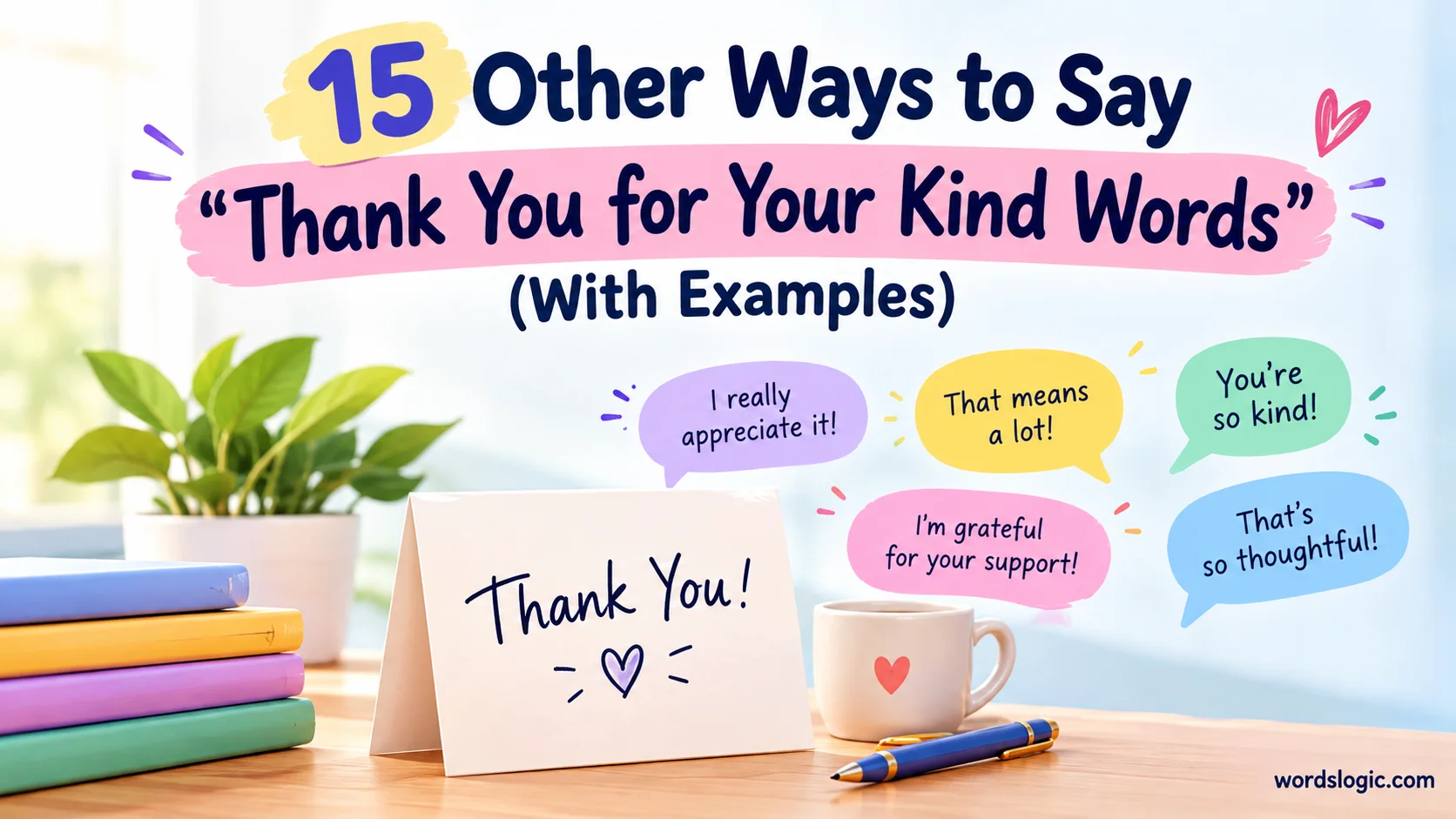
Other Ways to Say “Thank You for Your Kind Words” gives natural, polite alternatives to express gratitude, respect, and sincere appreciation. A simple phrase can carry a more heartfelt, professional, or meaningful feeling when you choose wording that fits the situation.
“Thank you for your kind words” is a warm expression of thankfulness, but alternative expressions such as “I really appreciate that,” “Your words mean a lot to me,” or “Thank you for the thoughtful compliment” can sound more personal. These natural alternatives help you express genuine appreciation while showing humility, kindness, and good manners. They can also strengthen personal and professional relationships when you acknowledge a compliment, encouragement, support, or positive feedback.
The best thoughtful expression depends on the setting, person, and tone. In emails, business communication, a professional email, or professional conversations, a courteous tone can show professional etiquette and create a lasting positive impression with colleagues, clients, a customer, or a partner. In social media replies, personal chats, everyday conversations, or in person, a friendly, warm, humble, and appreciative response may feel more natural. You can use different wording when speaking with friends, a friend, teachers, or family members, especially when responding to encouraging messages, supportive feedback, thoughtful remarks, or compliments. This kind of meaningful communication can build trust and long-term relationships in formal and informal settings while helping people feel valued and respected.
What Does “Thank You for Your Kind Words” Mean?
“Thank you for your kind words” is a polite way to show appreciation when someone has said something complimentary, supportive, encouraging, or thoughtful about you or something you have done. The phrase communicates that you noticed their positive message and genuinely appreciate the thought and goodwill behind it. For example, if someone compliments your work, congratulates you, offers encouragement, or says something comforting, you can respond with this expression. It is broad enough for both personal and professional situations, while still sounding warm.
The phrase does not necessarily mean that the other person has given you advice or done something practical for you. Instead, it focuses on their words and sentiment. Depending on the situation, “kind words” might refer to praise, encouragement, sympathy, congratulations, reassurance, or a heartfelt compliment.
Common Situations Where “Thank You for Your Kind Words” Is Used
People commonly use “thank you for your kind words” after receiving a compliment, supportive message, congratulations, or thoughtful comment. You might use it when a friend praises something you accomplished, when a colleague recognizes your contribution, or when someone sends an encouraging message during a difficult moment.
The phrase also works well in emails, social media replies, personal messages, and face-to-face conversations. Someone receiving sympathy after a loss, for example, may use it to acknowledge supportive messages. A professional might use it after receiving positive feedback from a client or colleague. Because the wording is polite without being overly formal, it can fit many different relationships.
Is It Professional or Polite to Say “Thank You for Your Kind Words”?
Yes. “Thank you for your kind words” is generally polite and appropriate in professional communication. It has a respectful tone without sounding stiff, so it can work in emails, workplace conversations, customer communication, appreciation messages, and formal correspondence. It can also sound perfectly natural between friends or family members.
The exact tone depends on the surrounding message. In a formal email, it can sound gracious and professional. In a personal conversation, it can feel warm and sincere. If you want to sound more casual, phrases such as “That means a lot to me” or “I really appreciate that” may feel more conversational.
Advantages and Disadvantages of Saying “Thank You for Your Kind Words”
Advantages
The main advantage is its versatility. The phrase can respond to praise, encouragement, sympathy, or a thoughtful comment without requiring much explanation. It is also respectful and emotionally warm while remaining appropriate in professional settings. Another benefit is that it acknowledges not only what the person said but also the good intention behind their words.
Disadvantages
The phrase can sometimes sound formal or somewhat conventional, especially in a casual text between close friends. If you use it repeatedly, your responses may also start to feel predictable. In some situations, a more specific response can communicate your feelings better. For example, “That really touched me” expresses stronger emotion, while “I appreciate you saying that” sounds more conversational.
15 Alternatives to “Thank You for Your Kind Words”
- I Really Appreciate Your Kind Words
- I Appreciate You Saying That
- That Means a Lot to Me
- I’m Grateful for Your Kind Words
- Thank You for Saying That
- Your Words Mean a Lot to Me
- I Truly Appreciate Your Support
- I’m Touched by Your Kind Words
- Your Encouragement Means So Much
- I’m So Grateful for Your Support
- Thank You for Your Thoughtful Message
- I’m Truly Thankful for Your Words
- I Appreciate Your Thoughtfulness
- Your Kindness Means a Great Deal to Me
- I’m Glad You Said That
1. I Really Appreciate Your Kind Words
Meaning
“I really appreciate your kind words” expresses sincere gratitude for someone’s positive, supportive, or complimentary message. It is a slightly more personal version of “thank you for your kind words.”
Definition
This phrase means “I am genuinely grateful for the thoughtful things you said to me.”
Detailed Explanation
The addition of “really” makes the appreciation sound more heartfelt without becoming overly emotional. It works particularly well when someone has gone out of their way to encourage you or recognize something you have done. Compared with the original phrase, it can feel a little more conversational while remaining polite. It is useful when you want your response to sound sincere but still natural.
Scenario Examples
Scenario: A colleague compliments your presentation.
Example: “I really appreciate your kind words. I’m glad the presentation was helpful.”
Scenario: A friend sends an encouraging message.
Example: “I really appreciate your kind words. I needed to hear that today.”
Scenario: Someone praises your creative work online.
Example: “I really appreciate your kind words about the project!”
Best Use
This expression works well in professional emails, friendly messages, conversations, and social media replies.
Tone
Tone: Warm, appreciative, and sincere.
The word “really” adds warmth while keeping the phrase appropriate for many settings.
2. I Appreciate You Saying That
Meaning
“I appreciate you saying that” shows gratitude for something thoughtful, encouraging, or complimentary that another person has said.
Definition
It means “I’m grateful that you took the time to say those supportive or positive words.”
Detailed Explanation
This alternative sounds more conversational than “thank you for your kind words.” It focuses directly on the other person’s decision to speak positively or supportively. It can work especially well when the conversation is personal or spontaneous. Because it is less formal, it often feels natural in everyday speech and texting.
Scenario Examples
Scenario: Your friend reassures you after a difficult day.
Example: “I appreciate you saying that. It honestly helps.”
Scenario: Your manager compliments your work.
Example: “I appreciate you saying that. I’ve put a lot of effort into the project.”
Scenario: Your partner gives you a sincere compliment.
Example: “I appreciate you saying that. That’s really sweet of you.”
Best Use
Use it in everyday conversation, texts, personal messages, and relaxed workplace communication.
Tone
Tone: Conversational, warm, and genuine.
It sounds less ceremonial and more like something you would naturally say in a real conversation.
3. That Means a Lot to Me
Meaning
“That means a lot to me” communicates that someone’s words have had a meaningful emotional impact on you.
Definition
It means “What you said is very important or meaningful to me.”
Detailed Explanation
This phrase goes beyond simple gratitude by highlighting the emotional value of the person’s words. It is especially suitable when someone has offered meaningful encouragement, reassurance, praise, or emotional support. Unlike “thank you for your kind words,” it emphasizes how deeply their message affected you. It may sound more personal and heartfelt, particularly in close relationships.
Scenario Examples
Scenario: A family member congratulates you on an achievement.
Example: “That means a lot to me. Thank you for always believing in me.”
Scenario: A friend supports you during a difficult period.
Example: “That means a lot to me. I really needed someone to say that.”
Scenario: Your mentor praises your progress.
Example: “That means a lot to me, especially coming from you.”
Best Use
It is ideal for personal conversations, heartfelt messages, congratulations, encouragement, and meaningful compliments.
Tone
Tone: Heartfelt, emotional, and sincere.
The expression is especially effective when you want to show that the person’s words genuinely affected you.
4. I’m Grateful for Your Kind Words
Meaning
“I’m grateful for your kind words” expresses sincere appreciation for someone’s thoughtful or supportive comments.
Definition
It means “I feel thankful for the positive and thoughtful things you said.”
Detailed Explanation
This expression is slightly more formal and reflective than “I really appreciate your kind words.” The word “grateful” can suggest deeper appreciation, especially when someone’s words provided comfort or encouragement. It fits situations where you want your response to feel thoughtful rather than casual. It is particularly suitable for written communication.
Scenario Examples
Scenario: Someone sends condolences after a loss.
Example: “I’m grateful for your kind words and support during this difficult time.”
Scenario: A colleague congratulates you on a promotion.
Example: “I’m grateful for your kind words. Your support has meant a lot.”
Best Use
Use it in formal messages, heartfelt notes, professional communication, and situations involving meaningful support.
Tone
Tone: Respectful, sincere, and heartfelt.
“Grateful” gives the phrase a slightly more thoughtful and formal quality.
5. Thank You for Saying That
Meaning
“Thank you for saying that” is a straightforward way to appreciate something positive, reassuring, or thoughtful someone has said.
Definition
It means “I appreciate that you expressed those words to me.”
Detailed Explanation
This is one of the most natural alternatives for everyday conversation. It is less formal than “thank you for your kind words” and can sound especially genuine when used immediately after a compliment or supportive statement. It does not necessarily imply deep emotion, so it works for both small compliments and more meaningful comments. The surrounding conversation determines how warm it feels.
Scenario Examples
Scenario: A friend compliments your new outfit.
Example: “Thank you for saying that. I wasn’t sure about it at first!”
Scenario: A coworker reassures you before a presentation.
Example: “Thank you for saying that. I feel much more confident now.”
Scenario: Someone gives you a sincere compliment.
Example: “Thank you for saying that. That’s very kind of you.”
Best Use
It works especially well in casual conversation, texting, friendly exchanges, and everyday compliments.
Tone
Tone: Simple, polite, and friendly.
Its straightforward wording makes it easy to use without sounding overly formal.
6. Your Words Mean a Lot to Me
Meaning
“Your words mean a lot to me” tells someone that what they said has significant personal or emotional value.
Definition
It means “What you said is deeply meaningful to me.”
Detailed Explanation
This phrase puts the focus on the impact of the other person’s words rather than simply acknowledging them. It can sound especially touching when the speaker has an important relationship with you or when their opinion matters greatly. Compared with “thank you for your kind words,” it usually carries more emotional weight. It is best reserved for situations where the words genuinely matter to you.
Scenario Examples
Scenario: A parent congratulates you on an accomplishment.
Example: “Your words mean a lot to me. Thank you for being so supportive.”
Scenario: Your partner reassures you about a difficult decision.
Example: “Your words mean a lot to me right now.”
Scenario: A longtime friend sends a heartfelt birthday message.
Example: “Your words mean a lot to me. I’m lucky to have you in my life.”
Best Use
Choose it for close relationships, heartfelt messages, meaningful encouragement, and emotional conversations.
Tone
Tone: Deeply appreciative, personal, and warm.
It communicates stronger emotional significance than a basic thank-you.
7. I Truly Appreciate Your Support
Meaning
“I truly appreciate your support” expresses sincere gratitude for someone’s encouragement, help, or backing.
Definition
It means “I am genuinely thankful that you supported me.”
Detailed Explanation
This alternative is especially useful when the person’s kind words are part of broader emotional or practical support. It does not focus only on what they said; instead, it recognizes their overall encouragement. The phrase can sound professional while still being warm. It is a good choice when responding to someone who has consistently stood behind you.
Scenario Examples
Scenario: A colleague supports your idea during a meeting.
Example: “I truly appreciate your support. It made a real difference in the discussion.”
Scenario: A friend encourages you while you prepare for an important event.
Example: “I truly appreciate your support. You’ve helped me stay positive.”
Scenario: A customer sends positive feedback about your service.
Example: “I truly appreciate your support and kind feedback.”
Best Use
It fits workplace communication, professional emails, personal messages, encouragement, and appreciation notes.
Tone
Tone: Professional, sincere, and appreciative.
It works when you want to recognize both someone’s words and their broader support.
8. I’m Touched by Your Kind Words
Meaning
“I’m touched by your kind words” expresses that someone’s thoughtful message has affected you emotionally.
Definition
It means “Your thoughtful words moved me emotionally.”
Detailed Explanation
This phrase is more emotional than a simple thank-you. “Touched” suggests that the person’s words reached you on a personal level and made you feel cared for, appreciated, or comforted. It works best when the message is genuinely meaningful rather than a routine compliment. Because of its emotional quality, it may sound too strong for a very casual exchange.
Scenario Examples
Scenario: A friend writes a heartfelt message after your achievement.
Example: “I’m touched by your kind words. Thank you for celebrating this with me.”
Scenario: Someone sends a thoughtful sympathy message.
Example: “I’m touched by your kind words during this difficult time.”
Scenario: A former teacher congratulates you on your career.
Example: “I’m truly touched by your kind words. They mean more than you know.”
Best Use
Use it for heartfelt messages, emotional support, meaningful congratulations, and personal notes.
Tone
Tone: Emotional, warm, and heartfelt.
The word “touched” signals that the message had a genuine emotional effect.
9. Your Encouragement Means So Much
Meaning
“Your encouragement means so much” shows deep appreciation for someone’s supportive and motivating words.
Definition
It means “Your support and positive words are extremely meaningful to me.”
Detailed Explanation
This expression is more specific than “thank you for your kind words” because it focuses on encouragement. It is ideal when someone has helped you keep going, believe in yourself, or feel more confident. The phrase sounds especially natural after someone reassures you about a challenge or achievement. It can also be adapted with “to me” when you want to make the message more personal.
Scenario Examples
Scenario: A friend motivates you before an exam.
Example: “Your encouragement means so much. I’m going to give it my best.”
Scenario: Your manager supports you during a challenging project.
Example: “Your encouragement means so much to me. Thank you for believing in my work.”
Scenario: A family member encourages you to pursue a goal.
Example: “Your encouragement means so much. I really needed that reminder.”
Best Use
It works best for encouragement, motivation, personal support, workplace recognition, and meaningful conversations.
Tone
Tone: Warm, encouraging, and heartfelt.
It specifically highlights the positive effect of someone’s supportive words.
10. I’m So Grateful for Your Support
Meaning
“I’m so grateful for your support” expresses strong appreciation for someone’s encouragement, care, or assistance.
Definition
It means “I feel very thankful that you have supported me.”
Detailed Explanation
This expression is broader than “thank you for your kind words.” It recognizes support as a whole, which may include kind messages, encouragement, practical help, or simply being present. The word “so” adds emotional warmth, making it particularly suitable for meaningful situations. It can be used professionally when the context is appropriate, but it also fits close personal relationships.
Scenario Examples
Scenario: Your team helps you complete a difficult project.
Example: “I’m so grateful for your support throughout this project.”
Scenario: A friend stays by your side during a stressful period.
Example: “I’m so grateful for your support. I don’t know what I would have done without you.”
Scenario: Someone encourages you after a setback.
Example: “I’m so grateful for your support and encouragement.”
Best Use
Use it for personal appreciation, workplace support, difficult situations, and heartfelt messages.
Tone
Tone: Warm, sincere, and emotionally appreciative.
It conveys more feeling than a routine thank-you.
11. Thank You for Your Thoughtful Message
Meaning
“Thank you for your thoughtful message” appreciates a message that was carefully written, considerate, or emotionally supportive.
Definition
It means “Thank you for taking the time to send such a considerate message.”
Detailed Explanation
This alternative works particularly well when someone has written you a longer or carefully considered note. Unlike “thank you for your kind words,” it emphasizes the thought and effort behind the message. It is appropriate for both professional and personal correspondence. It can be especially useful when replying to emails, cards, condolences, congratulations, or detailed feedback.
Scenario Examples
Scenario: A colleague sends a thoughtful congratulations email.
Example: “Thank you for your thoughtful message. I really appreciate your congratulations.”
Scenario: A friend sends a long birthday message.
Example: “Thank you for your thoughtful message. It made my day.”
Scenario: Someone writes to offer sympathy.
Example: “Thank you for your thoughtful message and support.”
Best Use
This phrase is well suited to emails, written notes, cards, professional communication, and thoughtful personal messages.
Tone
Tone: Polite, considerate, and appreciative.
It sounds slightly more formal than everyday expressions such as “Thanks for saying that.”
12. I’m Truly Thankful for Your Words
Meaning
“I’m truly thankful for your words” expresses sincere appreciation for something meaningful, supportive, or encouraging someone has said.
Definition
It means “I am genuinely grateful for what you said to me.”
Detailed Explanation
The word “truly” emphasizes sincerity, while “thankful” gives the response a warm and personal quality. This expression is useful when the other person’s words have offered comfort, encouragement, or reassurance. It sounds more reflective than a quick conversational response. In everyday texting, however, a shorter alternative may feel more natural.
Scenario Examples
Scenario: Someone offers comfort after a difficult event.
Example: “I’m truly thankful for your words. Your message brought me comfort.”
Scenario: A mentor congratulates you on reaching a goal.
Example: “I’m truly thankful for your words and guidance.”
Scenario: A friend sends a heartfelt message.
Example: “I’m truly thankful for your words. They meant a lot to me.”
Best Use
It is suitable for personal notes, heartfelt messages, formal appreciation, and emotionally meaningful situations.
Tone
Tone: Sincere, thoughtful, and heartfelt.
The wording has a reflective quality that suits meaningful exchanges.
13. I Appreciate Your Thoughtfulness
Meaning
“I appreciate your thoughtfulness” thanks someone for being considerate, caring, or attentive.
Definition
It means “I am grateful for the care and consideration you have shown.”
Detailed Explanation
This expression is broader than thanking someone specifically for their words. It recognizes the thought behind their action or message. You might use it when someone takes time to check on you, writes an encouraging note, offers congratulations, or makes a considerate gesture. It can sound polished without being overly formal.
Scenario Examples
Scenario: A coworker checks on you after a stressful day.
Example: “I appreciate your thoughtfulness. It was kind of you to check in.”
Scenario: A friend sends an encouraging card.
Example: “I appreciate your thoughtfulness. The card really made me smile.”
Scenario: A customer takes time to send a considerate message.
Example: “I appreciate your thoughtfulness and the time you took to write to us.”
Best Use
It works well in professional communication, personal notes, customer messages, and polite everyday interactions.
Tone
Tone: Polite, gracious, and considerate.
It emphasizes the other person’s care and consideration rather than simply the words themselves.
14. Your Kindness Means a Great Deal to Me
Meaning
“Your kindness means a great deal to me” communicates deep appreciation for someone’s caring words, actions, or support.
Definition
It means “I deeply value the kindness you have shown me.”
Detailed Explanation
This is a more expressive alternative that focuses on the person’s kindness as a whole. It can include both what someone says and what they do, making it broader than “thank you for your kind words.” The phrase has a warm, somewhat formal quality and can sound especially appropriate in heartfelt written communication. It may feel too serious for a quick response to a small compliment.
Scenario Examples
Scenario: Someone offers support during a difficult period.
Example: “Your kindness means a great deal to me. Thank you for being there.”
Scenario: A colleague helps you through a challenging task.
Example: “Your kindness means a great deal to me. I really appreciate your support.”
Scenario: Someone sends a heartfelt message after an achievement.
Example: “Your kindness means a great deal to me. Thank you for such thoughtful words.”
Best Use
Use it for heartfelt notes, formal appreciation, emotional support, and meaningful personal communication.
Tone
Tone: Warm, gracious, and heartfelt.
The phrase sounds more expressive and formal than a casual “Thanks for saying that.”
15. I’m Glad You Said That
Meaning
“I’m glad you said that” tells someone that their words were welcome, reassuring, helpful, or meaningful.
Definition
It means “I’m pleased that you expressed that thought or feeling.”
Detailed Explanation
This phrase is more conversational and situation-specific than “thank you for your kind words.” It works particularly well when someone says something you needed to hear or expresses an opinion that reassures you. It does not always communicate gratitude by itself, so the context matters. Adding “thank you” can make the appreciation clearer when needed.
Scenario Examples
Scenario: A friend reassures you before an important decision.
Example: “I’m glad you said that. I was starting to doubt myself.”
Scenario: Your partner expresses appreciation for you.
Example: “I’m glad you said that. It’s nice to know you feel that way.”
Scenario: A colleague shares positive feedback.
Example: “I’m glad you said that. I’ve been wondering how the team felt about it.”
Best Use
It fits casual conversation, personal messages, texting, supportive conversations, and relaxed workplace discussions.
Tone
Tone: Conversational, warm, and sincere.
It sounds natural when you want to show that someone’s words were particularly welcome or reassuring.
FAQs
What is another way to say “thank you for your kind words”?
Natural alternatives include “I really appreciate your kind words,” “I appreciate you saying that,” “That means a lot to me,” and “Thank you for your thoughtful message.” The best choice depends on whether you want to sound casual, professional, emotional, or deeply appreciative.
What does “thank you for your kind words” mean?
“Thank you for your kind words” means you appreciate someone’s thoughtful, supportive, complimentary, or encouraging comments. It acknowledges both what the person said and the positive intention behind their message.
Is “thank you for your kind words” professional?
Yes. “Thank you for your kind words” is polite and professional in many workplace and formal situations. It can also be used in personal conversations, although a more casual phrase may sound more natural between close friends.
What is a more polite way to say “thank you for your kind words”?
For a polished response, you could say “I’m grateful for your kind words,” “Thank you for your thoughtful message,” or “I appreciate your thoughtfulness.” These expressions can sound especially appropriate in formal emails, notes, and professional communication.
Which alternative works best in formal communication?
The most suitable choice depends on the situation. “Thank you for your thoughtful message,” “I’m grateful for your kind words,” and “I truly appreciate your support” can work well in formal or professional communication. Choose the phrase that accurately reflects whether you are responding to praise, encouragement, support, or a thoughtful written message.
Conclusion
Choosing the right response can make a simple expression of gratitude feel much more personal. “Thank you for your kind words” is already polite and versatile, but alternatives can help you match your wording to the relationship and situation. “I appreciate you saying that” feels conversational, while “That means a lot to me” carries more emotional weight. In professional communication, “Thank you for your thoughtful message” can sound polished and respectful. The key is to consider tone, context, relationship, and the feeling you want to communicate. Instead of automatically using the same phrase every time, choose wording that reflects what the other person actually meant to you.