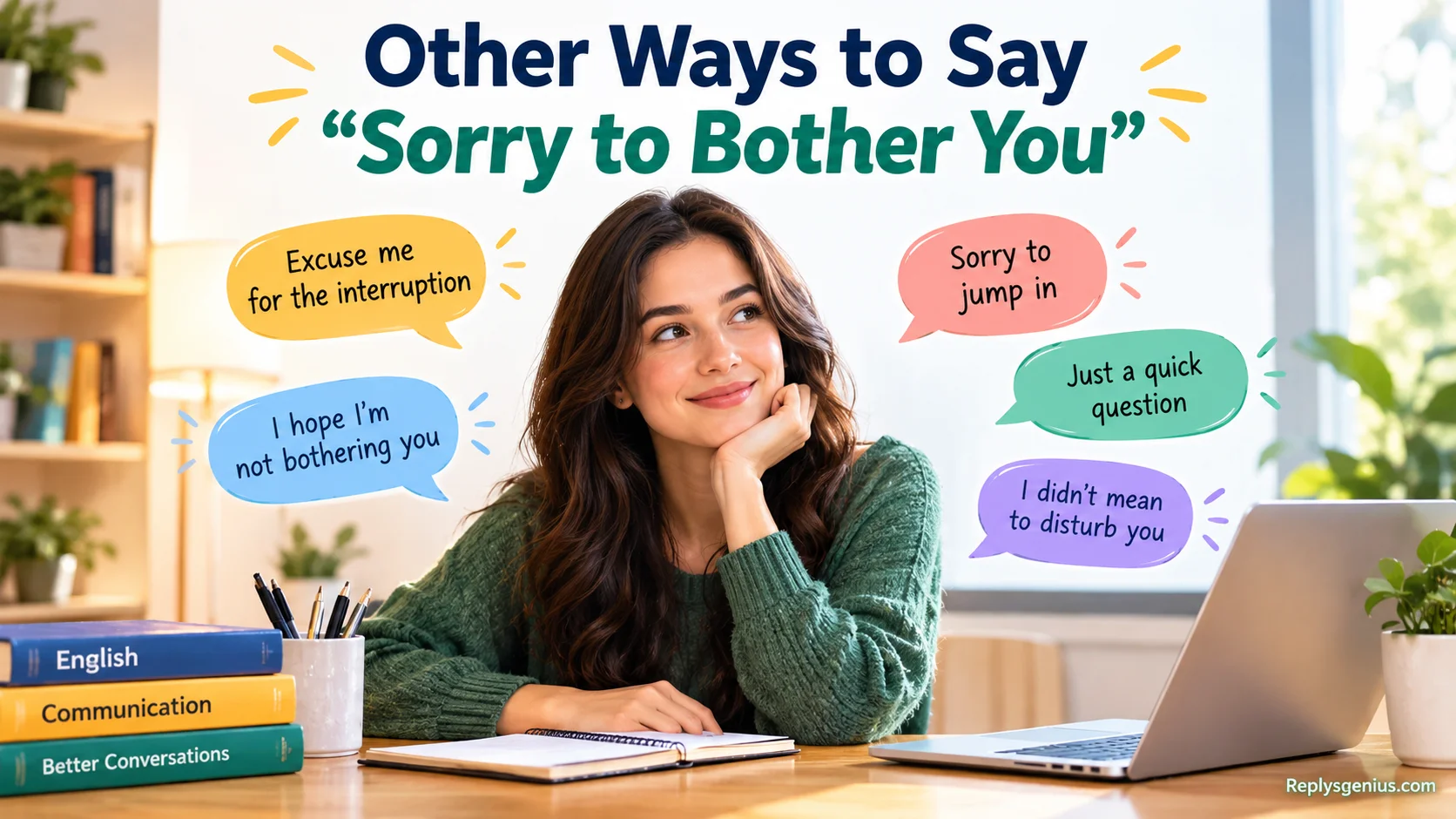
In a message, email, or text, Other Ways to Say “Sorry to Bother You” can help your communication sound more personal, warm, and respectful.
When you need someone’s time or attention. In everyday life, texting, or speaking, changing your wording can make a polite phrase feel more natural.Expressions such as “I hope I’m not interrupting,” “Excuse me for bothering you,” and “May I ask you something?” give you natural ways to say the same basic idea while helping you match your language to the situation.
The right alternatives depend on what you are requesting and whether you are in professional conversations or personal conversations. Simple, thoughtful, and considerate wording can help you acknowledge a person’s time, communicate clearly, and sound warmly respectful. A more conversational, empathetic, and friendly approach can capture genuine thoughtfulness, care, and genuine consideration, helping you connect more meaningfully instead of using the same phrase as a shortcut. When writing or sending a message, realistic examples, scenarios, tips, and a clear guide to meanings and tones can make these 15 or 25 alternatives easier to use.
What Does “Sorry to Bother You” Mean?
“Sorry to bother you” means that you are apologizing or showing consideration because you’re about to interrupt someone, ask for their attention, or request their help. It doesn’t necessarily mean you’ve actually caused a problem. Often, it’s simply a polite way to acknowledge that you’re taking someone’s time.
For example, you might say it before asking a coworker a question while they’re busy or messaging someone when you know they may have other things to do.
Is “Sorry to Bother You” Polite?
Yes. “Sorry to bother you” is generally polite and considerate. It shows that you recognize the other person’s time and attention may be valuable. However, if you use it too often, it can make your requests sound overly apologetic.
In many situations, you can sound more confident by simply saying “Could I ask you a quick question?” or “Do you have a moment?” These alternatives acknowledge the person’s time without unnecessarily apologizing.
When Should You Use Alternatives to “Sorry to Bother You”?
The best alternative depends on what you’re trying to do. If you’re interrupting someone in person, “Excuse me” may be enough. If you’re contacting someone at work, “Do you have a moment?” sounds professional and respectful. For a casual message, “Hope I’m not interrupting” can feel natural.
If you’re asking someone for a favor, “Could I ask you a quick favor?” makes the purpose of your message clear. When you don’t actually need to apologize, using a direct but polite question can make your communication sound more confident.
15 Other Ways to Say “Sorry to Bother You”
- Excuse me for interrupting.
- I hope I’m not interrupting.
- Do you have a moment?
- May I ask you something?
- Could I ask you a quick question?
- I hope I’m not disturbing you.
- Sorry to interrupt.
- Excuse me.
- When you have a moment, could you…?
- I apologize for the interruption.
- Could I trouble you for a moment?
- I hate to interrupt, but…
- I hope you don’t mind me asking.
- Would you mind if I asked you something?
- Could I take a moment of your time?
1. Excuse Me for Interrupting
Meaning
“Excuse me for interrupting” politely acknowledges that you’re interrupting someone and asks them to excuse the interruption.
Definition
A respectful expression used when you need to speak to someone while they are already occupied.
Detailed Explanation
This is a natural alternative when you’re physically interrupting someone who is talking, working, or otherwise engaged. It sounds more direct than “sorry to bother you” while remaining polite. It can work in both professional and everyday situations.
Scenario Examples
Scenario: Your manager is speaking with a coworker.
Example: “Excuse me for interrupting. Could I ask you something about the project?”
Scenario: You need to interrupt a conversation briefly.
Example: “Excuse me for interrupting, but I have an important question.”
Best Use
Best for in-person conversations, meetings, workplace situations, and formal interactions.
Tone
Tone: Polite, respectful, professional
2. I Hope I’m Not Interrupting
Meaning
“I hope I’m not interrupting” politely checks whether your message or arrival is inconvenient.
Definition
A considerate expression used when you’re unsure whether someone is currently busy.
Detailed Explanation
This phrase works particularly well in messages, phone calls, and workplace communication. Rather than directly apologizing, you’re acknowledging that the person may already be occupied. It sounds thoughtful without being excessively formal.
Scenario Examples
Scenario: You’re calling a coworker.
Example: “Hi, I hope I’m not interrupting. Do you have a minute?”
Scenario: You’re sending a message to a friend.
Example: “Hey, I hope I’m not interrupting. Can I ask you something?”
Best Use
Best for texts, phone calls, workplace messages, and casual conversations.
Tone
Tone: Considerate, friendly, polite
3. Do You Have a Moment?
Meaning
“Do you have a moment?” asks whether someone has a little time to talk or help you.
Definition
A concise and polite way to request someone’s attention without apologizing for doing so.
Detailed Explanation
This is one of the most natural alternatives when you want to sound confident and respectful. Instead of saying you’re sorry for bothering someone, you simply check whether they’re available. It works especially well in professional settings.
Scenario Examples
Scenario: You need to speak with your manager.
Example: “Do you have a moment? I’d like to discuss the schedule.”
Scenario: You’re approaching a coworker.
Example: “Do you have a moment to help me with this?”
Best Use
Best for workplace conversations, professional emails, meetings, and everyday requests.
Tone
Tone: Polite, confident, professional
4. May I Ask You Something?
Meaning
“May I ask you something?” politely asks for permission to ask a question.
Definition
A courteous expression used before asking someone for information or assistance.
Detailed Explanation
This phrase is useful when you want to avoid apologizing altogether. It gives the other person an easy opportunity to respond while keeping your request respectful. It can sound slightly more formal than “Can I ask you something?”
Scenario Examples
Scenario: You want to ask a colleague about a task.
Example: “May I ask you something about the new procedure?”
Scenario: You’re speaking with someone you don’t know well.
Example: “Excuse me, may I ask you something?”
Best Use
Best for polite questions, professional situations, unfamiliar people, and formal interactions.
Tone
Tone: Respectful, polite, slightly formal
5. Could I Ask You a Quick Question?
Meaning
“Could I ask you a quick question?” politely asks for a small amount of someone’s time.
Definition
A friendly and efficient way to request someone’s attention.
Detailed Explanation
This is particularly useful when you want to reassure the other person that your request won’t take long. The word “quick” makes the request feel less demanding. It’s natural in both workplace and casual conversations.
Scenario Examples
Scenario: You need information from a coworker.
Example: “Could I ask you a quick question about the report?”
Scenario: You’re talking to a friend.
Example: “Could I ask you a quick question before you leave?”
Best Use
Best for work, texting, casual conversations, and short requests.
Tone
Tone: Friendly, polite, casual
6. I Hope I’m Not Disturbing You
Meaning
“I hope I’m not disturbing you” expresses consideration for someone’s current situation or activity.
Definition
A polite phrase used when you’re concerned that your contact may be inconvenient.
Detailed Explanation
This alternative is useful when you know someone may be busy, resting, or occupied. It sounds considerate and somewhat more formal than “I hope I’m not interrupting.” It’s particularly appropriate when contacting someone outside a normal time or when you aren’t sure whether they’re available.
Scenario Examples
Scenario: You’re calling someone in the evening.
Example: “I hope I’m not disturbing you. Could I ask you something?”
Scenario: You’re contacting a colleague who seems busy.
Example: “I hope I’m not disturbing you. I just need to confirm one detail.”
Best Use
Best for phone calls, professional communication, and situations where someone’s availability is uncertain.
Tone
Tone: Thoughtful, respectful, considerate
7. Sorry to Interrupt
Meaning
“Sorry to interrupt” briefly apologizes for interrupting someone.
Definition
A shorter version of “sorry to bother you” specifically focused on an interruption.
Detailed Explanation
This phrase is natural when someone is already speaking or working and you need their attention. It’s common in meetings, conversations, and workplace settings. Because it’s short, you can quickly move from the apology to your actual question.
Scenario Examples
Scenario: Two coworkers are discussing something.
Example: “Sorry to interrupt, but could I clarify one thing?”
Scenario: Someone is explaining a process.
Example: “Sorry to interrupt. Could you go over that last part again?”
Best Use
Best for meetings, conversations, workplace situations, and face-to-face interactions.
Tone
Tone: Polite, direct, respectful
8. Excuse Me
Meaning
“Excuse me” is a versatile expression used to politely get someone’s attention or interrupt briefly.
Definition
A concise phrase that can introduce a question, request, or interruption.
Detailed Explanation
Sometimes you don’t need a long apology. “Excuse me” is enough to politely get someone’s attention. It’s especially useful in person, such as when asking a stranger for directions or speaking to someone who is busy. The meaning depends heavily on the situation and tone of voice.
Scenario Examples
Scenario: You need to ask a stranger for directions.
Example: “Excuse me, could you tell me where the station is?”
Scenario: You need to get someone’s attention.
Example: “Excuse me, could I ask you a question?”
Best Use
Best for in-person conversations, public places, strangers, and brief interruptions.
Tone
Tone: Polite, neutral, courteous
9. When You Have a Moment, Could You…?
Meaning
“When you have a moment, could you…?” politely asks someone to complete a request when they have time.
Definition
A considerate way to make a request without demanding immediate attention.
Detailed Explanation
This phrase is particularly useful at work because it recognizes that the other person may already have priorities. It removes the need to apologize for making a request and gives the recipient flexibility about when to respond.
Scenario Examples
Scenario: You need a coworker to review a document.
Example: “When you have a moment, could you review this document?”
Scenario: You’re sending a professional message.
Example: “When you have a moment, could you confirm the meeting time?”
Best Use
Best for workplace emails, professional messages, requests, and busy colleagues.
Tone
Tone: Professional, considerate, respectful
10. I Apologize for the Interruption
Meaning
“I apologize for the interruption” is a formal way to express regret for interrupting someone.
Definition
A professional and formal alternative to “sorry to bother you.”
Detailed Explanation
This phrase is more formal than everyday expressions such as “sorry to interrupt.” It’s appropriate when you’re addressing someone in a professional or official setting and want to acknowledge that you have interrupted their conversation or activity.
Scenario Examples
Scenario: You need to interrupt a formal meeting.
Example: “I apologize for the interruption, but there is an urgent matter that needs attention.”
Scenario: You’re contacting someone during an important discussion.
Example: “I apologize for the interruption. Could I have a moment of your time?”
Best Use
Best for formal meetings, professional communication, official situations, and serious interruptions.
Tone
Tone: Formal, respectful, professional
11. Could I Trouble You for a Moment?
Meaning
“Could I trouble you for a moment?” politely asks someone to give you a small amount of their time.
Definition
A courteous and somewhat formal request for someone’s attention or assistance.
Detailed Explanation
This expression has a traditional, polite feel. It can be useful when you want to sound especially courteous, although it may feel more formal than necessary in casual conversation. It works well when asking someone for a brief favor or conversation.
Scenario Examples
Scenario: You need help from a colleague.
Example: “Could I trouble you for a moment? I need some advice on this.”
Scenario: You’re speaking with someone in a formal setting.
Example: “Could I trouble you for a moment to discuss the schedule?”
Best Use
Best for formal requests, professional settings, and polite favors.
Tone
Tone: Courteous, formal, respectful
12. I Hate to Interrupt, But…
Meaning
“I hate to interrupt, but…” acknowledges that you’re interrupting while introducing a reason for doing so.
Definition
A conversational expression used before making an interruption that you consider necessary.
Detailed Explanation
This phrase is useful when you want to soften an interruption. It communicates that you understand the timing may not be ideal, but you have something important to say. Because it’s conversational, it fits better in speech and informal professional settings than in highly formal writing.
Scenario Examples
Scenario: A meeting is running late.
Example: “I hate to interrupt, but we need to move on to the next item.”
Scenario: Your friends are discussing something.
Example: “I hate to interrupt, but I think I have the answer.”
Best Use
Best for conversations, meetings, casual workplace situations, and spoken communication.
Tone
Tone: Conversational, considerate, slightly apologetic
13. I Hope You Don’t Mind Me Asking
Meaning
“I hope you don’t mind me asking” politely acknowledges that your question might be personal, unexpected, or inconvenient.
Definition
A considerate expression used before asking a potentially sensitive or unexpected question.
Detailed Explanation
This is especially useful when you’re not sure whether the other person will be comfortable answering. It gives the person room to decline without making the situation awkward. It’s often more appropriate for personal questions than “sorry to bother you.”
Scenario Examples
Scenario: You want to ask someone about their experience.
Example: “I hope you don’t mind me asking, but how did you get started in this field?”
Scenario: You need clarification about a personal matter.
Example: “I hope you don’t mind me asking, but are you available tomorrow?”
Best Use
Best for personal questions, unfamiliar topics, sensitive situations, and polite conversations.
Tone
Tone: Considerate, cautious, respectful
14. Would You Mind If I Asked You Something?
Meaning
“Would you mind if I asked you something?” politely asks for permission to ask a question.
Definition
A courteous way to check whether someone is comfortable having a conversation.
Detailed Explanation
This wording is useful when you want to be particularly respectful of someone’s boundaries or time. It can be used before personal questions, requests for advice, or questions you aren’t sure the other person will want to answer.
Scenario Examples
Scenario: You want to ask a colleague for advice.
Example: “Would you mind if I asked you something about the project?”
Scenario: You want to ask a friend a personal question.
Example: “Would you mind if I asked you something a little personal?”
Best Use
Best for polite questions, personal conversations, workplace discussions, and sensitive topics.
Tone
Tone: Respectful, careful, polite
15. Could I Take a Moment of Your Time?
Meaning
“Could I take a moment of your time?” politely asks someone to give you a short amount of their attention.
Definition
A professional expression used to request a brief conversation or discussion.
Detailed Explanation
This is a strong alternative when you want to sound professional without apologizing. It clearly acknowledges that you’re asking for someone’s time while keeping the wording respectful. It’s especially natural in workplace and formal settings.
Scenario Examples
Scenario: You need to speak with your manager.
Example: “Could I take a moment of your time to discuss the upcoming deadline?”
Scenario: You’re approaching someone at a professional event.
Example: “Could I take a moment of your time? I’d like to ask about your presentation.”
Best Use
Best for professional conversations, workplace situations, meetings, and formal interactions.
Tone
Tone: Professional, respectful, confident
Quick Guide: Which Alternative Should You Use?
| Situation | Best Alternative |
| Asking a coworker a quick question | “Do you have a moment?” |
| Interrupting someone | “Sorry to interrupt.” |
| Formal interruption | “I apologize for the interruption.” |
| Asking a friend something | “Can I ask you something?” |
| Asking a stranger | “Excuse me.” |
| Sending a workplace request | “When you have a moment, could you…?” |
| Asking a sensitive question | “I hope you don’t mind me asking.” |
| Requesting someone’s time professionally | “Could I take a moment of your time?” |
| Asking for a small favor | “Could I trouble you for a moment?” |
| Checking whether someone is busy | “I hope I’m not interrupting.” |
FAQs
What is a polite way to say “sorry to bother you”?
You can say “I hope I’m not interrupting,” “Do you have a moment?” or “Could I ask you a quick question?” These alternatives are polite without making your request sound overly apologetic.
What is a professional way to say “sorry to bother you”?
For professional communication, try “Do you have a moment?” “Could I take a moment of your time?” or “When you have a moment, could you…?” These phrases are respectful and confident.
Is “sorry to bother you” too apologetic?
Not necessarily. It’s a polite expression, but if you use it frequently, it can make your communication sound more apologetic than necessary. In many situations, simply asking “Do you have a moment?” is more direct while remaining courteous.
What can I say instead of “sorry to bother you” in an email?
You could write “I hope I’m not interrupting,” “When you have a moment, could you…?” or “Could I ask you a quick question?” For formal emails, “Could I take a moment of your time?” is another suitable option.
How do you say “sorry to bother you” without apologizing?
Instead of apologizing, ask directly and politely: “Do you have a moment?” “May I ask you something?” or “Could I ask you a quick question?” These expressions respect the person’s time without saying sorry.
What is a casual way to say “sorry to bother you”?
For casual conversations, you can say “Hope I’m not interrupting,” “Can I ask you something?” or “Got a minute?” The last option is especially informal and is best used with people you know well.
Conclusion
There are plenty of natural alternatives to “sorry to bother you,” and the best one depends on the situation. For professional conversations, “Do you have a moment?” and “Could I take a moment of your time?” sound respectful and confident. For casual situations, “Can I ask you something?” works well.
When you’re actually interrupting someone, “Sorry to interrupt” or “Excuse me for interrupting” makes the context clear. And when you want to avoid apologizing altogether, a simple, polite request can often communicate the same consideration more confidently.