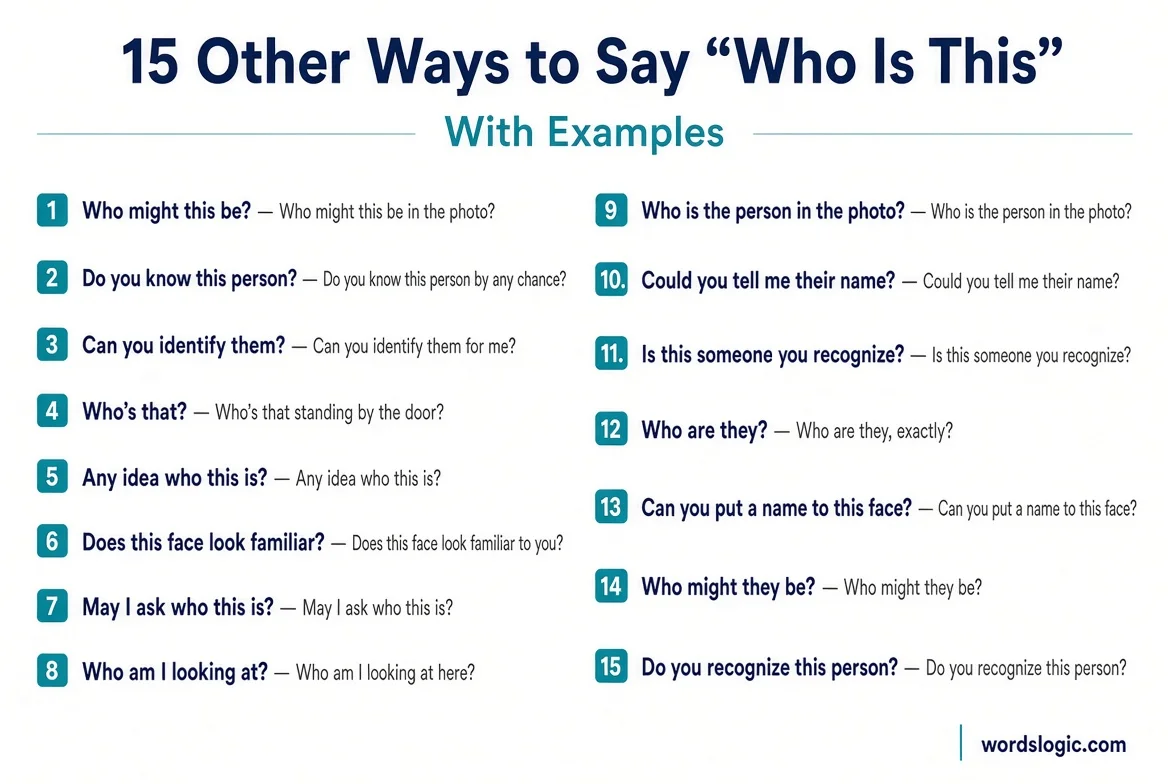
Other Ways to Say “Who Is This” can help you sound polite and natural when answering an unknown caller or replying to a new contact.
When you receive a phone call, message, unexpected email, or hear from an unknown number, it’s natural to wonder about the person’s identity and look for answers.
The common question, “Who Is This?” is a clear question, but it may sound direct, blunt, abrupt, rude, confrontational, or overly direct depending on the situation, context, tone, and relationship. You can soften the phrase by directly asking in a more polite, friendly, courteous, respectful, natural, and warmer way. “May I know who is this?” is one example that keeps the conversation comfortable. In friendly conversation, casual conversation, texting, or social interaction, especially when speaking with a new contact, thoughtful wording can show respect, warmth, and confidence.
The right wording depends on politeness, precision, naturalness, and how you want to communicate. In a professional setting or business setting, a polished alternative can sound more professional, confident, and appropriate when replying to a phone call, answering client queries, verifying contacts, or handling online inquiries. In my experience, people often respond more comfortably when a question feels thoughtful rather than demanding.
What Does “Who Is This” Mean?
“Who is this?” is a question used to ask for someone’s identity, especially when you do not immediately recognize the person you are speaking to or communicating with. In everyday English, it can mean that you want to know who is calling, messaging, speaking, or contacting you. For example, if an unknown number sends you a message, you might ask, “Who is this?”
The meaning is straightforward, but the tone depends heavily on context. When spoken casually, it can simply show curiosity. However, if said abruptly, it may sound direct or slightly suspicious. In professional or unfamiliar situations, a softer expression can make the conversation feel more respectful.
Common Situations Where “Who Is This” Is Used
People commonly use “Who is this?” during phone calls, text messages, social media conversations, and unexpected personal contact. If someone calls from an unfamiliar number, the phrase can quickly establish who is on the other end. It can also be used when someone contacts you online without introducing themselves.
The phrase is less common as a formal opening in workplace communication because it can sound very direct. In professional settings, a more courteous expression may create a better first impression. The same applies when speaking with a customer, new colleague, teacher, client, or someone you do not know well.
Is It Professional or Polite to Say “Who Is This”?
“Who is this?” is grammatically correct and socially acceptable, but it is generally more direct and conversational than formal. With friends or in casual texting, there is usually nothing unusual about using it. With an unfamiliar person, however, the wording can sometimes sound abrupt, especially if there is no greeting or other polite context.
In professional communication, choosing a softer expression can make the question feel more respectful and approachable. The best wording depends on the situation. A person answering an unexpected business call may want a courteous question, while someone responding to an unknown text may prefer something short and casual.
Advantages and Disadvantages of Saying “Who Is This”
Advantages
The biggest advantage of “Who is this?” is its clarity and simplicity. It immediately tells the other person that you do not recognize them and want to know their identity. It is short, easy to understand, and natural in everyday speech and messaging. It can also be useful when you need an answer quickly.
Disadvantages
The main limitation is its direct tone. Depending on how it is written or spoken, it may sound suspicious, impatient, or less welcoming than intended. It also does not communicate much emotional warmth or formality. In professional or sensitive situations, a more considerate expression may better match the relationship and setting.
Synonyms for “Who Is This”
- Who Am I Speaking With?
- May I Ask Who’s Calling?
- Who’s Speaking?
- May I Know Who I’m Speaking To?
- Who’s This, Please?
- Can I Ask Who’s Calling?
- Who Am I Chatting With?
- May I Know Your Name?
- Could You Tell Me Who You Are?
- Who’s There?
- Who Is Calling?
- Who’s On the Line?
- Can I Ask Your Name?
- With Whom Am I Speaking?
- Identify Yourself
1. Who Am I Speaking With?
Meaning
“Who am I speaking with?” is a polite way to ask for someone’s identity when you are already talking to them. It is especially natural during a phone call or professional conversation.
Definition
It means “May I know who I am talking to?”
Detailed Explanation
This expression is softer and more courteous than “Who is this?” because it focuses on the conversation rather than sounding like a demand for identification. It works particularly well when you have answered an unfamiliar call. The wording feels polite without being overly formal, making it useful in both personal and professional settings.
Scenario Examples
Scenario: You answer a call from an unfamiliar number.
Example: “Hello, I’m sorry, who am I speaking with?”
Scenario: You receive a business call from someone who has not introduced themselves.
Example: “Thank you for calling. May I ask who I’m speaking with?”
Best Use
Best for phone calls, workplace communication, customer conversations, and unfamiliar contacts.
Tone
Tone: Polite, professional, approachable. It sounds respectful because it asks for the person’s identity without sounding suspicious.
2. May I Ask Who’s Calling?
Meaning
“May I ask who’s calling?” politely asks for the identity of someone who has contacted you by telephone.
Definition
It means “May I know the name of the person calling?”
Detailed Explanation
This is a particularly natural expression for telephone conversations. The word “may” gives the question a courteous quality, while “calling” makes the context clear. It is more formal and polished than the casual “Who is this?”, so it can work well when speaking with customers, clients, offices, or unfamiliar callers.
Scenario Examples
Scenario: You answer a business phone without recognizing the caller.
Example: “Good morning. May I ask who’s calling?”
Scenario: A receptionist answers a call for another employee.
Example: “Certainly. May I ask who’s calling before I put you through?”
Best Use
Best for business calls, reception desks, customer service, and formal telephone conversations.
Tone
Tone: Professional, courteous, formal. It shows respect while keeping the conversation efficient.
3. Who’s Speaking?
Meaning
“Who’s speaking?” asks someone to identify themselves while they are talking to you.
Definition
It means “Who is the person speaking to me?”
Detailed Explanation
This is a concise alternative that works especially well over the phone or during voice communication. It is more neutral than “Identify yourself,” but more direct than “May I ask who’s calling?” Because it is short, the tone depends strongly on delivery. A friendly voice can make it sound perfectly normal, while a sharp delivery can make it sound demanding.
Scenario Examples
Scenario: You answer a call from a number you do not recognize.
Example: “Hello, who’s speaking?”
Scenario: You are on a group audio call and do not recognize one participant.
Example: “Sorry, who’s speaking?”
Best Use
Best for phone calls, voice chats, and everyday conversations where you need a quick identification.
Tone
Tone: Direct, neutral, conversational. It is simple and natural but can sound abrupt if said too sharply.
4. May I Know Who I’m Speaking To?
Meaning
“May I know who I’m speaking to?” is a courteous way to ask for someone’s identity during a conversation.
Definition
It means “Could you please tell me your name or identity?”
Detailed Explanation
This wording is more respectful and formal than the original phrase. It is useful when you want to establish someone’s identity without making the question feel confrontational. It works especially well when speaking to an unfamiliar person in a professional or service-related setting.
Scenario Examples
Scenario: An unfamiliar person calls your office.
Example: “Hello. May I know who I’m speaking to?”
Scenario: Someone contacts you about an important matter but does not introduce themselves.
Example: “Of course, I’d be happy to help. May I know who I’m speaking to?”
Best Use
Best for professional conversations, formal phone calls, customer communication, and unfamiliar contacts.
Tone
Tone: Respectful, formal, courteous. The wording creates a more considerate impression than a blunt identity question.
5. Who’s This, Please?
Meaning
“Who’s this, please?” asks who the person contacting or speaking to you is while adding a small element of politeness.
Definition
It means “Please tell me who you are.”
Detailed Explanation
This expression keeps the directness of “Who is this?” but softens it with “please.” It is especially natural in telephone conversations and casual messages. It is not highly formal, but it can sound more courteous when you do not know the person.
Scenario Examples
Scenario: An unknown number sends you a message.
Example: “Hi, who’s this, please?”
Scenario: You answer an unexpected call.
Example: “Hello, who’s this, please?”
Best Use
Best for casual calls, text messages, and everyday communication.
Tone
Tone: Casual, polite, direct. “Please” adds courtesy without making the expression overly formal.
6. Can I Ask Who’s Calling?
Meaning
“Can I ask who’s calling?” politely asks for the identity of the person on the phone.
Definition
It means “Could you tell me who is calling?”
Detailed Explanation
This expression is slightly softer than a direct question about someone’s identity. “Can I ask” creates a conversational buffer, making the request feel less abrupt. It works well when you want to sound friendly and respectful without using highly formal language.
Scenario Examples
Scenario: You receive an unexpected personal call.
Example: “Hi, can I ask who’s calling?”
Scenario: You answer a work phone and do not recognize the number.
Example: “Good afternoon. Can I ask who’s calling?”
Best Use
Best for telephone conversations, workplace calls, and polite everyday communication.
Tone
Tone: Friendly, polite, conversational. It is less formal than “May I ask who’s calling?” but still considerate.
7. Who Am I Chatting With?
Meaning
“Who am I chatting with?” asks for someone’s identity during an online or text-based conversation.
Definition
It means “Who is the person I am chatting with?”
Detailed Explanation
This expression is particularly suited to online conversations, where you may be communicating with someone you have not met before. The word “chatting” makes it sound relaxed and informal. It would feel unusual in a highly formal business letter, but it fits naturally in messaging, social media, and casual online discussions.
Scenario Examples
Scenario: Someone messages you from an unfamiliar social media account.
Example: “Hi! Who am I chatting with?”
Scenario: You join an online conversation and do not recognize another participant.
Example: “Sorry, I joined late. Who am I chatting with?”
Best Use
Best for texting, social media, online chats, forums, and informal digital communication.
Tone
Tone: Casual, friendly, curious. The word “chatting” makes the question feel relaxed rather than formal.
8. May I Know Your Name?
Meaning
“May I know your name?” politely asks someone to provide their name.
Definition
It means “Could you please tell me your name?”
Detailed Explanation
This expression is related to “Who is this?”, but it is slightly more specific because it asks directly for a person’s name. It can sound courteous when meeting someone, speaking to an unfamiliar contact, or handling a professional interaction. Unlike the original phrase, it does not necessarily suggest that you are trying to identify an unknown caller.
Scenario Examples
Scenario: You meet someone at a professional event.
Example: “It’s nice to meet you. May I know your name?”
Scenario: Someone introduces themselves too quickly for you to catch their name.
Example: “Sorry, may I know your name again?”
Best Use
Best for introductions, professional meetings, customer interactions, and polite personal conversations.
Tone
Tone: Polite, respectful, warm. It focuses on the person’s name rather than treating the situation as an identification problem.
9. Could You Tell Me Who You Are?
Meaning
“Could you tell me who you are?” asks someone to explain their identity.
Definition
It means “Please tell me who you are.”
Detailed Explanation
This expression can be polite, but its tone depends strongly on context. The word “could” softens the request, yet the phrase can still sound more serious or formal than everyday alternatives. It may be appropriate when someone contacts you unexpectedly and you need more information about who they are.
Scenario Examples
Scenario: Someone contacts you without introducing themselves.
Example: “Before we continue, could you tell me who you are?”
Scenario: An unfamiliar person approaches you at an event.
Example: “Sorry, could you tell me who you are?”
Best Use
Best for situations requiring clarification, formal conversations, or circumstances where you need someone to identify themselves clearly.
Tone
Tone: Direct, serious, polite. It can sound respectful when delivered calmly but may feel more confrontational in some contexts.
10. Who’s There?
Meaning
“Who’s there?” asks for the identity of someone whose presence you notice but cannot see or recognize.
Definition
It means “Who is present?” or “Who is at the door or nearby?”
Detailed Explanation
This is not a universal replacement for “Who is this?” because its meaning is more specific. It is normally used when someone is at a door, outside a room, nearby, or otherwise present but unidentified. Using it during a phone conversation would usually sound unnatural because the expression focuses on physical presence.
Scenario Examples
Scenario: Someone knocks on your front door.
Example: “Who’s there?”
Scenario: You hear someone enter another room without knowing who it is.
Example: “I heard someone come in. Who’s there?”
Best Use
Best for doors, rooms, physical locations, and situations involving an unidentified person nearby.
Tone
Tone: Casual, direct, curious. It is natural in everyday situations involving someone’s physical presence.
11. Who Is Calling?
Meaning
“Who is calling?” asks for the identity of the person making a phone call.
Definition
It means “Who is making this call?”
Detailed Explanation
This expression is specifically connected to telephone communication. It is straightforward and easy to understand, although it can sound slightly more formal or detached than “Who’s this?” depending on the situation. It is useful when someone is asking about the caller rather than addressing the caller directly.
Scenario Examples
Scenario: Someone answers the office phone for a colleague.
Example: “I’m sorry, who is calling?”
Scenario: A family member asks who is on the phone.
Example: “Who is calling?”
Best Use
Best for phone calls, reception situations, office communication, and conversations about callers.
Tone
Tone: Neutral, direct, professional. It is clear without adding much emotional warmth.
12. Who’s On the Line?
Meaning
“Who’s on the line?” asks who is currently connected to a telephone call.
Definition
It means “Who is speaking on the phone?”
Detailed Explanation
This expression is strongly associated with telephone conversations and can sound slightly traditional compared with more modern everyday wording. It is still understandable and can be useful when referring specifically to the person connected to a call. Because it has a somewhat old-fashioned flavor in some settings, it may not be the first choice for casual texting.
Scenario Examples
Scenario: An assistant receives a call for a manager.
Example: “Before I transfer you, may I ask who’s on the line?”
Scenario: You hear a phone ringing while someone else answers it.
Example: “Who’s on the line?”
Best Use
Best for telephone conversations, offices, reception areas, and formal or traditional communication.
Tone
Tone: Professional, neutral, slightly formal. The phrase clearly signals a telephone context.
13. Can I Ask Your Name?
Meaning
“Can I ask your name?” is a polite way to ask someone to tell you their name.
Definition
It means “Would you mind telling me your name?”
Detailed Explanation
This expression is useful when the main information you need is the person’s name rather than their broader identity. It sounds natural in introductions and everyday professional interactions. Compared with “Who is this?”, it feels less like you are questioning an unknown person and more like you are politely requesting basic information.
Scenario Examples
Scenario: You begin a conversation with someone you have not met.
Example: “I’m sorry, can I ask your name?”
Scenario: A customer approaches a service desk.
Example: “Certainly. Can I ask your name before I look up your appointment?”
Best Use
Best for introductions, customer service, workplace conversations, and polite everyday interactions.
Tone
Tone: Friendly, courteous, approachable. It sounds less confrontational because it focuses specifically on the person’s name.
14. With Whom Am I Speaking?
Meaning
“With whom am I speaking?” is a formal way to ask for someone’s identity during a conversation.
Definition
It means “Who am I speaking with?”
Detailed Explanation
This is a more formal and traditional construction than most alternatives in this list. It may be appropriate in highly formal communication, although everyday speakers often prefer simpler wording. The expression clearly communicates respect and formality, but it can sound somewhat stiff in casual conversation.
Scenario Examples
Scenario: You are handling a formal business call.
Example: “Good afternoon. With whom am I speaking?”
Scenario: You receive a formal inquiry from an unfamiliar contact.
Example: “Thank you for contacting us. With whom am I speaking?”
Best Use
Best for formal phone calls, professional communication, official settings, and situations where a formal tone is expected.
Tone
Tone: Formal, respectful, traditional. Its structure gives the question a more official feel.
15. Identify Yourself
Meaning
“Identify yourself” tells someone to state who they are.
Definition
It means “Tell me who you are.”
Detailed Explanation
This is the strongest and most direct expression in the list. Unlike the softer alternatives, it can sound commanding, suspicious, or confrontational, so it should be used carefully. It may fit situations where someone’s identity genuinely needs to be established immediately, but it is usually too forceful for ordinary friendly conversation.
Scenario Examples
Scenario: An unknown person approaches a restricted workplace area.
Example: “Please identify yourself before entering.”
Scenario: Someone contacts an organization without providing any identifying information.
Example: “Before we discuss the matter, please identify yourself.”
Best Use
Best for security-related situations, official instructions, strict procedures, or circumstances where clear identification is necessary.
Tone
Tone: Direct, authoritative, serious. It can sound demanding, so it is not normally the best choice for casual or friendly communication.
FAQs
What is another way to say “Who Is This”?
There are several natural alternatives, depending on the context. “Who am I speaking with?” works well for general conversations, while “May I ask who’s calling?” is especially suitable for phone calls. For casual online conversations, “Who am I chatting with?” can sound more natural.
What does “Who Is This” mean?
“Who is this?” is a question used to ask someone to identify themselves. It is commonly used when you do not recognize a caller, texter, or person speaking to you. The phrase is simple and direct, but its tone can vary depending on how it is delivered.
Is “Who Is This” professional?
“Who is this?” is understandable and acceptable, but it is fairly direct and conversational. In professional situations, a softer expression such as “May I know who I’m speaking to?” or “May I ask who’s calling?” may sound more courteous.
What is a more polite way to say “Who Is This”?
“Who am I speaking with?” is a natural polite choice. “May I know your name?” is also useful when you specifically want the person’s name rather than simply asking who they are.
Which alternative works best in formal communication?
For formal communication, “May I ask who’s calling?”, “May I know who I’m speaking to?”, and “With whom am I speaking?” can work well depending on the setting. The first two generally sound more natural in modern professional conversations, while the last is more traditional and formal.
Conclusion
Choosing an alternative to “Who is this?” is mainly about matching your wording to the situation. The basic question is clear and useful, but a small change can make your message sound warmer, more polite, more professional, or more direct. For an unfamiliar phone call, a courteous expression can make the interaction smoother, while casual online conversations may call for more relaxed wording.
In situations where identity must be established firmly, a stronger expression may be appropriate. The important point is to consider context, relationship, tone, and purpose before choosing your words. Similar expressions do not always carry exactly the same meaning, so the most natural choice is the one that communicates what you need without creating an unintended impression.













