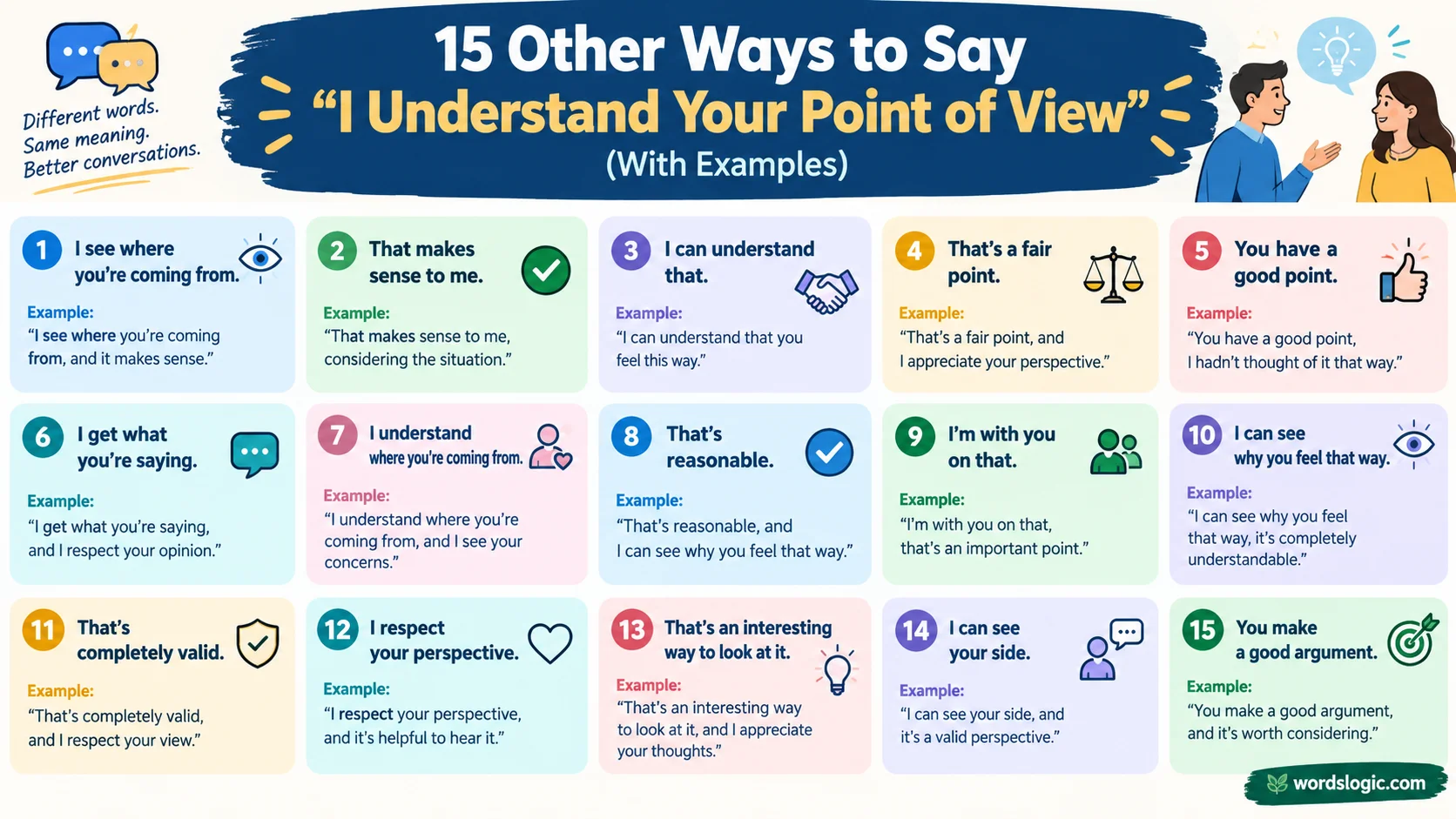
Other Ways to Say “I Understand Your Point of View” helps you express empathy, show respect, and improve your communication skills in everyday conversations. Explore Other Ways to Say “I Understand Your Point of View” to express empathy, respect different opinions, and communicate clearly in every conversation. Whether you’re talking with a friend, participating in a meeting, or handling a workplace discussion, choosing the right words helps you build trust and show genuine understanding without pretending to agree with everything someone says.
Understanding another person’s point of view means listening carefully, acknowledging their opinion, and considering their thoughts and feelings. You can disagree with someone while still showing mutual respect and active listening. Expressions such as “I see where you’re coming from,” “I understand why you feel that way,” and “I appreciate your perspective” make conversations more natural. These alternatives also help reduce tension, encourage open dialogue, and strengthen personal and professional relationships.
In workplace communication, especially customer service, the right professional tone can make a meaningful difference. When someone feels frustrated, upset, or overwhelmed, a thoughtful response can show empathy, offer reassurance, and demonstrate genuine concern. Instead of repeating the same phrase, choose considerate wording that fits the situation. This approach supports conflict resolution, improves customer relations, and creates a more respectful environment where people feel heard, valued, and understood.
What Does “I Understand Your Point of View” Mean?
“I understand your point of view” means that you understand how another person thinks, feels, or approaches a particular situation. It communicates that you have listened to their explanation and can recognize the reasons behind their opinion. The phrase is often used during discussions, disagreements, and conversations about personal experiences. However, understanding someone does not necessarily mean agreeing with them. You can recognize why a person holds a particular belief while still having a different opinion. The expression is generally polite, respectful, and suitable for both casual and professional communication.
Common Situations Where “I Understand Your Point of View” Is Used
People use this expression when discussing different opinions, resolving misunderstandings, or responding to someone’s concerns. In everyday conversations, it can help friends and family members feel heard. In relationships, it may show that you are trying to understand your partner’s feelings rather than dismissing them.
In the workplace, the phrase can help during meetings, negotiations, feedback sessions, and disagreements about decisions. Students may use it during classroom discussions, while customer service representatives can use similar wording to acknowledge a customer’s concerns. Because the original phrase can sometimes sound formal or repetitive, alternatives such as “I see where you’re coming from” or “I understand your concerns” may feel more natural in particular situations.
Is It Professional or Polite to Say “I Understand Your Point of View”?
Yes, “I understand your point of view” is generally polite and professional. It communicates respect for another person’s perspective without suggesting that you agree with everything they say. The phrase works well in business meetings, workplace emails, academic discussions, and conversations involving different opinions.
However, it can sound slightly formal in casual conversations. When speaking with friends, “I see what you mean” may feel more relaxed. When responding to someone who is upset, “I can understand how you feel” may communicate more empathy. In professional situations, choose wording that reflects the person’s actual concern rather than using a polite expression without acknowledging what they said.
Advantages and Disadvantages of Saying “I Understand Your Point of View”
Advantages
The phrase encourages respectful communication and shows that you are willing to listen to another perspective. It can help keep disagreements constructive, reduce the chance of misunderstandings, and create space for a more balanced conversation. Its neutral tone makes it useful in professional and personal situations. It also allows you to acknowledge someone’s opinion without pretending to agree with it.
Disadvantages
The expression can sound somewhat formal or distant in emotional conversations. If you repeat it too often, it may feel rehearsed rather than sincere. It also doesn’t explain exactly what you understand, so the other person may wonder whether you have truly considered their concerns. In sensitive situations, a more specific response can communicate empathy, attention, and genuine interest more effectively.
15 Alternatives to “I Understand Your Point of View”
- I See Where You’re Coming From
- I Understand What You Mean
- I See Your Perspective
- I Can Appreciate Your Point
- I Understand Your Concerns
- That Makes Sense to Me
- I Can See Why You Feel That Way
- I Hear What You’re Saying
- I Get Where You’re Coming From
- I Respect Your Perspective
- I Can Follow Your Reasoning
- I Understand Your Position
- I See Things From Your Side
- I Can Relate to Your Viewpoint
- I Take Your Point
1. I See Where You’re Coming From
Meaning
“I see where you’re coming from” means you understand the reasons, experiences, or feelings behind someone’s opinion. It acknowledges their perspective without necessarily agreeing with their conclusion.
Definition
A conversational expression used to show that you understand why someone thinks or feels a certain way.
Detailed Explanation
This phrase is a natural alternative when you want to sound understanding rather than overly formal. It focuses on the reasoning behind another person’s opinion. It can make a disagreement feel less confrontational because you acknowledge their perspective before sharing your own. The expression is especially useful when the other person has explained their reasons in detail.
Scenario Examples
- Scenario: A friend explains why they don’t want to attend a crowded event.
Example: “I see where you’re coming from. Large crowds can be exhausting.” - Scenario: A coworker explains why a deadline seems unrealistic.
Example: “I see where you’re coming from, especially with the amount of work involved.” - Scenario: Your partner explains why they felt overlooked.
Example: “I see where you’re coming from, and I understand why that bothered you.”
Best Use
Use this phrase in everyday conversations, workplace discussions, and personal relationships. It works particularly well when you want to acknowledge someone’s reasoning before explaining your own position.
Tone
Tone: Friendly, understanding, conversational.
Its relaxed wording helps you show respect without making the conversation feel stiff or overly formal.
2. I Understand What You Mean
Meaning
“I understand what you mean” communicates that you understand someone’s message, explanation, or intended meaning. It is useful when you want to confirm that their words make sense to you.
Definition
A straightforward expression indicating that you have understood another person’s explanation or message.
Detailed Explanation
This expression is slightly more focused on comprehension than on emotional empathy. It works well when someone explains an idea, clarifies a misunderstanding, or describes a situation. Unlike “I understand your point of view,” it does not necessarily suggest that you have considered every reason behind their opinion. It is a practical choice when you want to keep the conversation clear and direct.
Scenario Examples
- Scenario: A classmate explains a difficult assignment.
Example: “I understand what you mean now. We need to explain the process, not just give the answer.” - Scenario: A colleague clarifies a project requirement.
Example: “I understand what you mean. I’ll update the report accordingly.” - Scenario: A friend explains why they changed their plans.
Example: “I understand what you mean. You need some time to get everything organized.”
Best Use
Use it during clarifications, instructions, everyday discussions, and professional conversations. It is especially appropriate when the goal is to confirm understanding rather than express deep emotional support.
Tone
Tone: Clear, neutral, polite.
The wording is simple and direct, making it suitable for many situations without sounding overly emotional.
3. I See Your Perspective
Meaning
“I see your perspective” means that you recognize how another person views a situation. It emphasizes awareness of their viewpoint, even when your own opinion differs.
Definition
An expression used to acknowledge another person’s way of thinking about an issue.
Detailed Explanation
This phrase sounds slightly more polished than casual alternatives. It is useful when discussing decisions, opinions, or competing priorities. The wording shows that you have considered the other person’s position without promising agreement. It can also encourage a balanced discussion in which both people have room to explain their reasoning.
Scenario Examples
- Scenario: Two coworkers disagree about a new process.
Example: “I see your perspective, although I think we should test both options first.” - Scenario: A student explains a different interpretation of a book.
Example: “I see your perspective. That character’s actions do look different from that angle.” - Scenario: A friend explains why they prefer to save money rather than travel.
Example: “I see your perspective. You’re thinking about your long-term goals.”
Best Use
Choose this expression for professional discussions, academic conversations, thoughtful debates, and situations involving different opinions.
Tone
Tone: Respectful, thoughtful, moderately formal.
Its wording sounds measured and considerate, making it useful when you want to keep a discussion constructive.
4. I Can Appreciate Your Point
Meaning
“I can appreciate your point” means you recognize the value or reasoning behind someone’s argument. It can suggest that their explanation has given you something worth considering.
Definition
A polite expression that acknowledges the merit or reasoning of another person’s argument.
Detailed Explanation
This phrase goes a little beyond simply hearing someone’s opinion. It suggests that you recognize something reasonable or valuable in what they have said. However, appreciating a point does not mean accepting the entire argument. The expression works well when you want to acknowledge a reasonable concern while continuing to explain a different position.
Scenario Examples
- Scenario: A manager explains why a project needs more time.
Example: “I can appreciate your point about quality, but we still need to meet the revised deadline.” - Scenario: A friend argues that buying a used car is more practical.
Example: “I can appreciate your point. Saving money on the purchase could help with future expenses.” - Scenario: A team member suggests a different approach.
Example: “I can appreciate your point about simplifying the process. Let’s look at the possible trade-offs.”
Best Use
Use this expression in meetings, negotiations, discussions, and respectful disagreements where you want to acknowledge the reasoning behind an argument.
Tone
Tone: Considerate, professional, measured.
The phrase sounds thoughtful and can help you disagree without dismissing another person’s contribution.
5. I Understand Your Concerns
Meaning
“I understand your concerns” means you recognize the worries, objections, or practical problems someone has raised. It focuses on what is troubling the person rather than their entire viewpoint.
Definition
A respectful expression acknowledging another person’s worries or reservations about a situation.
Detailed Explanation
This alternative is especially useful when someone is anxious, uncertain, or unhappy about a decision. It shows that you have noticed the issues they consider important. In a workplace setting, it can create an opening to discuss possible solutions. However, it is most appropriate when the person has actually expressed concerns; it is not a perfect substitute for every opinion-based conversation.
Scenario Examples
- Scenario: An employee worries that a new schedule will affect their responsibilities.
Example: “I understand your concerns about the new schedule. Let’s review how the changes will affect your workload.” - Scenario: A customer questions a delivery delay.
Example: “I understand your concerns about receiving the order on time, and I’ll check the latest update.” - Scenario: A parent is uncertain about a school trip.
Example: “I understand your concerns about the arrangements. Let’s go through the details together.”
Best Use
Choose this expression for customer service, workplace communication, problem-solving, and sensitive conversations involving worries or objections.
Tone
Tone: Empathetic, professional, reassuring.
It acknowledges the other person’s concerns directly and can help move the conversation toward a practical response.
6. That Makes Sense to Me
Meaning
“That makes sense to me” means that someone’s explanation seems logical or understandable. It can also show that you find their decision reasonable based on the information they provided.
Definition
A conversational expression indicating that an explanation or idea seems reasonable.
Detailed Explanation
This phrase is less formal than “I understand your point of view.” It works well when someone explains their reasoning and you want to acknowledge that it is understandable. Depending on the situation, it may communicate more than comprehension because it suggests that the explanation follows a reasonable line of thought. However, it does not always mean you agree with the person’s final decision.
Scenario Examples
- Scenario: A friend explains why they chose a job closer to home.
Example: “That makes sense to me. A shorter commute would give you more free time.” - Scenario: A colleague explains why a task should be completed first.
Example: “That makes sense to me. Let’s handle the urgent items before the smaller updates.” - Scenario: A student explains a solution to a math problem.
Example: “That makes sense to me now. I hadn’t considered that step.”
Best Use
Use this phrase in casual conversations, team discussions, learning environments, and everyday decision-making when someone’s reasoning is understandable.
Tone
Tone: Natural, agreeable, relaxed.
The wording sounds approachable and is particularly useful when you want to acknowledge an explanation without making the conversation too formal.
7. I Can See Why You Feel That Way
Meaning
“I can see why you feel that way” means you understand the reasons behind someone’s emotional reaction. It recognizes their feelings without necessarily saying that every conclusion they have reached is correct.
Definition
An empathetic expression acknowledging why another person might have a particular emotional response.
Detailed Explanation
This phrase is more emotionally focused than the original expression. It is useful when someone feels disappointed, frustrated, hurt, or worried. Rather than discussing only their logic, it recognizes the personal experience behind their reaction. Use it sincerely, because it can sound dismissive if you say it without listening to the person’s explanation.
Scenario Examples
- Scenario: A friend feels disappointed after being left out of a gathering.
Example: “I can see why you feel that way. You expected to be included.” - Scenario: Your partner feels frustrated because plans changed at the last minute.
Example: “I can see why you feel that way. You arranged your day around our plans.” - Scenario: A coworker feels discouraged after receiving critical feedback.
Example: “I can see why you feel that way. That was a lot of feedback to take in at once.”
Best Use
Use it in personal relationships, supportive conversations, conflict resolution, and situations involving strong feelings.
Tone
Tone: Warm, empathetic, reassuring.
Its focus on emotions helps the other person feel heard rather than treated as though the conversation is only about logic.
8. I Hear What You’re Saying
Meaning
“I hear what you’re saying” means you acknowledge another person’s message or concern. It signals that you are listening, although it does not automatically mean you agree or fully understand.
Definition
An expression used to acknowledge someone’s words, argument, or concern.
Detailed Explanation
This phrase emphasizes listening rather than agreement. It can be useful when a discussion becomes tense and you want to recognize what the other person has said before responding. In some contexts, however, it can sound distant or dismissive, especially if you use it to end the conversation. Follow it with a specific acknowledgment or a thoughtful response when the subject matters.
Scenario Examples
- Scenario: A coworker raises concerns about a proposed change.
Example: “I hear what you’re saying about the extra workload. We should look at the staffing plan again.” - Scenario: A friend explains why they felt ignored.
Example: “I hear what you’re saying, and I want to understand what upset you most.” - Scenario: A customer explains a problem with an order.
Example: “I hear what you’re saying about the delay. Let me review the order details.”
Best Use
Choose this phrase for active listening, difficult conversations, customer interactions, and discussions where someone wants their concerns acknowledged.
Tone
Tone: Attentive, neutral, sometimes firm.
Its tone depends heavily on delivery. Pairing it with a specific response makes it sound more sincere and helpful.
9. I Get Where You’re Coming From
Meaning
“I get where you’re coming from” means you understand the reasons or experiences influencing someone’s opinion. It is an informal version of “I see where you’re coming from.”
Definition
A casual expression showing that you understand the background behind another person’s viewpoint.
Detailed Explanation
This phrase is natural in everyday speech and informal messages. It can make a conversation feel relaxed while still acknowledging a different perspective. Because “get” is conversational, the expression may sound less polished in a formal report or official email. It also does not imply agreement, so you can use it before explaining why you see things differently.
Scenario Examples
- Scenario: A friend explains why they don’t want to lend money again.
Example: “I get where you’re coming from. You don’t want the same problem to happen twice.” - Scenario: A teammate explains why they prefer working independently.
Example: “I get where you’re coming from, but this project will need some coordination.” - Scenario: A sibling explains why they want to move to another city.
Example: “I get where you’re coming from. You want a fresh start.”
Best Use
Use it in text messages, conversations with friends, family discussions, and informal workplace chats.
Tone
Tone: Casual, understanding, friendly.
The conversational wording helps acknowledge another person’s reasons without sounding distant or overly formal.
10. I Respect Your Perspective
Meaning
“I respect your perspective” means you recognize another person’s right to hold their opinion and are willing to treat it seriously. It does not mean you agree with the opinion.
Definition
A respectful expression showing that you value another person’s viewpoint, even when it differs from your own.
Detailed Explanation
This phrase emphasizes respect more than understanding. It can be useful when people disagree about personal choices, values, or workplace decisions. The wording establishes that disagreement does not have to become disrespectful. However, it may sound somewhat formal or distant in an intimate conversation, where more personal language could feel warmer.
Scenario Examples
- Scenario: Two colleagues disagree about a company policy.
Example: “I respect your perspective, although I have some concerns about how the policy would work.” - Scenario: A friend makes a personal decision you wouldn’t make yourself.
Example: “I respect your perspective. It’s your decision, and you’ve clearly thought about it.” - Scenario: A group discusses a sensitive social issue.
Example: “I respect your perspective, and I think we can discuss our differences without making it personal.”
Best Use
Choose this expression for professional disagreements, sensitive discussions, debates, and conversations where mutual respect is important.
Tone
Tone: Respectful, composed, diplomatic.
It communicates that you can acknowledge someone’s right to a different opinion without pretending to share it.
11. I Can Follow Your Reasoning
Meaning
“I can follow your reasoning” means you understand the steps or logic behind someone’s conclusion. It focuses on how the person reached an idea rather than how they feel about it.
Definition
An expression indicating that you understand the logical process behind another person’s argument or decision.
Detailed Explanation
This phrase is useful when someone explains a plan, argument, or sequence of decisions. It suggests that you can trace the connection between their reasons and their conclusion. It does not necessarily mean you consider the reasoning correct or agree with the result. The expression sounds more analytical than emotional, so it is usually better suited to discussions about ideas and decisions than conversations about hurt feelings.
Scenario Examples
- Scenario: A colleague explains why a marketing campaign should target a smaller audience first.
Example: “I can follow your reasoning. Testing the smaller audience could help us identify problems before expanding.” - Scenario: A classmate explains how they reached an answer.
Example: “I can follow your reasoning, especially the way you handled the final step.” - Scenario: A friend explains why they are postponing a purchase.
Example: “I can follow your reasoning. Waiting until you’ve saved more money could be sensible.”
Best Use
Use it in analytical discussions, academic settings, project planning, and professional decision-making.
Tone
Tone: Analytical, thoughtful, professional.
The expression signals that you are engaging with the logic of an argument rather than simply acknowledging the speaker’s feelings.
12. I Understand Your Position
Meaning
“I understand your position” means you understand someone’s stance on an issue, including the opinion or priorities influencing it. It is especially useful when people have clearly defined positions.
Definition
A formal-leaning expression acknowledging another person’s stance on a particular matter.
Detailed Explanation
This phrase is particularly appropriate when discussing workplace policies, negotiations, disagreements, or decisions. It sounds more structured than everyday expressions such as “I get what you mean.” It acknowledges the other person’s stance without implying that you accept it. Because it can sound formal or somewhat detached, a warmer alternative may be better when responding to a close friend who is sharing personal feelings.
Scenario Examples
- Scenario: A supplier explains why they cannot lower a quoted price.
Example: “I understand your position regarding the production costs. Let’s see whether we can adjust the order size.” - Scenario: A manager explains why a team member disagrees with a new procedure.
Example: “I understand your position, and I’d like to discuss the concerns you’ve raised.” - Scenario: Two people negotiate responsibilities for a shared project.
Example: “I understand your position. We may need to find a compromise that works for both sides.”
Best Use
Choose this expression for business communication, negotiations, formal discussions, and structured disagreements.
Tone
Tone: Professional, measured, diplomatic.
Its formal wording helps keep discussions focused on the issue rather than personal conflict.
13. I See Things From Your Side
Meaning
“I see things from your side” means you are trying to understand a situation from another person’s position. It emphasizes considering how the situation looks to them.
Definition
A conversational expression showing that you are considering an issue from another person’s point of view.
Detailed Explanation
This phrase highlights the effort to consider another person’s circumstances. It can be especially useful when both people have different needs or expectations. The wording may sound more personal than a formal phrase because it suggests that you are trying to look at the situation through the other person’s eyes. However, it does not mean you have completely adopted their viewpoint.
Scenario Examples
- Scenario: A friend feels frustrated because you canceled plans.
Example: “I see things from your side. You set aside your evening, and I changed the plan too late.” - Scenario: A team member explains the difficulties of handling a busy workload.
Example: “I see things from your side now. You’ve been managing several urgent tasks at once.” - Scenario: A couple discusses how to divide household responsibilities.
Example: “I’m trying to see things from your side so we can find an arrangement that feels fair.”
Best Use
Use it in personal conversations, relationship discussions, teamwork, and situations where people need to consider each other’s circumstances.
Tone
Tone: Empathetic, cooperative, thoughtful.
It emphasizes perspective-taking and can help people move beyond their own assumptions.
14. I Can Relate to Your Viewpoint
Meaning
“I can relate to your viewpoint” means you understand someone’s perspective because it connects with your own experiences, thoughts, or feelings.
Definition
An expression showing that another person’s perspective feels understandable or familiar to you.
Detailed Explanation
This phrase can communicate a personal connection rather than simple intellectual understanding. It is most natural when you genuinely have experiences or feelings that help you understand the other person’s position. However, relating to a viewpoint is not identical to agreeing with it. Avoid using the phrase when you have no meaningful connection to the person’s experience, because it may sound insincere.
Scenario Examples
- Scenario: A friend explains the stress of starting a new job.
Example: “I can relate to your viewpoint. Starting somewhere new can take time to get used to.” - Scenario: A colleague explains why they value flexible working hours.
Example: “I can relate to your viewpoint. Having more control over your schedule can make a real difference.” - Scenario: A student describes the pressure of preparing for several exams.
Example: “I can relate to your viewpoint. Balancing different subjects can be challenging.”
Best Use
Choose this expression for supportive conversations, discussions about shared experiences, and situations where you can genuinely connect with someone’s perspective.
Tone
Tone: Personal, warm, understanding.
The phrase creates a sense of connection, especially when you can explain what makes the person’s perspective familiar to you.
15. I Take Your Point
Meaning
“I take your point” means you understand the main idea or argument someone has made. It acknowledges their reasoning without necessarily accepting their conclusion.
Definition
A concise expression used to recognize and understand another person’s argument.
Detailed Explanation
This phrase is more common in British English than in some varieties of American English, where “I see your point” may sound more natural. It is useful during discussions when someone has made a specific argument or raised an important consideration. The wording is concise and can sound measured rather than emotional. If the other person is sharing a personal struggle, a warmer expression may be more appropriate.
Scenario Examples
- Scenario: A colleague explains why a proposed change could create extra work.
Example: “I take your point about the additional workload. We should account for that before making a decision.” - Scenario: A friend explains why they prefer a quieter holiday.
Example: “I take your point. A relaxing trip might be better than a packed schedule this year.” - Scenario: A group discusses whether to extend a project deadline.
Example: “I take your point about maintaining quality, and we should weigh that against the delivery date.”
Best Use
Use this phrase in structured discussions, professional conversations, reasoned disagreements, and situations where you want to acknowledge a specific argument.
Tone
Tone: Concise, thoughtful, slightly formal.
It works well when you want to recognize someone’s argument without adding unnecessary words or suggesting automatic agreement.
FAQs
What does “I understand your point of view” mean?
“I understand your point of view” means you recognize another person’s perspective, thoughts, or feelings. It shows respect, active listening, and empathy, even when you don’t fully agree with their opinion.
What are some professional alternatives to “I understand your point of view”?
You can say “I see where you’re coming from,” “I appreciate your perspective,” “I understand your concerns,” or “I can see why you feel that way.” These expressions support professional communication and help maintain a respectful tone in workplace discussions.
How can I show understanding without agreeing with someone?
You can acknowledge someone’s opinion without accepting it as your own. Try saying, “I understand your reasoning, although I see it differently.” This response demonstrates mutual respect, encourages open dialogue, and makes respectful disagreement easier.
Why is it important to use different ways to express understanding?
Using different expressions makes your communication sound more natural and thoughtful. It helps you adjust your tone to different situations, strengthen relationships, reduce tension, and show genuine understanding rather than repeating the same phrase.
How can I express empathy when someone is frustrated?
Start by listening carefully and acknowledging the person’s feelings. You might say, “I understand why this situation is frustrating,” or “I can see why you’re concerned.” These responses show empathy, reassurance, and genuine concern, especially in customer service and professional conversations.
Conclusion
Learning Other Ways to Say “I Understand Your Point of View” helps you communicate with more empathy, respect, and confidence. Whether you’re speaking with a friend, discussing an issue with a colleague, or responding to a frustrated customer, the right words can make your message sound more thoughtful. Expressions such as “I see where you’re coming from” and “I appreciate your perspective” show that you are listening and considering another person’s feelings without pretending to agree with everything they say.
The key to effective communication is to choose words that fit the situation and feel natural. Practice active listening, acknowledge different perspectives, and maintain a respectful tone during difficult conversations. These simple habits can build trust, reduce misunderstandings, and strengthen both personal and professional relationships. When people feel heard, respected, and understood, conversations become more productive, meaningful, and positive.