Other Ways to Say “Vibe Check” help you describe a person’s mood, understand their feelings, and choose suitable words for casual or professional conversations.
A vibe check is an informal way of understanding someone’s mood, energy, and emotional condition in a particular place or situation. It involves gauging feelings and assessing the overall atmosphere or state of a group. This expression is common in conversations, social media, workplaces, group chats, and modern internet culture. For example, an app might help people evaluate the atmosphere in their neighbourhood. By noticing people’s phrases, actions, and reactions, you can understand the context and determine whether everyone feels comfortable. A vibe check is a quick assessment that helps improve communication and understand how others feel.
When you want to understand a group, try reading the room and observing how people are responding. A simple check in can help you gauge the mood before an important discussion. However, an alternative such as assess the situation may sound more appropriate in professional or sensitive situations. Understanding these differences helps professionals, students, content writers choose language that fits their audience, purpose, and wording needs.
Generational language gaps can cause immediate confusion at work. A younger colleague might type “vibe check” in a project channel, leaving others unsure how to respond. This guide explains the exact meaning of the phrase and when it is safe to use this internet terminology in corporate communications. Although it works well in casual chats, formal discussions often benefit from precise wording that suits professional evaluations.
What Does “Vibe Check” Mean?
A vibe check is an informal way to assess someone’s mood, emotional state, energy, or the general feeling of a place or situation. People often use it to ask how someone feels, see whether a group is enjoying itself, or understand the atmosphere before making a decision. For example, a friend might text, “Vibe check: how are you doing today?” to see whether you’re feeling happy, stressed, or simply tired.
The expression can also refer to observing the social atmosphere rather than asking a direct question. Someone might say, “Let’s do a vibe check before we start the meeting,” meaning they want to see how everyone is feeling. Depending on the context, a vibe check can be playful, supportive, thoughtful, or practical. It is usually casual language, especially in texting, online conversations, and everyday speech.
Common Situations Where “Vibe Check” Is Used
People use “vibe check” in several everyday situations. In text messages, it can be a quick way to ask a friend about their mood. On social media, it may appear as a funny caption, a poll, or a question inviting people to share their feelings. Among friends or partners, it can open the door to an honest conversation without making things feel too serious.
At work or school, someone might use the expression to see whether a team feels comfortable with a plan or whether a group is ready to continue. However, the wording can sound too informal in some professional settings. Alternatives such as “How is everyone feeling?” or “Can we check in?” may communicate the same general intention more clearly. Choosing the right phrase helps you match the situation, the relationship, and the level of formality.
Is It Professional or Polite to Say “Vibe Check”?
“Vibe check” is generally casual, friendly, and informal. It works well with friends, classmates, familiar coworkers, and online communities where relaxed language is normal. It can also make a conversation feel lighthearted when you want to check someone’s mood without sounding overly serious.
In a formal email, client meeting, or conversation with someone you don’t know well, the phrase may sound too playful or vague. For example, asking a colleague, “Quick vibe check?” might work in a relaxed team chat, but “How is everyone feeling about the proposed plan?” is clearer in a formal meeting. The expression itself is not necessarily impolite. Its suitability depends on the audience, workplace culture, and purpose of the conversation.
Advantages and Disadvantages of Saying “Vibe Check”
Advantages
The main advantage of “vibe check” is its simplicity and flexibility. It can refer to someone’s mood, a group’s energy, or the atmosphere of a situation without requiring a long explanation. The phrase feels approachable and can make emotional check-ins less intimidating. It is also easy to use in texts, social media posts, and casual conversations.
Disadvantages
The expression can be vague because it doesn’t explain exactly what you want to know. Someone might wonder whether you’re asking about their feelings, the group’s mood, or their opinion of a situation. It may also sound too casual for professional communication. When you need an honest emotional response or specific feedback, a direct question such as “How are you feeling about this?” can be more useful.
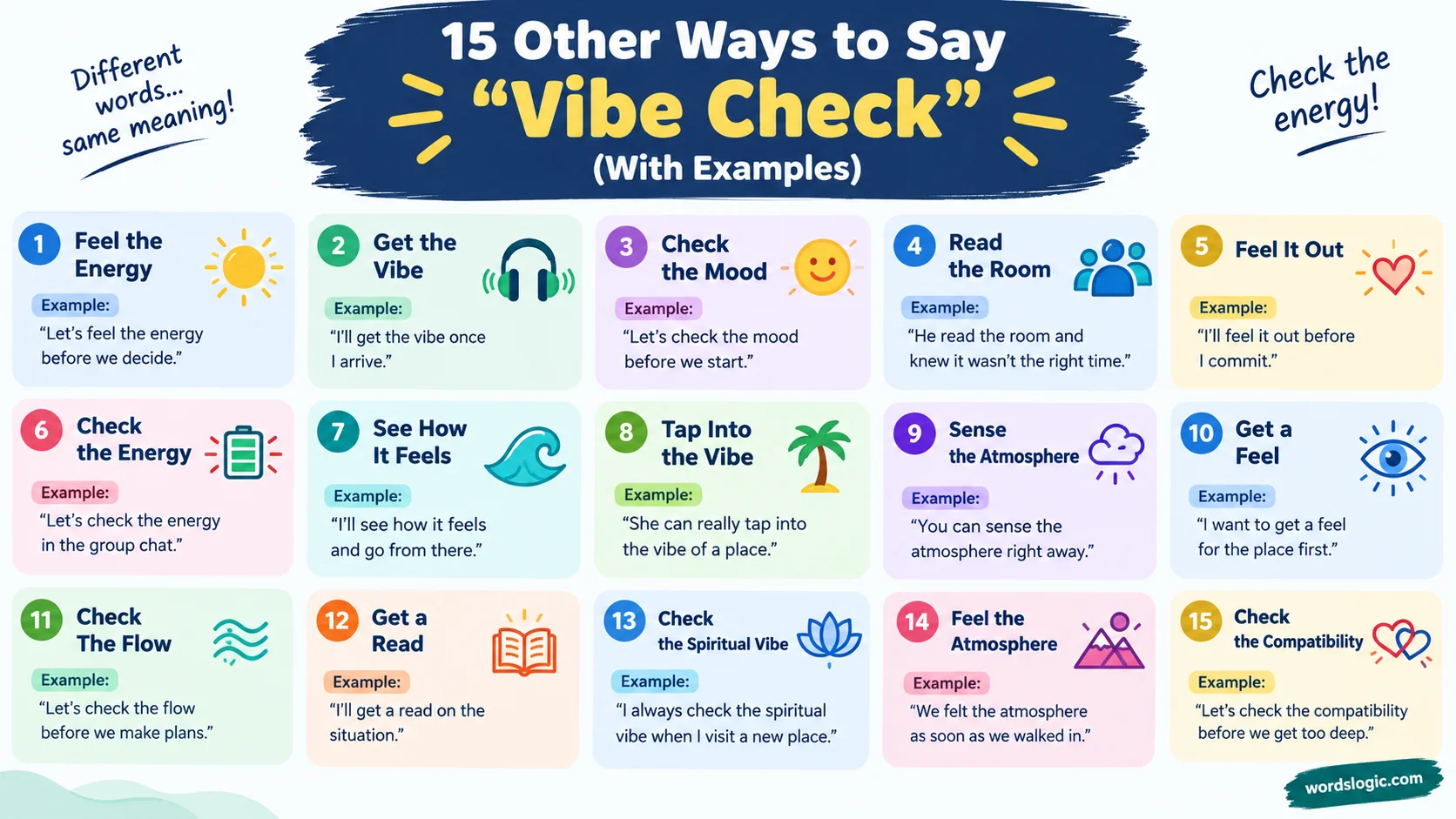
15 Other Ways to Say “Vibe Check”
- How Are You Feeling?
- What’s the Vibe?
- How’s Your Energy?
- What’s Your Mood Today?
- You Good?
- How Are Things?
- What’s Going On?
- How Are You Holding Up?
- What’s the Atmosphere Like?
- Can I Get a Read on the Room?
- Let’s Check In
- How’s Everyone Feeling?
- What’s the Energy Like?
- Quick Mood Check
- How Are We Doing?
1. How Are You Feeling?
Meaning
“How are you feeling?” asks someone about their current emotions or general state. It is a thoughtful alternative when your vibe check is specifically about a person’s feelings rather than the atmosphere around them.
Definition
A direct question asking someone to describe their emotional or physical state.
Detailed Explanation
This expression is more personal and specific than “vibe check.” It invites someone to share how they actually feel instead of giving a general impression of their mood. It can sound caring when you ask with genuine interest. Although it is suitable for everyday conversation, it can also work in professional or sensitive situations when the tone is respectful.
Scenario Examples
Scenario: Checking on a friend after a difficult day.
Example: “Hey, how are you feeling after everything that happened yesterday?”
Scenario: Asking a teammate about a stressful project.
Example: “How are you feeling about the new deadline?”
Scenario: Checking on your partner.
Example: “You’ve seemed quiet this evening. How are you feeling?”
Best Use
Use this phrase for personal check-ins, emotional conversations, and situations where you want an honest response. It is also useful at work when you want someone’s opinion or emotional reaction to a decision.
Tone
Tone: Caring, thoughtful, direct.
It shows interest in the person’s actual feelings rather than simply asking whether the overall atmosphere is good or bad.
2. What’s the Vibe?
Meaning
“What’s the vibe?” asks about the mood, atmosphere, or general feeling of a place, event, or situation. It is especially useful when you want to know what something feels like rather than how one person feels.
Definition
A casual question about the general mood or atmosphere of something.
Detailed Explanation
This expression is very close to “vibe check” and often works as a direct replacement in informal conversations. It can refer to a party, a new workplace, a social gathering, or even a plan between friends. Unlike “How are you feeling?”, it focuses on the broader experience. Its meaning depends on context, so you may need to clarify whether you’re asking about the people, the setting, or the overall mood.
Scenario Examples
Scenario: Asking a friend about a party before arriving.
Example: “You’re there already? What’s the vibe like?”
Scenario: Discussing a new café.
Example: “I heard they opened a new place downtown. What’s the vibe?”
Scenario: Checking the mood before joining a group call.
Example: “What’s the vibe in the group chat today?”
Best Use
Use this expression in casual conversation, social media posts, messages to friends, and discussions about events or places.
Tone
Tone: Casual, curious, friendly.
The wording feels relaxed and natural when you want a quick impression rather than a detailed explanation.
3. How’s Your Energy?
Meaning
“How’s your energy?” asks whether someone feels energetic, tired, motivated, or emotionally drained. It works when a vibe check is really about someone’s current level of energy.
Definition
A question about someone’s energy level, motivation, or general capacity at a particular moment.
Detailed Explanation
This phrase focuses more on energy than on mood alone. Someone can feel happy but tired, or motivated while still feeling stressed. Asking about their energy makes room for those differences. It is useful when planning an activity or checking whether someone has the capacity to participate, but it may sound slightly unusual in a conversation where you only want to ask how their day is going.
Scenario Examples
Scenario: Planning an evening with a friend.
Example: “How’s your energy tonight? Are you up for going out?”
Scenario: Checking whether a coworker is ready for another task.
Example: “How’s your energy after those back-to-back meetings?”
Scenario: Talking to a workout partner.
Example: “How’s your energy today? Want to try the longer route?”
Best Use
Use it when discussing motivation, tiredness, activity plans, or readiness. It is especially helpful when you want to respect someone’s limits instead of assuming they are available.
Tone
Tone: Considerate, relaxed, supportive.
It encourages an honest answer about someone’s capacity without putting pressure on them to appear enthusiastic.
4. What’s Your Mood Today?
Meaning
“What’s your mood today?” asks someone to describe their current mood. It is a useful alternative when you want to know whether they feel cheerful, calm, anxious, frustrated, or somewhere in between.
Definition
A casual question about someone’s present emotional mood.
Detailed Explanation
This expression narrows the focus to emotions rather than the entire atmosphere of a situation. It can sound playful among friends, especially when people enjoy sharing their daily moods. Depending on your relationship, it can also invite a more meaningful conversation. However, some people may prefer a gentler question if they are dealing with difficult feelings or don’t want to explain their emotions.
Scenario Examples
Scenario: Messaging a friend in the morning.
Example: “Morning! What’s your mood today: productive or taking it slow?”
Scenario: Sharing a social media story.
Example: “What’s your mood today? Tell me with one emoji.”
Scenario: Talking with a partner after work.
Example: “What’s your mood today? Do you feel like talking or relaxing?”
Best Use
Choose this phrase for friendly texts, casual conversations, mood-related posts, and light emotional check-ins.
Tone
Tone: Playful, personal, conversational.
It makes discussing emotions feel approachable, although the wording may be too casual for formal workplace communication.
5. You Good?
Meaning
“You good?” is a short, informal way to ask whether someone is okay. It can serve as a quick vibe check when you notice a change in their behavior or want to make sure everything is fine.
Definition
An informal question asking whether someone is okay or needs anything.
Detailed Explanation
This expression is shorter and more direct than “How are you feeling?” It often works well when you notice someone becoming quiet, looking upset, or seeming uncomfortable. Depending on your tone, it can communicate genuine concern or simple curiosity. However, it may sound abrupt in a formal setting, and some people might interpret it as confrontational if you ask sharply.
Scenario Examples
Scenario: Checking on a friend who has stopped talking.
Example: “You good? You’ve been quiet for a while.”
Scenario: Making sure a teammate understands a task.
Example: “You good with those instructions, or should we go over them again?”
Scenario: Asking a friend after an awkward interaction.
Example: “You good after that conversation? We can leave if you want.”
Best Use
Use it in casual conversations, quick text messages, and familiar relationships. Add a little context when you want the question to sound more supportive.
Tone
Tone: Casual, direct, concerned.
Its brevity makes it convenient, but your delivery matters. A gentle voice can sound caring, while a sharp tone may sound impatient.
6. How Are Things?
Meaning
“How are things?” is a broad question about someone’s life or current circumstances. It can function as a relaxed check-in when you want to see how someone is doing without focusing on one specific emotion.
Definition
A conversational way to ask about someone’s general situation or well-being.
Detailed Explanation
Unlike “vibe check,” this phrase can cover several areas of a person’s life, including work, relationships, and everyday challenges. It doesn’t necessarily ask about their immediate mood, so it works best when you want a broader update. The wording is natural with friends, relatives, colleagues, and acquaintances. If you want a more precise answer, you can follow up by asking about a particular situation.
Scenario Examples
Scenario: Catching up with an old friend.
Example: “It’s been ages since we talked. How are things?”
Scenario: Starting a conversation with a colleague.
Example: “Hi, how are things going with the new assignment?”
Scenario: Checking on a family member.
Example: “How are things at home? Everyone doing okay?”
Best Use
Use it for everyday conversation, catching up, friendly emails, and general check-ins. It is particularly useful when you don’t want to assume what the other person might be feeling.
Tone
Tone: Friendly, neutral, approachable.
The phrase is warm without being overly personal, making it suitable for both familiar and moderately formal relationships.
7. What’s Going On?
Meaning
“What’s going on?” asks someone to explain what is happening. It can work as a vibe-check alternative when you notice something unusual and want to understand the situation.
Definition
A question asking about current events, circumstances, or a noticeable change.
Detailed Explanation
This expression is broader than a question about mood. It may ask about a person’s feelings, but it can also request an explanation of an event or behavior. For example, if a group suddenly becomes quiet, asking what’s going on may help you understand why. The phrase can sound curious and friendly, but depending on the circumstances and your tone, it may also communicate surprise, frustration, or suspicion.
Scenario Examples
Scenario: Entering a room where everyone seems unusually quiet.
Example: “What’s going on in here? Did I miss something?”
Scenario: Messaging a friend who has been acting differently.
Example: “Hey, what’s going on? You haven’t seemed like yourself lately.”
Scenario: Joining a conversation midway.
Example: “What’s going on? Can someone catch me up?”
Best Use
Choose this expression when you want context or an explanation, not just a quick emotional update. It works in everyday conversations and informal messages.
Tone
Tone: Curious, direct, context-dependent.
It can be friendly when asked casually, but it may sound confrontational if someone thinks you’re challenging their behavior.
8. How Are You Holding Up?
Meaning
“How are you holding up?” asks how someone is coping with a difficult, stressful, or emotional situation. It is a thoughtful alternative when a vibe check is intended to offer genuine support.
Definition
A caring question about someone’s ability to cope with a challenging experience.
Detailed Explanation
This expression is more emotionally specific than “vibe check.” It suggests that you know the person may be going through something difficult and want to understand how they are managing. It can open the door to a deeper conversation without demanding that the person share every detail. However, it is not the best choice for a cheerful gathering or an ordinary conversation where no particular difficulty exists.
Scenario Examples
Scenario: Checking on a friend after a breakup.
Example: “I know this week has been rough. How are you holding up?”
Scenario: Supporting a coworker during a demanding project.
Example: “We’ve had a lot to manage lately. How are you holding up?”
Scenario: Messaging someone after a family loss.
Example: “I’ve been thinking about you. How are you holding up today?”
Best Use
Use this phrase for sensitive conversations, difficult life events, stressful periods, and personal messages. Give the person time and space to respond honestly.
Tone
Tone: Compassionate, gentle, supportive.
The expression acknowledges that someone may be struggling, so it communicates more emotional care than a general mood check.
9. What’s the Atmosphere Like?
Meaning
“What’s the atmosphere like?” asks about the general feeling of a place, event, or gathering. It is useful when you want to understand whether an environment feels relaxed, tense, lively, or formal.
Definition
A question about the overall mood or social environment of a place or event.
Detailed Explanation
This expression focuses on the environment rather than an individual’s personal feelings. It can help you understand what to expect before attending a meeting, party, event, or unfamiliar gathering. Compared with “What’s the vibe?”, it sounds slightly more descriptive and less slang-based. It is also appropriate in many professional contexts, although a specific question about the event may be clearer when you need practical information.
Scenario Examples
Scenario: Asking a friend about a networking event.
Example: “What’s the atmosphere like there? Is it relaxed or pretty formal?”
Scenario: Discussing a classroom before a presentation.
Example: “What’s the atmosphere like in that class? Do people ask many questions?”
Scenario: Checking on a community event.
Example: “What’s the atmosphere like at the festival this year?”
Best Use
Use it when discussing events, workplaces, classrooms, public spaces, and social settings. It is especially helpful when you want a description of the environment rather than one person’s mood.
Tone
Tone: Neutral, descriptive, mildly formal.
The wording is suitable for a wider range of settings than slang expressions, particularly when you want to sound clear and measured.
10. Can I Get a Read on the Room?
Meaning
“Can I get a read on the room?” means you want to understand how people are reacting to a situation. It is a useful expression when you need to assess a group’s mood, interest, or comfort level.
Definition
A request to understand the group’s reactions, feelings, or general response.
Detailed Explanation
This phrase is especially relevant when several people are involved. You might use it before introducing an idea, continuing a discussion, or making a decision that affects the group. It suggests that you want to notice people’s reactions rather than assume everyone agrees. The wording is conversational and can work in professional discussions, although “Could I get everyone’s thoughts?” may be clearer in a formal meeting.
Scenario Examples
Scenario: Presenting a new idea to a team.
Example: “Before we move forward, can I get a read on the room? How does everyone feel about this approach?”
Scenario: Planning a surprise celebration.
Example: “Can I get a read on the room before we decide whether to make it a big event?”
Scenario: Discussing a sensitive topic with friends.
Example: “Let me get a read on the room first. Is everyone comfortable talking about this?”
Best Use
Use it in group discussions, meetings, planning sessions, and sensitive social situations where understanding people’s reactions matters.
Tone
Tone: Thoughtful, observant, collaborative.
It communicates awareness of other people’s reactions and encourages you to consider the group’s comfort before moving ahead.
11. Let’s Check In
Meaning
“Let’s check in” means taking a moment to discuss how someone is doing or how a situation is progressing. It is a versatile alternative when you want a more purposeful check-in than a casual vibe check.
Definition
An invitation to share an update, discuss feelings, or review progress.
Detailed Explanation
This expression is useful because it doesn’t limit the conversation to emotions. Depending on the context, it can involve personal well-being, team progress, concerns, or expectations. It is also less slang-heavy than “vibe check,” so it fits many professional and personal situations. To make your intention clear, explain what you want to discuss rather than leaving the purpose of the check-in uncertain.
Scenario Examples
Scenario: Beginning a weekly team meeting.
Example: “Let’s check in before we get started. Does anyone have a concern about this week’s priorities?”
Scenario: Reconnecting with a friend who has been busy.
Example: “It’s been a while, so I thought we’d check in. How have you been?”
Scenario: Talking with your partner after a busy week.
Example: “Let’s check in tonight and talk about how the week went for both of us.”
Best Use
Use this expression in workplace meetings, personal conversations, regular updates, and relationship discussions. It works particularly well when you want to create space for people to speak openly.
Tone
Tone: Supportive, organized, considerate.
The phrase feels purposeful without being demanding. It signals that the conversation has room for questions, concerns, or updates.
12. How’s Everyone Feeling?
Meaning
“How’s everyone feeling?” asks a group to share its current mood or reaction. It is a clear alternative when you want to check the emotional state of several people rather than one individual.
Definition
A question about the feelings or reactions of a group.
Detailed Explanation
This expression is more direct than “vibe check” because it identifies the people whose feelings you want to understand. It can be helpful before a decision, after a demanding activity, or during a discussion where everyone should have a chance to respond. Unlike a question about the atmosphere, it focuses on the people in the group. It can also be adapted to ask about a specific topic, making the answers more useful.
Scenario Examples
Scenario: Checking on classmates after a group presentation.
Example: “How’s everyone feeling after that presentation? I think we handled the questions well.”
Scenario: Leading a team meeting.
Example: “How’s everyone feeling about the revised schedule?”
Scenario: Planning a weekend trip with friends.
Example: “How’s everyone feeling about leaving early on Saturday?”
Best Use
Choose this phrase for group conversations, classroom discussions, team meetings, and shared plans. It is especially helpful when you want to encourage participation rather than guess how people feel.
Tone
Tone: Inclusive, friendly, considerate.
It gives the group an opportunity to respond and helps people feel that their opinions and feelings matter.
13. What’s the Energy Like?
Meaning
“What’s the energy like?” asks about the liveliness, enthusiasm, or emotional atmosphere of a place or group. It is a natural alternative when you want to know whether a setting feels exciting, calm, tense, or welcoming.
Definition
A question about the level and character of enthusiasm or activity in a setting.
Detailed Explanation
This phrase is similar to “What’s the vibe?” but places more emphasis on liveliness and emotional intensity. It can help you decide whether an event suits your mood or whether a group is ready for an activity. For example, a concert might have high energy, while a quiet café might feel calm and relaxed. Because energy can mean different things to different people, a follow-up question may help if you need a more detailed description.
Scenario Examples
Scenario: Asking someone about a concert.
Example: “What’s the energy like at the venue? Is the crowd getting into the music?”
Scenario: Checking on a fitness class.
Example: “What’s the energy like in that class? Is it intense or beginner-friendly?”
Scenario: Asking about a new social group.
Example: “What’s the energy like with those people? Do they make newcomers feel welcome?”
Best Use
Use it when discussing events, social groups, workouts, performances, or lively environments. It is less suitable when your main goal is to ask about a person’s private emotional struggles.
Tone
Tone: Casual, curious, enthusiastic.
It invites a description of the feeling and intensity of a setting rather than a simple judgment about whether things are good or bad.
14. Quick Mood Check
Meaning
“Quick mood check” is a short way to introduce a question about someone’s feelings or a group’s current mood. It is a close alternative to “vibe check,” particularly in texts, group chats, and informal meetings.
Definition
A brief invitation to share how you feel at the moment.
Detailed Explanation
This expression signals that you want a quick answer rather than a long conversation. It can make an emotional check-in feel light and manageable, especially when people are busy. You can use it to ask whether friends are in the mood to go out or whether a team feels ready to continue. However, if someone is dealing with a serious problem, a quick mood check may not provide enough space for a meaningful conversation.
Scenario Examples
Scenario: Asking friends whether they want to make plans.
Example: “Quick mood check: are we feeling dinner out or a quiet night at home?”
Scenario: Checking on a group before starting an activity.
Example: “Quick mood check before we begin. Does everyone feel ready?”
Scenario: Sending a lighthearted group message.
Example: “Quick mood check: give me one word for how your week is going.”
Best Use
Use it for casual group chats, social plans, short meetings, and informal emotional check-ins. Choose a more open-ended approach when the situation calls for a deeper conversation.
Tone
Tone: Light, friendly, informal.
The word “quick” lowers the pressure to give a long answer, which makes the expression convenient for everyday communication.
15. How Are We Doing?
Meaning
“How are we doing?” asks about the current state of a group, shared activity, or situation. It can be a useful alternative when you want to check progress, comfort, or general feelings without making the question too personal.
Definition
A question about how a group or shared situation is progressing or feeling.
Detailed Explanation
This phrase can refer to emotions, teamwork, progress, or overall satisfaction. It works well when you are part of the group because the word “we” creates a sense of shared responsibility. In a personal relationship, it may invite a discussion about how both people feel. In a work setting, it can ask whether a team is comfortable with its progress. Since the meaning is broad, adding context helps make your question clearer.
Scenario Examples
Scenario: Checking progress during a team project.
Example: “We’ve finished the first two sections. How are we doing with the rest?”
Scenario: Talking with a partner about the relationship.
Example: “We’ve both been busy lately. How are we doing? Is there anything we should talk about?”
Scenario: Checking on friends during a long road trip.
Example: “We’ve been driving for hours. How are we doing? Should we stop for a break?”
Best Use
Use this phrase for teamwork, shared plans, relationships, group activities, and progress discussions. It is particularly useful when you want everyone to feel included in the conversation.
Tone
Tone: Collaborative, considerate, open.
The wording places the speaker alongside the other people instead of making them feel as though they are being evaluated.
FAQs
What does “vibe check” mean?
A vibe check is a quick way to understand someone’s mood, energy, or feelings in a particular situation. People often use it in casual conversations, social media, and group chats to see how others feel.
What are the best alternatives to “vibe check”?
Some useful alternatives include check in, gauge the mood, read the room, assess the situation, and check how everyone feels. Choose an expression that fits your audience, purpose, and communication style.
Can you use “vibe check” in the workplace?
Yes, you can use vibe check in friendly workplace conversations and informal team chats. However, check in or gauge the mood may sound more appropriate in formal meetings or sensitive discussions.
How do you use “vibe check” in a sentence?
You can say, “Let’s do a quick vibe check before the meeting begins.” This means you want to understand everyone’s mood and make sure the group feels comfortable sharing their thoughts.
Why should you learn other ways to say “vibe check”?
Learning alternatives improves your communication and helps you express ideas clearly in different situations. Phrases such as read the room and assess the situation can make your language more suitable for professional or formal conversations.
Conclusion
Learning Other Ways to Say “Vibe Check” helps you understand people’s moods, feelings, and reactions while choosing the right words for different situations. Expressions such as check in, gauge the mood, and read the room work well in everyday conversations, social media, and workplace discussions. Each phrase has a slightly different meaning, so consider the context before using it.
In professional settings, the right wording can reduce generational language gaps and prevent confusion during meetings or group chats. Although vibe check works well in casual conversations, alternatives such as check in and assess the situation may sound clearer in formal discussions. Choose language that matches your audience, keeps people comfortable, and makes your message easy to understand.