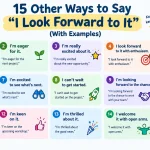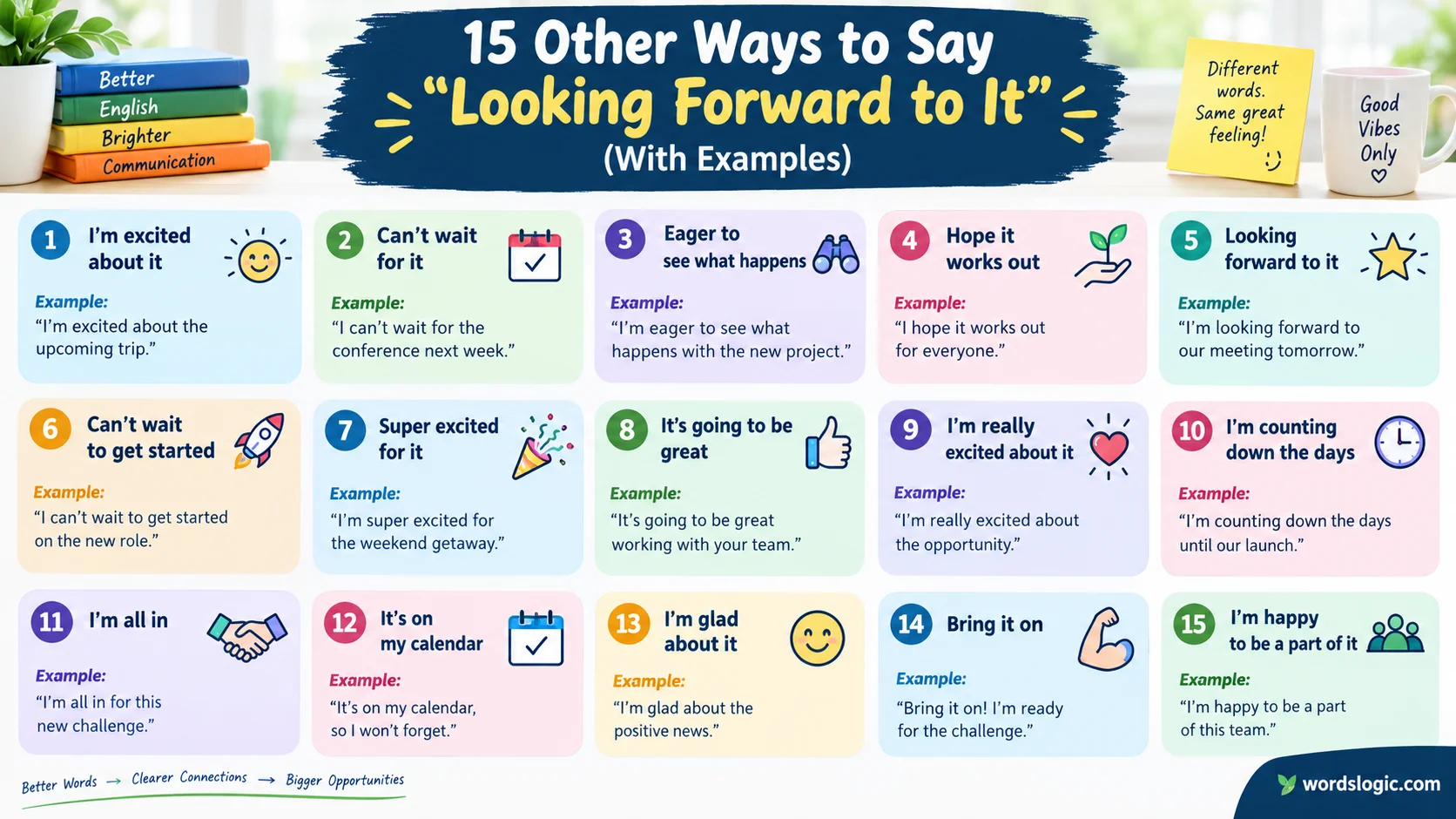
Other Ways to Say “Looking Forward to It” help you express excitement, anticipation, and positive expectations naturally in everyday conversations.
When you prepare for a meeting, event, or upcoming weekend, choosing the right words makes your replies sound more genuine, friendly, and engaging. A casual message to friends may need a warm expression, while a professional email requires polite wording and a polished tone.
Sometimes, a quiet thrill comes from eagerly awaiting an enjoyable plan, a celebration, or an expected surprise. Expressions like “I would love to,” “I’m excited about it,” and “I can’t wait” show genuine excitement without repeating a common phrase. These alternatives also help you respond to social invitations, discuss future plans, and create meaningful interactions. Choosing natural expressions makes your communication feel more personal and helps you build stronger relationships.
In business communication, “Looking forward to speaking with you” is a familiar closing line for an interview, meeting, or call. However, repeating it in every professional email can make your writing sound predictable. Using varied expressions, a suitable professional tone, and thoughtful wording helps your emails feel more intentional. This guide explores 30+ effective alternatives, with meanings, examples, and practical tips for choosing the right expression for formal correspondence, workplace conversations, and personal messages.
What Does “Looking Forward to It” Mean?
“Looking forward to it” means feeling happy, excited, or positive about something that will happen in the future. People commonly use this expression when they anticipate an event, meeting, trip, activity, or conversation. For example, if a friend invites you to dinner, you might reply, “I’m looking forward to it!” This shows that you welcome the plan and expect to enjoy it.
The phrase generally communicates positive anticipation without sounding overly emotional. It works in personal conversations, text messages, and professional communication. The exact tone depends on the situation and the relationship between the speakers. In a work email, it can express polite enthusiasm about an upcoming meeting. In a message to a friend, it can show genuine excitement about spending time together.
Common Situations Where “Looking Forward to It” Is Used
People use this expression in many everyday situations. Friends might say it when arranging a movie night, planning a vacation, or organizing a birthday celebration. Couples may use it to express excitement about a date or an upcoming visit. In text messages and social media conversations, the phrase helps confirm plans while showing interest.
The expression also fits professional communication. You might write it when confirming a meeting, accepting an invitation, preparing for a presentation, or responding to a job interview invitation. Students can use it when discussing a class project, school trip, or group activity.
Sometimes, a different phrase communicates the intended feeling more clearly. “I can’t wait” conveys stronger excitement, while “I look forward to our meeting” sounds more polished in a business email. Choosing the right alternative helps you match your message to the occasion.
Is It Professional or Polite to Say “Looking Forward to It”?
Yes. “Looking forward to it” is generally polite, friendly, and suitable for professional communication. It expresses positive expectations without being overly formal or emotional. In a workplace email, it can help end a message on a welcoming note, especially after confirming an appointment, interview, or collaborative project.
However, the wording can sound slightly casual when used in a very formal letter without a clear reference to the upcoming event. In those situations, “I look forward to our meeting” or “I look forward to discussing this further” may sound more precise. In personal messages, expressions such as “I can’t wait!” or “I’m so excited!” can communicate more enthusiasm.
The best choice depends on your audience, relationship, and purpose. The original phrase is flexible, but a more specific alternative can make your message sound more natural.
Advantages and Disadvantages of Saying “Looking Forward to It”
Advantages
The phrase is polite, positive, and easy to understand. It works in casual conversations as well as many professional settings. You can use it to acknowledge plans, confirm your interest, and show enthusiasm without writing a long message. Its neutral tone also makes it useful when you want to sound friendly without appearing overly excited.
Disadvantages
The expression can feel repetitive if you use it in every email or conversation about future plans. It may also sound less enthusiastic than you actually feel. Because the phrase is general, it does not always explain what you are excited about. In some situations, a more specific expression can communicate stronger emotion, personal warmth, or professional interest.
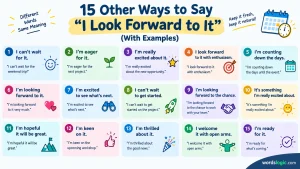
15 Alternatives to “Looking Forward to It”
- I can’t wait.
- I’m excited about it.
- I’m eager to get started.
- I’m counting down the days.
- It can’t come soon enough.
- I’m thrilled about it.
- I’m keen to see how it goes.
- I’m excited to see you.
- I’m glad it’s coming up.
- I’m anticipating it.
- I look forward to it.
- I’m looking forward to meeting you.
- This will be fun.
- I’m ready for it.
- I’m excited to see how it turns out.
1. I Can’t Wait
Meaning
“I can’t wait” expresses strong excitement about something that will happen soon or at a later date. It communicates more enthusiasm than the original phrase in many casual situations.
Definition
A common expression that means you are very eager for a future event or experience to happen.
Detailed Explanation
This phrase is especially natural when talking to friends, family members, or people you know well. It suggests that you are so excited that waiting feels difficult, although it is not meant literally. Compared with “Looking forward to it,” it sounds more energetic and emotionally expressive. In formal business writing, it may feel too casual unless you have a friendly relationship with the recipient.
Scenario Examples
Scenario: A friend has invited you to a concert.
Example: “I can’t wait! It’s going to be an amazing night.”
Scenario: Your family is planning a holiday together.
Example: “I can’t wait to spend a few days with everyone.”
Best Use
Use this expression in casual conversations, texts, friendly emails, and personal messages when you want to show clear excitement.
Tone
Tone: Enthusiastic, casual, friendly.
It communicates strong positive feelings and works best when a relaxed, expressive style feels appropriate.
2. I’m Excited About It
Meaning
“I’m excited about it” tells someone that you feel enthusiastic about a future plan, opportunity, or event. It is a direct and natural alternative to the original phrase.
Definition
A statement expressing happiness and enthusiasm about something expected to happen.
Detailed Explanation
This expression makes your feelings clear without relying on an idiom. It works for personal plans, new opportunities, and professional projects. Unlike “I can’t wait,” it does not suggest that waiting is difficult. It simply explains your positive emotional response, making it suitable for situations where you want to sound sincere but not overly dramatic.
Scenario Examples
Scenario: Your friend tells you about an upcoming group trip.
Example: “I’m excited about it! I’ve wanted to visit that place for ages.”
Scenario: Your manager announces a new team project.
Example: “I’m excited about it and look forward to contributing.”
Best Use
Use it in everyday conversations, workplace discussions, messages, and emails when you want to communicate enthusiasm clearly.
Tone
Tone: Positive, sincere, adaptable.
Its straightforward wording makes it useful in both friendly and moderately formal situations.
3. I’m Eager to Get Started
Meaning
“I’m eager to get started” communicates enthusiasm about beginning a task, project, activity, or new experience. It focuses on taking the first step rather than simply waiting for something to happen.
Definition
A phrase meaning you are keen to begin an activity or responsibility.
Detailed Explanation
This expression is particularly useful when the upcoming event involves action or work. It suggests motivation and readiness, not just excitement. Compared with “Looking forward to it,” the phrase is more focused on beginning and making progress. It works well in professional settings because it can show initiative, although it may sound less suitable for an ordinary social invitation.
Scenario Examples
Scenario: You have accepted a new job and are speaking with your manager.
Example: “Thank you for the warm welcome. I’m eager to get started next Monday.”
Scenario: Your classmates are about to begin a group assignment.
Example: “I’ve reviewed the instructions, and I’m eager to get started.”
Best Use
Use it for new jobs, projects, courses, assignments, collaborations, and other activities that require active participation.
Tone
Tone: Motivated, professional, purposeful.
The wording emphasizes readiness and interest, making it especially effective when you want to show that you are prepared to contribute.
4. I’m Counting Down the Days
Meaning
“I’m counting down the days” expresses excitement about an event that you are eagerly waiting to experience. It suggests that the occasion is important enough for you to think about how soon it will arrive.
Definition
An expression meaning you are eagerly waiting for a specific future date or event.
Detailed Explanation
This phrase adds a personal and playful feeling to a message. It is particularly effective when the event has a known date, such as a wedding, vacation, concert, or family reunion. Unlike the original expression, it creates a picture of someone actively anticipating the occasion. It can sound exaggerated if the event is ordinary or if the relationship calls for a more restrained tone.
Scenario Examples
Scenario: You are messaging a friend before your planned vacation.
Example: “Only two weeks left! I’m counting down the days.”
Scenario: Your sibling is getting married next month.
Example: “I’m counting down the days until the big celebration.”
Best Use
Use it in personal messages, social media captions, holiday conversations, and discussions about special events.
Tone
Tone: Playful, warm, enthusiastic.
It conveys personal investment and works especially well when you have a meaningful date to anticipate.
5. It Can’t Come Soon Enough
Meaning
“It can’t come soon enough” means you are extremely eager for something to happen. You feel that the wait is too long and wish the event would arrive sooner.
Definition
An expression used to show that you want a future event to happen as soon as possible.
Detailed Explanation
This phrase conveys stronger impatience and anticipation than the original expression. People often use it when waiting for a vacation, a reunion, the release of something they enjoy, or the end of a difficult period. It is usually positive when the context involves something desirable. However, it can sound impatient or intense if the listener does not share your excitement.
Scenario Examples
Scenario: You are discussing an upcoming holiday with a coworker.
Example: “This has been a busy month. The vacation can’t come soon enough.”
Scenario: Your favorite musician is releasing a new album.
Example: “I’ve loved the singles so far. The full album can’t come soon enough.”
Best Use
Use it in casual conversations, friendly texts, and enthusiastic discussions about highly anticipated events.
Tone
Tone: Eager, expressive, slightly impatient.
The wording emphasizes how strongly you want the event to arrive, so it is best for situations where that intensity feels natural.
6. I’m Thrilled About It
Meaning
“I’m thrilled about it” expresses a high level of happiness and excitement about something in the future. It is stronger and more emotionally expressive than the original phrase.
Definition
A statement meaning you feel extremely happy or excited about an upcoming event or opportunity.
Detailed Explanation
This phrase is useful when an ordinary expression does not fully capture your feelings. You might use it for good news, a special celebration, an exciting opportunity, or a major personal milestone. It emphasizes your emotional response rather than the act of waiting. Although it can work in professional communication, its strong enthusiasm may be unnecessary for routine meetings or small tasks.
Scenario Examples
Scenario: Your friend announces that you have both been invited to a special event.
Example: “I’m thrilled about it! It’ll be wonderful to go together.”
Scenario: You are discussing an opportunity to lead an important project.
Example: “I’m thrilled about the opportunity and grateful for your confidence in me.”
Best Use
Use it for important opportunities, celebrations, exciting news, and personal milestones.
Tone
Tone: Joyful, enthusiastic, emotionally expressive.
It communicates a high level of excitement and helps make your positive feelings unmistakable.
7. I’m Keen to See How It Goes
Meaning
“I’m keen to see how it goes” expresses interest in an upcoming activity or situation and curiosity about its outcome. It combines enthusiasm with an open-minded attitude.
Definition
A phrase meaning you are interested in an upcoming experience and curious about its results.
Detailed Explanation
This expression is especially natural in British English and is also understood in other varieties of English. It works when you are interested in a new idea, trial, event, or project but do not yet know exactly what to expect. Unlike the original phrase, it places more emphasis on curiosity than on simple excitement. It can sound thoughtful and measured rather than highly emotional.
Scenario Examples
Scenario: Your team is testing a new way to organize its work.
Example: “The new process sounds promising. I’m keen to see how it goes.”
Scenario: A friend is trying a new hobby for the first time.
Example: “That sounds interesting! I’m keen to see how it goes for you.”
Best Use
Use it in workplace discussions, conversations about new experiences, and situations where the outcome is uncertain.
Tone
Tone: Interested, measured, optimistic.
It conveys genuine interest without suggesting that you already know the experience will be successful or enjoyable.
8. I’m Excited to See You
Meaning
“I’m excited to see you” expresses happiness about meeting someone in the future. It shifts the focus from the event itself to the person you will spend time with.
Definition
A phrase meaning you feel happy and enthusiastic about seeing someone soon.
Detailed Explanation
This is a more personal alternative when the main reason for your anticipation is another person. It works well for friends, relatives, romantic partners, and people you have not seen for a while. Unlike “Looking forward to it,” it directly communicates warmth toward the person rather than the plan. In a professional setting, it can also work when you have an established friendly relationship, but a neutral meeting-focused phrase may be better for formal appointments.
Scenario Examples
Scenario: Your friend is visiting after living in another city.
Example: “It’s been months! I’m excited to see you this weekend.”
Scenario: You are arranging a date with your partner.
Example: “Dinner at seven sounds perfect. I’m excited to see you.”
Best Use
Use it in personal texts, family conversations, friendly invitations, and messages to people you care about.
Tone
Tone: Warm, personal, affectionate.
It makes the person feel valued by emphasizing that seeing them is part of what makes the upcoming occasion special.
9. I’m Glad It’s Coming Up
Meaning
“I’m glad it’s coming up” expresses a positive feeling about an event that will happen soon. It communicates satisfaction or quiet excitement without sounding overly enthusiastic.
Definition
A phrase meaning you are pleased that an anticipated event is approaching.
Detailed Explanation
This expression is useful when you feel positive about an upcoming event but do not want to exaggerate your excitement. It works for meetings, holidays, celebrations, appointments, and planned activities. Compared with “I can’t wait,” it is more restrained and relaxed. It also assumes that the listener already knows which event you are discussing, so it may be unclear without some conversational context.
Scenario Examples
Scenario: A coworker asks whether you are ready for an upcoming team lunch.
Example: “Yes, I’m glad it’s coming up. It’ll be nice to catch up outside the office.”
Scenario: Your family is discussing a planned reunion.
Example: “I’m glad it’s coming up. We haven’t all been together in a long time.”
Best Use
Use it in everyday conversations, informal workplace chats, and messages about familiar plans.
Tone
Tone: Relaxed, positive, understated.
Its gentle enthusiasm is useful when you want to express anticipation without making a strong emotional statement.
10. I’m Anticipating It
Meaning
“I’m anticipating it” means you are expecting something to happen and thinking about it in advance. Depending on the context, it can communicate excitement, expectation, or preparation.
Definition
A phrase meaning you are expecting a future event and considering it ahead of time.
Detailed Explanation
This expression is grammatically correct, but it can sound more formal or less conversational than “I’m looking forward to it.” The verb “anticipate” does not always mean you are happy about an event; people can also anticipate difficulties, changes, or challenges. For that reason, the surrounding context matters. If you want to communicate unmistakable enthusiasm in everyday conversation, “I’m excited about it” is often more natural.
Scenario Examples
Scenario: You are discussing a major presentation with a colleague.
Example: “I’ve finished preparing the materials, and I’m anticipating the discussion.”
Scenario: You are talking about a demanding competition.
Example: “I’m anticipating a challenging event, but I’m ready to give it my best.”
Best Use
Use it in thoughtful discussions, formal writing, and contexts involving expectations or preparation. For simple social plans, a warmer expression may fit better.
Tone
Tone: Reflective, measured, somewhat formal.
The wording focuses on expectation and awareness of what lies ahead rather than pure excitement.
11. I Look Forward to It
Meaning
“I look forward to it” expresses a positive expectation about a future event. It is a slightly more complete and polished form of the familiar expression “Looking forward to it.”
Definition
A phrase used to communicate pleasant anticipation of something that will happen in the future.
Detailed Explanation
This wording is especially useful when you want to sound clear and courteous. It fits professional emails, appointment confirmations, formal invitations, and everyday conversation. Compared with “I can’t wait,” it is more restrained and less emotionally intense. It can sound formal in a casual text, but it remains natural when you want a polite and balanced response.
Scenario Examples
Scenario: You are confirming a business meeting.
Example: “Thank you for confirming the time. I look forward to it.”
Scenario: A friend invites you to a planned activity.
Example: “Saturday works perfectly for me. I look forward to it!”
Best Use
Use it in professional emails, polite messages, appointment confirmations, and situations where you want to sound composed.
Tone
Tone: Polite, composed, professional.
It expresses positive anticipation without sounding too casual or overly enthusiastic.
12. I’m Looking Forward to Meeting You
Meaning
“I’m looking forward to meeting you” communicates positive anticipation about meeting someone, often for the first time. It makes the purpose of your excitement specific.
Definition
A polite expression meaning you are pleased about the prospect of meeting another person.
Detailed Explanation
This phrase is particularly useful when arranging a first meeting, interview, consultation, or professional introduction. Unlike the general expression, it clearly identifies the upcoming interaction. It sounds courteous and interested without implying personal closeness. If you already know the person well, “I’m excited to see you” may sound warmer and more natural.
Scenario Examples
Scenario: You are responding to a job interview invitation.
Example: “Thank you for the invitation. I’m looking forward to meeting you on Thursday.”
Scenario: A client has arranged an introductory call.
Example: “I appreciate you making time for the discussion. I’m looking forward to meeting you.”
Best Use
Use it in job interviews, professional introductions, client communication, networking, and formal invitations.
Tone
Tone: Respectful, welcoming, professional.
It expresses interest in the person and the upcoming interaction while maintaining appropriate distance.
13. This Will Be Fun
Meaning
“This will be fun” expresses the belief that an upcoming activity or event will be enjoyable. It communicates positive expectations about the experience itself.
Definition
A statement meaning you expect a future activity to be enjoyable, entertaining, or pleasant.
Detailed Explanation
This phrase works particularly well when making social plans or encouraging others to join an activity. It is more specific about expected enjoyment than “Looking forward to it,” although it does not directly describe how excited you feel. It also expresses confidence that the experience will be enjoyable, which may not fit every serious or uncertain situation. In professional communication, it works best for informal team activities rather than formal appointments.
Scenario Examples
Scenario: Your friends are planning a board-game night.
Example: “Let’s bring some snacks and try the new game. This will be fun!”
Scenario: Your team is organizing a casual office outing.
Example: “It’s nice to do something together outside work. This will be fun.”
Best Use
Use it in social invitations, friendly conversations, group activities, and casual messages.
Tone
Tone: Cheerful, casual, encouraging.
It builds positive expectations and can help others feel more enthusiastic about joining the plan.
14. I’m Ready for It
Meaning
“I’m ready for it” communicates that you feel prepared to face or participate in something that is coming. It emphasizes readiness more than excitement.
Definition
A phrase meaning you feel prepared and willing to take part in an upcoming experience or challenge.
Detailed Explanation
This expression works when an upcoming event requires effort, confidence, or preparation. You might use it before an exam, presentation, competition, or demanding assignment. Unlike “Looking forward to it,” it does not necessarily mean you expect the experience to be enjoyable. It communicates that you are prepared to handle what comes next, making it a stronger choice when readiness matters more than enthusiasm.
Scenario Examples
Scenario: You have prepared for an important presentation.
Example: “I’ve practiced several times, checked the slides, and I’m ready for it.”
Scenario: Your friend is about to start a challenging fitness program.
Example: “It’s going to take commitment, but I’m ready for it.”
Best Use
Use it in workplace discussions, academic situations, competitions, personal challenges, and conversations about new responsibilities.
Tone
Tone: Confident, determined, prepared.
It focuses on your willingness and ability to participate rather than simply expressing happiness about the future.
15. I’m Excited to See How It Turns Out
Meaning
“I’m excited to see how it turns out” expresses enthusiasm about discovering the final result of something. It combines positive anticipation with curiosity about the outcome.
Definition
A phrase meaning you are eager to discover the result of an upcoming event, process, or project.
Detailed Explanation
This expression is especially useful when the outcome is not yet known. It works for creative projects, experiments, competitions, renovations, and new plans. Unlike the original phrase, it focuses on the result rather than the entire experience. It also leaves room for uncertainty, so it does not promise that the outcome will be good. In professional communication, it can sound natural when discussing a developing project or a new approach.
Scenario Examples
Scenario: Your friend is renovating a room and has shared the plans.
Example: “The new design looks great. I’m excited to see how it turns out.”
Scenario: Your team is testing a new marketing idea.
Example: “We’ve put a lot of thought into this approach. I’m excited to see how it turns out.”
Best Use
Use it in creative discussions, workplace projects, personal plans, and situations where the final outcome is still uncertain.
Tone
Tone: Curious, optimistic, engaged.
It shows enthusiasm while acknowledging that you still need to see the final result.
FAQs
1. What does “looking forward to it” mean?
“Looking forward to it” means you feel excited, happy, or eager about something that will happen in the future. You can use it when discussing an upcoming meeting, event, trip, or social gathering.
2. What are some other ways to say “looking forward to it”?
You can say “I can’t wait,” “I’m excited about it,” “I’m looking forward to it,” “That sounds wonderful,” or “I’m eager for it.” Choose an expression that matches your relationship with the other person and the situation.
3. How can I say “looking forward to it” professionally?
In a professional email, you can write “I look forward to our meeting,” “I look forward to speaking with you,” or “I’m pleased about the opportunity to connect.” These expressions sound polite, clear, and appropriate for workplace communication.
4. Is “looking forward to it” formal or informal?
The phrase works in both formal and informal situations. You can use it in business emails, conversations with colleagues, and casual messages to friends. Your overall tone depends on the words surrounding the phrase.
5. How can I avoid repeating “looking forward to it” in my messages?
Try using varied expressions that reflect your actual feelings. For example, say “I can’t wait to catch up” when meeting a friend or “I look forward to discussing this further” in a professional email. Matching your words to the situation makes your communication sound more natural and genuine.
Conclusion
Choosing the right alternatives to “looking forward to it” helps you express excitement, anticipation, and positive expectations without making your messages sound repetitive. Whether you are preparing for a meeting, accepting an invitation, planning a weekend with friends, or confirming an interview, the right expression can make your communication more natural, friendly, and professional. Simple phrases such as “I can’t wait,” “I’m excited about it,” and “That sounds wonderful” work well in everyday conversations, while “I look forward to speaking with you” suits professional situations.
The key is to consider your audience, purpose, and tone before choosing an expression. Use casual wording with friends, thoughtful language in personal messages, and polite expressions in workplace emails. By exploring different phrases and practicing them in real conversations, you can improve your vocabulary, strengthen your communication skills, and express genuine enthusiasm with confidence. Small changes in wording can make your messages feel more personal and help you build meaningful relationships.