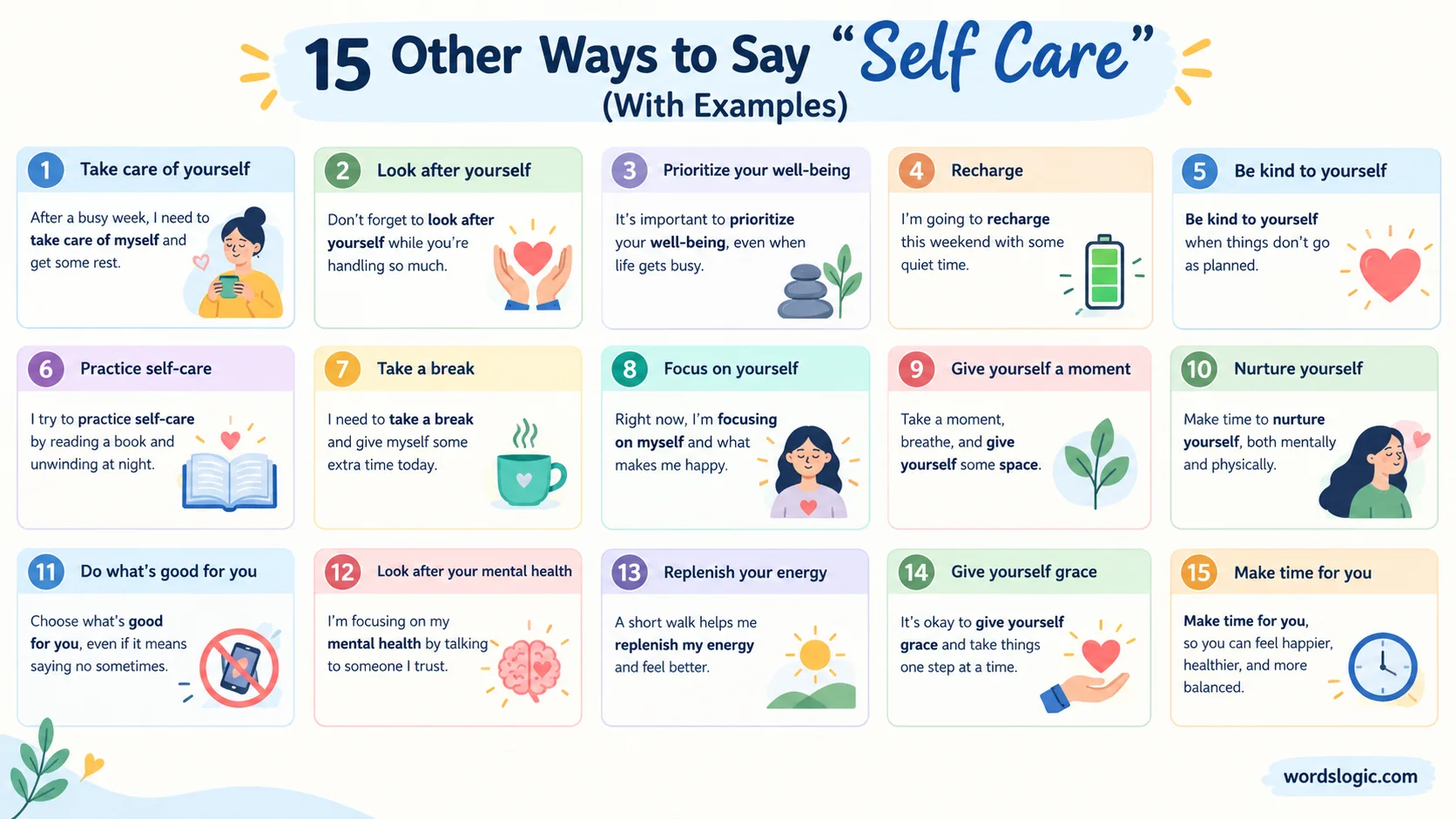
Other Ways to Say “Self Care” helps you express wellness, rest, and daily balance in a clearer and warmer way. In modern life, self-care means protecting your energy, health, and well-being through sleep, breaks, healthy boundaries, and emotional care.
From my experience with English writing, choosing natural words makes personal messages, everyday conversations, social media captions, and professional writing sound more authentic. Since the phrase can sometimes feel overused, vague, or repetitive, fresh expressions help communicate your meaning more precisely.
Self-care includes resting, healing, relaxing, meditation, exercise, journaling, and other healthy habits. These practices support physical health, mental health, emotional health, and overall well-being.
What Does “Self Care” Mean?
Self-care means taking intentional steps to look after your physical, mental, and emotional well-being. It includes everyday activities such as eating nourishing meals, getting enough rest, exercising, enjoying hobbies, spending time with supportive people, and making space for relaxation. The phrase can also refer to setting boundaries, managing stress, and recognizing when you need a break.
In everyday English, self-care usually communicates self-respect, personal well-being, and balance. It does not necessarily mean being selfish or putting your needs above everyone else’s. Instead, it describes recognizing your own needs and responding to them in healthy ways. Depending on the context, self-care might mean a quiet evening at home, a regular exercise routine, emotional reflection, or seeking professional support when needed.
Common Situations Where “Self Care” Is Used
People use the phrase self-care in many personal and social situations because it covers several aspects of well-being.
- Everyday conversations: Someone might explain that they are staying home to rest instead of attending another event.
- Text messages: Friends may encourage one another to take a break, relax, or make time for themselves.
- Social media: People use the phrase in captions about relaxing weekends, healthy routines, personal growth, and peaceful moments.
- Relationships: Self-care can involve communicating personal needs, maintaining boundaries, and balancing time with others and time alone.
- Workplace communication: Employees and managers may discuss rest, reasonable workloads, and habits that support a healthier work-life balance.
- School and education: Students may talk about managing academic pressure, getting enough sleep, and taking breaks from studying.
- Formal writing: Articles, wellness resources, and educational materials often use the term when discussing personal health and emotional well-being.
Choosing a different expression can make the intended meaning more specific. For example, personal well-being sounds broader and more formal, while taking time for yourself feels friendly and conversational.
Is It Professional or Polite to Say “Self Care”?
Yes, self-care is both polite and appropriate for professional communication when the subject is personal well-being, stress management, or healthy routines. It is common in workplace discussions, wellness materials, educational resources, and conversations about maintaining a sustainable workload. The phrase itself is neutral and does not usually sound rude or overly emotional.
However, the best wording depends on the audience and purpose. In a formal report, personal well-being or employee well-being may sound more precise. In a friendly email, saying “Please take some time to rest and recharge” can feel warmer and more personal. When discussing boundaries or workload, maintaining a healthy work-life balance may communicate the practical issue more clearly than the broader term self-care.
Advantages and Disadvantages of Saying “Self Care”
Advantages
- Easy to understand: Most readers recognize the phrase and associate it with looking after personal well-being.
- Broad meaning: It covers physical, emotional, and mental needs without limiting the discussion to one activity.
- Positive message: It encourages people to recognize their needs and make time for healthy routines.
- Suitable for different settings: It works in casual conversations, wellness articles, social media captions, and professional discussions.
- Encourages healthy boundaries: It can help people explain why rest, personal time, or a change in routine matters.
Disadvantages
- Can be vague: The phrase does not always explain whether someone means rest, emotional support, exercise, or another activity.
- May sound overused: Repeating it in captions or articles can make the wording feel less personal.
- Can be misunderstood: Some readers may associate it only with relaxation or beauty routines rather than broader well-being.
- May lack precision: In professional or educational writing, a more specific expression can explain the intended goal more clearly.
Synonyms for “Self Care”
- Personal well-being
- Taking Care of Yourself
- Looking After Yourself
- Self-Nurturing
- Personal Wellness
- Mental and Emotional Well-Being
- Prioritizing Your Needs
- Making Time for Yourself
- Rest and Rejuvenation
- Nurturing Your Mind and Body
- Healthy Self-Maintenance
- Emotional Self-Support
- Work-Life Balance
- Personal Renewal
- Investing in Your Well-Being
1. Personal Well-Being
Meaning
Personal well-being refers to your overall quality of life, including your physical health, emotional state, relationships, and sense of balance. It is a broad alternative to self-care that emphasizes how well you are doing rather than the individual activities you perform.
Definition
Personal well-being is the overall state of being healthy, comfortable, and satisfied with your life.
Detailed Explanation
This expression is especially useful when discussing self-care as part of a larger approach to living well. Unlike self-care, which often focuses on intentional actions, personal well-being describes the broader outcome those actions may support. It sounds measured, professional, and inclusive, making it suitable for educational and workplace discussions. It can also include social connection, financial stability, and a sense of purpose, depending on the context.
Scenario Examples
Scenario: A manager encourages employees to maintain healthy routines.
Example: “We want everyone to have the time and resources needed to support their personal well-being.”
Scenario: A friend asks how you have been feeling lately.
Example: “I’ve been making a few changes to improve my personal well-being.”
Scenario: A student writes about healthy habits.
Example: “Regular sleep and supportive friendships can contribute to personal well-being.”
Best Use
Use personal well-being in professional communication, educational writing, wellness articles, and thoughtful conversations about overall life quality.
Tone
Tone: Professional, balanced, thoughtful.
The phrase sounds objective and considerate without making the conversation overly personal.
2. Taking Care of Yourself
Meaning
Taking care of yourself means meeting your own needs and doing things that help you stay healthy, rested, and emotionally balanced. It is one of the closest everyday alternatives to self-care.
Definition
Taking care of yourself means looking after your physical, mental, and emotional needs.
Detailed Explanation
This expression is more conversational than the noun self-care. It emphasizes actual behavior, such as eating properly, resting, or asking for help when necessary. The wording feels natural when offering encouragement because it sounds like something a friend or family member would say. It is also flexible enough to describe both small daily habits and more significant personal decisions.
Scenario Examples
Scenario: A friend has been working late every night.
Example: “You’ve been working so hard lately. Please start taking care of yourself, too.”
Scenario: You explain why you are canceling plans.
Example: “I’m staying home tonight and taking care of myself.”
Scenario: A family member is feeling overwhelmed.
Example: “Taking care of yourself doesn’t mean you have to solve everything today.”
Best Use
Use this expression in casual conversations, supportive messages, texts, and personal communication.
Tone
Tone: Warm, caring, conversational.
Its direct but gentle wording communicates concern without sounding formal or distant.
3. Looking After Yourself
Meaning
Looking after yourself means paying attention to your own needs and making sensible choices to protect your health and well-being. It has almost the same everyday meaning as taking care of yourself.
Definition
Looking after yourself means making sure your personal needs are being met.
Detailed Explanation
This phrase is especially natural in British English and is also understood in many other English-speaking communities. It often sounds like friendly advice rather than a formal wellness concept. Compared with self-care, it places greater emphasis on practical actions and personal responsibility. It works well when reminding someone to rest, eat regularly, or avoid taking on too much.
Scenario Examples
Scenario: A colleague is preparing for several demanding deadlines.
Example: “Don’t forget to look after yourself while you’re finishing the project.”
Scenario: A friend is moving to a new city.
Example: “Keep in touch, and make sure you’re looking after yourself.”
Scenario: You explain a change in your daily routine.
Example: “I’ve started looking after myself better by making time for exercise and sleep.”
Best Use
Use looking after yourself in friendly conversations, personal messages, everyday advice, and supportive spoken English.
Tone
Tone: Friendly, reassuring, informal.
The phrase sounds personal and caring, especially when speaking to someone you know well.
4. Self-Nurturing
Meaning
Self-nurturing means giving yourself the patience, attention, and support needed to grow and feel emotionally supported. It emphasizes kindness toward yourself rather than simply completing healthy routines.
Definition
Self-nurturing is the practice of supporting your own emotional growth and personal needs with care and understanding.
Detailed Explanation
Self-nurturing is particularly useful when the focus is on emotional healing, self-compassion, or personal development. While self-care can include practical activities such as exercising or getting enough sleep, self-nurturing suggests a gentler, more emotionally focused approach. It may involve allowing yourself to make mistakes, celebrating progress, or making space for difficult feelings. The expression is less common in everyday conversation, so it often fits better in reflective writing or wellness discussions.
Scenario Examples
Scenario: Someone is learning to stop criticizing themselves for small mistakes.
Example: “I’m practicing self-nurturing instead of being so hard on myself.”
Scenario: A person writes a journal entry about personal growth.
Example: “This month, I want to focus on self-nurturing and giving myself room to grow.”
Best Use
Use self-nurturing in personal development articles, reflective writing, journaling discussions, and conversations about self-compassion.
Tone
Tone: Gentle, compassionate, reflective.
The expression emphasizes emotional kindness and personal growth rather than productivity.
5. Personal Wellness
Meaning
Personal wellness refers to the habits and choices that support your overall health and quality of life. It is a broad expression that can include physical activity, emotional health, nutrition, rest, and social connection.
Definition
Personal wellness is an approach to maintaining and improving your overall health and well-being.
Detailed Explanation
Personal wellness is often used in educational, workplace, fitness, and health-related settings. It can describe an ongoing lifestyle rather than a single act of self-care. The word wellness gives the phrase a slightly more structured or program-oriented feel. It is particularly useful when discussing routines, goals, or resources designed to support a person’s health.
Scenario Examples
Scenario: An organization introduces a voluntary employee wellness program.
Example: “The program offers resources to help staff support their personal wellness.”
Scenario: A student discusses changes to a daily routine.
Example: “I’ve made sleep and regular exercise part of my personal wellness plan.”
Best Use
Use personal wellness in workplace materials, health education, wellness planning, and formal or semi-formal writing.
Tone
Tone: Informative, professional, health-focused.
The wording sounds organized and practical, making it suitable for discussions about habits and long-term health.
6. Mental and Emotional Well-Being
Meaning
Mental and emotional well-being refers to how you manage thoughts, feelings, stress, and everyday challenges. It is a more specific alternative when self-care mainly concerns psychological or emotional needs.
Definition
Mental and emotional well-being is the state of maintaining psychological and emotional health.
Detailed Explanation
This expression is useful when the focus is on stress, emotional regulation, coping skills, or feeling mentally balanced. Unlike self-care, it does not necessarily refer to physical routines or activities. Instead, it identifies the particular areas of health being discussed. The phrase is more descriptive and formal, so it can be a better fit for educational resources, workplace conversations, or thoughtful discussions about emotional needs.
Scenario Examples
Scenario: A teacher discusses the pressure students experience during exams.
Example: “Taking regular breaks can support your mental and emotional well-being during exam season.”
Scenario: A friend explains why they need a quieter schedule.
Example: “I’m cutting back on commitments to protect my mental and emotional well-being.”
Best Use
Use this expression in educational writing, workplace wellness discussions, supportive conversations, and articles about emotional health.
Tone
Tone: Thoughtful, clear, somewhat formal.
Its specific wording helps readers understand that the focus is psychological and emotional rather than physical wellness alone.
7. Prioritizing Your Needs
Meaning
Prioritizing your needs means recognizing what you need and giving it appropriate attention instead of consistently putting everything else first. It connects self-care with making deliberate decisions about your time, energy, and boundaries.
Definition
Prioritizing your needs means treating important personal needs as a meaningful part of your decisions.
Detailed Explanation
This phrase is particularly useful when self-care involves saying no, reducing commitments, or asking for support. It is more action-oriented than the original phrase because it highlights decision-making and personal priorities. It does not mean ignoring other people’s needs; it means recognizing that your own needs also deserve consideration. Depending on the situation, the expression can sound confident and empowering or slightly firm.
Scenario Examples
Scenario: A friend feels pressured to accept every invitation.
Example: “I’m prioritizing my needs this weekend and giving myself some quiet time.”
Scenario: A team member discusses workload with a supervisor.
Example: “I need to prioritize my needs and manage my workload more realistically.”
Scenario: Someone is learning to establish healthier boundaries.
Example: “Prioritizing your needs can include saying no when you genuinely don’t have the capacity.”
Best Use
Use prioritizing your needs when discussing boundaries, personal decisions, workload, relationships, and personal growth.
Tone
Tone: Confident, direct, empowering.
It communicates self-respect and intentional decision-making without necessarily sounding confrontational.
8. Making Time for Yourself
Meaning
Making time for yourself means deliberately setting aside time for activities, rest, or experiences that meet your personal needs. It is a practical alternative when self-care involves stepping away from responsibilities for a while.
Definition
Making time for yourself means reserving part of your schedule for your own well-being or interests.
Detailed Explanation
This expression focuses on time and personal space, rather than the full range of physical and emotional health. It is especially appropriate when someone has a busy schedule or spends much of their time caring for others. Unlike the broader term self-care, it suggests a concrete action: creating room in your day for yourself. It can refer to anything from reading quietly to pursuing a hobby or simply enjoying an uninterrupted break.
Scenario Examples
Scenario: A parent has been busy with family responsibilities.
Example: “I’m going to make time for myself this Sunday and finally finish my book.”
Scenario: A friend feels overwhelmed by a packed calendar.
Example: “You don’t have to fill every free hour. Try making time for yourself.”
Best Use
Use this phrase in casual conversations, texts, personal messages, lifestyle articles, and discussions about busy schedules.
Tone
Tone: Relaxed, encouraging, practical.
Its everyday wording makes the idea of personal time feel approachable rather than complicated.
9. Rest and Rejuvenation
Meaning
Rest and rejuvenation refers to taking time to recover your energy and feel refreshed. It is a suitable alternative when self-care specifically involves relaxation, recovery, or taking a break from demanding activities.
Definition
Rest and rejuvenation means allowing yourself time to recover physically or mentally and regain energy.
Detailed Explanation
This expression is narrower than self-care because it emphasizes rest and renewal rather than every aspect of personal well-being. It works well when describing a quiet weekend, a holiday, a break after a busy period, or a routine designed to restore energy. The word rejuvenation adds a slightly polished and uplifting feel. It is less natural for discussing subjects such as setting boundaries or managing difficult emotions unless those actions are connected to recovery.
Scenario Examples
Scenario: A travel writer describes a peaceful weekend getaway.
Example: “The countryside retreat offered the perfect setting for rest and rejuvenation.”
Scenario: A colleague has completed a demanding project.
Example: “After that intense deadline, I could really use a weekend of rest and rejuvenation.”
Best Use
Use rest and rejuvenation in lifestyle writing, travel descriptions, wellness content, and conversations about recovering from fatigue.
Tone
Tone: Calm, polished, restorative.
The phrase creates a peaceful impression and works especially well when describing time away from pressure.
10. Nurturing Your Mind and Body
Meaning
Nurturing your mind and body means supporting both your physical health and your mental or emotional needs. It is a helpful alternative when you want to communicate a balanced approach to well-being.
Definition
Nurturing your mind and body means caring for your physical and psychological health through supportive habits and choices.
Detailed Explanation
This expression makes the physical and mental aspects of self-care explicit. It may refer to activities such as exercising, sleeping well, enjoying meaningful hobbies, eating balanced meals, and allowing time for relaxation. The word nurturing gives the phrase a warm, supportive quality. Compared with self-care, it sounds more descriptive and can be particularly effective when explaining a holistic approach to health.
Scenario Examples
Scenario: Someone shares a wellness routine online.
Example: “My morning routine is all about nurturing my mind and body before the day begins.”
Scenario: A friend is trying to build healthier habits.
Example: “Choose routines that help you nurture your mind and body without making your schedule overwhelming.”
Best Use
Use this expression in wellness blogs, personal reflections, lifestyle captions, and conversations about balanced habits.
Tone
Tone: Warm, holistic, encouraging.
The wording highlights the connection between physical health and mental or emotional well-being.
11. Healthy Self-Maintenance
Meaning
Healthy self-maintenance refers to the regular habits and practical actions that help you maintain your health and everyday functioning. It emphasizes consistency and looking after your basic needs.
Definition
Healthy self-maintenance is the ongoing practice of maintaining personal health through sensible daily habits.
Detailed Explanation
This phrase is more practical and structured than self-care. It may describe maintaining sleep routines, attending regular health appointments, keeping up with personal hygiene, or following habits that help you function well. However, it is not a common substitute in casual conversation and can sound technical or mechanical. It works best when the intended meaning involves ongoing maintenance rather than emotional comfort, personal growth, or relaxation.
Scenario Examples
Scenario: A health educator discusses basic daily routines.
Example: “Healthy self-maintenance includes consistent sleep, hygiene, and appropriate medical care.”
Scenario: Someone creates a checklist to keep their routine manageable.
Example: “I’ve added a few healthy self-maintenance habits to my weekly schedule.”
Best Use
Use healthy self-maintenance in practical wellness guides, habit-planning resources, and discussions focused on everyday health routines.
Tone
Tone: Practical, structured, matter-of-fact.
Its emphasis is on consistency and maintenance rather than warmth or emotional expression.
12. Emotional Self-Support
Meaning
Emotional self-support means using healthy ways to help yourself cope with feelings, stress, disappointment, or uncertainty. It is particularly relevant when self-care focuses on emotional resilience.
Definition
Emotional self-support is the practice of responding to your feelings with understanding and constructive coping strategies.
Detailed Explanation
This expression highlights how you respond to your own emotions rather than focusing on physical routines or general wellness. It might involve recognizing your feelings, reflecting before reacting, or reminding yourself that a difficult experience does not define your worth. It can also include knowing when to seek support from trusted people or qualified professionals. Unlike self-care, the phrase is relatively specialized, so it is most useful when emotional coping is the main topic.
Scenario Examples
Scenario: A person is disappointed after an unsuccessful interview.
Example: “I’m practicing emotional self-support by treating this setback as a chance to learn.”
Scenario: A friend feels overwhelmed by a difficult week.
Example: “Give yourself a little patience and find a healthy way to work through those feelings.”
Best Use
Use this expression in reflective writing, discussions about coping skills, and educational material about emotional well-being.
Tone
Tone: Compassionate, reflective, supportive.
It encourages understanding and constructive responses to difficult feelings rather than self-criticism.
13. Work-Life Balance
Meaning
Work-life balance means maintaining a reasonable relationship between professional responsibilities and personal life. It is an appropriate alternative when self-care involves managing work demands, protecting personal time, and avoiding an unsustainable schedule.
Definition
Work-life balance is the ability to manage work responsibilities alongside personal needs, relationships, and leisure.
Detailed Explanation
This expression is more specific than self-care because it concerns the relationship between work and life outside work. It can involve setting working hours, taking breaks, making time for family, and avoiding excessive commitments. Although a healthy work-life balance can support well-being, the terms are not interchangeable in every context: emotional reflection or a relaxing hobby may be self-care without involving work at all. This phrase is particularly useful in professional discussions because it identifies a practical area for improvement.
Scenario Examples
Scenario: An employee discusses expectations with a manager.
Example: “A more predictable schedule would help me maintain a healthier work-life balance.”
Scenario: A freelancer explains a change to their routine.
Example: “I’m setting clearer working hours to improve my work-life balance.”
Scenario: A career adviser gives general guidance.
Example: “A sustainable work-life balance leaves room for responsibilities, relationships, and rest.”
Best Use
Use work-life balance in workplace communication, career advice, professional writing, and conversations about managing responsibilities.
Tone
Tone: Professional, practical, balanced.
The phrase focuses on managing competing demands and is especially effective in employment-related contexts.
14. Personal Renewal
Meaning
Personal renewal means giving yourself an opportunity to refresh your perspective, restore your energy, or begin a new phase of personal growth. It is useful when self-care involves reflection or making meaningful changes.
Definition
Personal renewal is the process of restoring your sense of energy, purpose, or personal direction.
Detailed Explanation
Personal renewal suggests a fresh start rather than simply maintaining an existing routine. It might involve taking a break, reconsidering priorities, reconnecting with meaningful interests, or changing habits that no longer serve you well. Unlike self-care, which can describe small daily actions, personal renewal often implies a broader period of reflection or change. The expression is slightly more formal and inspirational, making it suitable for writing about transitions, growth, and new beginnings.
Scenario Examples
Scenario: Someone takes a short break after a demanding year.
Example: “I’m taking a few days away from my usual routine for some personal renewal.”
Scenario: A writer reflects on changing priorities.
Example: “This season of personal renewal has helped me focus on what matters most.”
Best Use
Use personal renewal in reflective essays, personal development writing, wellness retreats, and conversations about life changes.
Tone
Tone: Hopeful, reflective, uplifting.
It suggests restoration and a fresh perspective rather than ordinary daily maintenance.
15. Investing in Your Well-Being
Meaning
Investing in your well-being means making deliberate choices that support your health and quality of life over time. It presents self-care as something worthwhile that deserves attention and effort.
Definition
Investing in your well-being means dedicating time, effort, or resources to support your long-term personal health.
Detailed Explanation
This expression emphasizes the long-term value of healthy choices. It can refer to building consistent routines, learning new coping skills, maintaining supportive relationships, or seeking appropriate professional guidance. The word investing suggests intention and commitment, which makes the phrase more purposeful than the everyday term self-care. However, it does not necessarily imply spending money; the investment may simply be time, attention, or effort.
Scenario Examples
Scenario: A friend wants to improve their daily habits.
Example: “I’m investing in my well-being by making sleep and regular movement priorities.”
Scenario: A company discusses employee support.
Example: “Providing reasonable workloads and useful resources is one way an organization can invest in employee well-being.”
Scenario: Someone reflects on personal development.
Example: “Learning to set boundaries has been an important way of investing in my well-being.”
Best Use
Use investing in your well-being in personal development articles, professional communication, wellness planning, and discussions about long-term habits.
Tone
Tone: Purposeful, positive, confident.
The expression frames personal well-being as a valuable commitment rather than an occasional luxury.
FAQs
1. What is another way to say “self care”?
A natural alternative is taking care of yourself. Other options include personal well-being, looking after yourself, making time for yourself, and personal wellness. The best choice depends on whether you mean everyday habits, emotional support, rest, or overall health.
2. What does “self care” mean in simple English?
Self-care means doing things that help you look after your physical, mental, and emotional needs. Examples include getting enough sleep, taking breaks, setting healthy boundaries, enjoying hobbies, and asking for support when needed.
3. Is “self care” professional?
Yes. Self-care is appropriate in workplace conversations, wellness resources, educational materials, and professional writing. In more formal contexts, phrases such as personal well-being or employee well-being may communicate the intended meaning more precisely.
4. What is a more polite way to encourage someone to practice self-care?
You could say, “Please make some time for yourself,” or “Remember to look after yourself.” Both expressions sound caring and natural. If someone is going through a difficult period, a gentle offer of practical help may be more supportive than simply telling them to take care of themselves.
5. Which alternative works best in formal communication?
Personal well-being is a strong general choice for formal communication because it sounds clear, neutral, and professional. Use mental and emotional well-being when discussing psychological health, or work-life balance when the focus is on professional responsibilities and personal time.
Conclusion
Choosing the right alternative to self-care helps you communicate your needs and intentions more clearly. Expressions such as taking care of yourself and looking after yourself work well in everyday conversations, while personal well-being and personal wellness are suitable for more formal discussions. If you want to emphasize emotional support, self-nurturing or emotional self-support may express your meaning more accurately.
For conversations about busy schedules, work-life balance or making time for yourself can be more specific. Remember that these phrases are related, but they do not all mean exactly the same thing. Consider your audience, your purpose, and the feeling you want to communicate. Ultimately, caring for yourself is personal, and the best words are the ones that express your needs honestly and naturally.