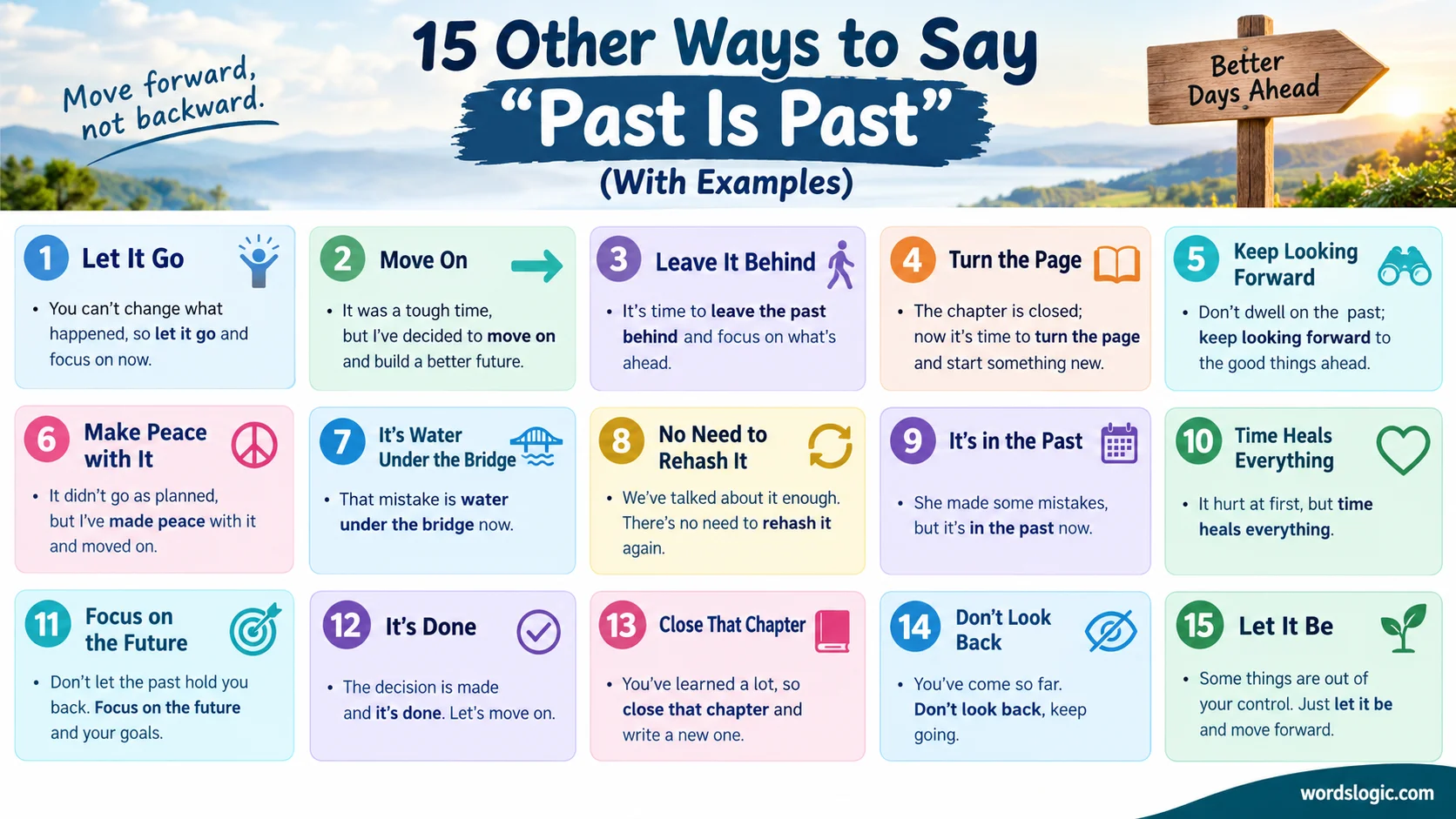
This guide to Other Ways to Say “Past Is Past” explains how to accept old mistakes, release regret, and focus on the future with a clearer mind. The phrase reminds us that past events, old mistakes, and past regrets are part of life, but they shouldn’t control our future. In my experience, holding onto regrets and dwelling on mistakes can create an emotional burden that makes it harder to move forward. Some things have already happened, and nothing can change them. Instead of revisiting blame, we can accept what happened, learn valuable lessons, and make room for forgiveness, accountability, and new beginnings.
The meaning of “Past Is Past” is closely related to “The past is behind us.” Both phrases encourage acceptance, letting go, and a healthier way to handle difficult experiences. However, tone matters in personal, professional, and digital communication. In supportive conversations, these words can sound healing and practical, but in sensitive situations, they may seem dismissive. Using empathy, emotional intelligence, and mutual respect helps you choose the right words for each situation. Whether you’re addressing workplace conflicts, strengthening professional relationships, or supporting a friend, clear communication can help people release regret without ignoring genuine feelings.
Learning to accept the past also means focusing on what you can do today. A positive mindset, personal growth, and self-improvement can help you stop repeating old worries and start making progress. Rather than carrying unnecessary emotional weight, focus on the present moment, learn from past experiences, and set meaningful future goals. Every small step can support forward progress, emotional freedom, and inner peace. You cannot change yesterday, but you can use its lessons to make better choices, embrace new opportunities, and build a more hopeful future.
What Does “Past Is Past” Mean?
“Past is past” means that events that have already happened cannot be changed, so it is often better to accept them and move forward. People use the expression to encourage someone to stop worrying about previous mistakes, disappointments, arguments, or missed opportunities. It can communicate acceptance, forgiveness, and a fresh start, depending on the context.
The phrase is similar to saying that what is done is done. However, it doesn’t necessarily mean that the past no longer matters or that someone should forget every painful experience. It usually suggests that people should learn from what happened instead of allowing it to control their present decisions. Its tone can feel reassuring and hopeful, although it may sound dismissive if someone uses it before another person has had time to process their feelings.
Common Situations Where “Past Is Past” Is Used
People commonly use this expression during personal conversations when someone feels guilty about a mistake or keeps thinking about an unpleasant experience. For example, a friend might say it to reassure someone who regrets an awkward conversation. In a relationship, it may help both people discuss forgiveness and the possibility of rebuilding trust, provided they have genuinely addressed the problem.
The phrase can also appear in text messages, everyday discussions, and social media posts about personal growth. In the workplace, someone might use it to encourage a team to learn from a failed project rather than remain stuck on the disappointment. However, it is less suitable when a problem still needs to be resolved. In those situations, “Let’s learn from what happened” or “Let’s focus on how we can improve” may communicate the message more constructively.
Is It Professional or Polite to Say “Past Is Past”?
“Past is past” is generally casual, direct, and conversational. It can sound friendly when used between people who understand each other, especially when someone wants to offer reassurance or encourage a fresh start. However, it isn’t particularly formal, and its bluntness may make a person feel that their concerns are being ignored.
In professional communication, the phrase may work during an informal discussion after a minor mistake has been addressed. In a formal email, meeting, or conflict-resolution conversation, more thoughtful wording is usually preferable. For example, “Let’s focus on the lessons learned and our next steps” acknowledges the past without dismissing its importance. The key is to recognize any unresolved concerns before encouraging people to move forward.
Advantages and Disadvantages of Saying “Past Is Past”
Advantages
- Encourages acceptance: It reminds people that they cannot change events that have already happened.
- Promotes moving forward: It shifts attention toward new choices and opportunities.
- Supports forgiveness: In the right context, it can help people let go of resentment after an issue has been addressed.
- Keeps communication simple: The expression is short, familiar, and easy to understand.
Disadvantages
- May sound dismissive: Someone who is still hurting may feel that their emotions aren’t being taken seriously.
- Can overlook accountability: Moving forward doesn’t mean ignoring the consequences of a mistake.
- Lacks emotional detail: The phrase may not offer enough comfort during a serious disagreement or personal loss.
- May feel too casual: More careful wording can be better for professional discussions or sensitive relationships.
The best alternative depends on whether you want to express acceptance, forgiveness, personal growth, or a fresh start.
15 Alternatives to “Past Is Past”
- What’s done is done
- Let bygones be bygones
- Let’s move forward
- Leave the past behind
- There’s no use crying over spilled milk
- Learn from the past
- It’s time for a fresh start
- Let’s not dwell on it
- The past can’t be changed
- Let’s turn over a new leaf
- We can’t change what happened
- Focus on what lies ahead
- It’s water under the bridge
- Make peace with the past
- Look ahead, not behind
1. What’s Done Is Done
Meaning
“What’s done is done” means that an action or event has already happened and cannot be undone. Like “past is past,” it encourages acceptance rather than endless regret.
Definition
A common expression used to acknowledge that the past cannot be reversed.
Detailed Explanation
This expression is direct and practical. It helps someone recognize that repeatedly regretting a decision won’t change the outcome. However, it can sound firmer than “past is past” because it emphasizes finality. Use it when the situation is settled, but avoid it when someone needs emotional support or when important consequences still need attention.
Scenario Examples
Scenario: A friend regrets missing an important opportunity.
Example: “What’s done is done. You can prepare better for the next opportunity.”
Scenario: Two colleagues discuss a minor mistake during a completed project.
Example: “What’s done is done; let’s review what we can improve next time.”
Best Use
Use this phrase in casual conversations, everyday advice, and discussions about mistakes that cannot be undone.
Tone
Tone: Direct, practical, matter-of-fact.
Its straightforward wording encourages acceptance, but it may feel blunt in sensitive conversations.
2. Let Bygones Be Bygones
Meaning
“Let bygones be bygones” means choosing to stop holding past disagreements or mistakes against someone. It emphasizes forgiveness more than simply accepting that an event has ended.
Definition
A traditional expression encouraging people to forgive past conflicts and move on.
Detailed Explanation
This phrase is especially useful when two people want to repair a relationship after an argument. It suggests putting resentment aside rather than continuing to punish each other for earlier mistakes. Compared with “past is past,” it has a stronger focus on reconciliation and goodwill. However, forgiveness should not require anyone to ignore repeated harmful behavior or abandon reasonable boundaries.
Scenario Examples
Scenario: Two friends want to repair their friendship after a misunderstanding.
Example: “We’ve both said things we regret. Let’s let bygones be bygones.”
Scenario: Former classmates reconnect after an old disagreement.
Example: “It’s been years since that argument. Why don’t we let bygones be bygones?”
Best Use
Use it when discussing forgiveness, reconciliation, friendships, family disagreements, or old personal conflicts.
Tone
Tone: Forgiving, warm, conciliatory.
The phrase encourages goodwill and signals a willingness to put resentment aside.
3. Let’s Move Forward
Meaning
“Let’s move forward” means focusing on the next steps instead of remaining stuck on previous events. It can acknowledge the past without making it the center of the conversation.
Definition
An expression that encourages people to focus on progress and future actions.
Detailed Explanation
This alternative works particularly well when a situation needs a constructive next step. Unlike “past is past,” it doesn’t suggest that the previous experience should simply be forgotten. Instead, it directs attention toward what people can do now. In professional settings, it can sound collaborative because the word “let’s” invites everyone to participate.
Scenario Examples
Scenario: A team has discussed why a presentation went poorly.
Example: “We’ve identified the problems, so let’s move forward with a clearer plan.”
Scenario: A couple wants to rebuild their relationship after resolving an argument.
Example: “We’ve talked honestly about what happened. Let’s move forward together.”
Best Use
Choose this expression for work meetings, relationship conversations, group discussions, and personal goal-setting.
Tone
Tone: Constructive, encouraging, collaborative.
It focuses on shared progress rather than blame.
4. Leave the Past Behind
Meaning
“Leave the past behind” means stopping old experiences from controlling your present life. It often encourages someone to release regret, disappointment, or emotional baggage.
Definition
A phrase about letting go of previous experiences to make room for a healthier future.
Detailed Explanation
This expression has a more emotional and personal meaning than “past is past.” It suggests a conscious decision to stop carrying old disappointments into new situations. People may use it when discussing personal growth, life changes, or the end of a difficult chapter. Still, leaving the past behind doesn’t mean denying what happened or refusing to learn from it.
Scenario Examples
Scenario: A friend is nervous about dating after a difficult breakup.
Example: “You deserve to be happy again. Don’t let one bad relationship stop you from leaving the past behind.”
Scenario: Someone begins a new job after an unpleasant experience at their previous workplace.
Example: “I’m ready to leave the past behind and start this role with a fresh perspective.”
Best Use
Use it in personal conversations, motivational messages, relationship discussions, and reflections on life changes.
Tone
Tone: Hopeful, reflective, encouraging.
It communicates emotional release and the possibility of a new chapter.
5. There’s No Use Crying Over Spilled Milk
Meaning
“There’s no use crying over spilled milk” means there is little value in being upset about something that has already happened and cannot be changed.
Definition
An idiom reminding people that regretting an irreversible mistake won’t undo it.
Detailed Explanation
This familiar idiom often encourages practical thinking after a small mistake or disappointment. Compared with “past is past,” it can sound more lighthearted, especially when the problem is relatively minor. It works best when someone can learn from an incident and take useful action instead of dwelling on it. However, it may sound insensitive if the loss is serious or the person is still deeply upset.
Scenario Examples
Scenario: A student realizes they studied the wrong chapter before a quiz.
Example: “There’s no use crying over spilled milk. Let’s make a better study plan for next time.”
Scenario: Someone accidentally buys the wrong ticket and cannot get a refund.
Example: “Well, there’s no use crying over spilled milk. We’ll check the details more carefully next time.”
Best Use
Use it for everyday mistakes, minor setbacks, casual advice, and situations where a practical lesson is possible.
Tone
Tone: Practical, casual, sometimes lighthearted.
The idiom can ease tension, but the situation should be serious enough for humor or lightness to feel appropriate.
6. Learn from the Past
Meaning
“Learn from the past” means using previous experiences, including mistakes, to make wiser decisions in the future.
Definition
An expression that encourages people to turn past experiences into useful lessons.
Detailed Explanation
This phrase differs from “past is past” because it doesn’t focus mainly on letting go. Instead, it emphasizes understanding what happened and using that knowledge constructively. It works well when an experience has revealed a weakness, a misunderstanding, or an opportunity to improve. The message is that the past matters as a teacher, even when it should not control the future.
Scenario Examples
Scenario: A student receives a lower grade than expected.
Example: “Don’t be too hard on yourself. Learn from the past and try a different study method.”
Scenario: A business team reviews an unsuccessful campaign.
Example: “Let’s learn from the past and use those insights when planning our next launch.”
Best Use
Choose this alternative for education, professional development, decision-making, personal growth, and problem-solving.
Tone
Tone: Thoughtful, constructive, responsible.
It promotes accountability while encouraging improvement rather than shame.
7. It’s Time for a Fresh Start
Meaning
“It’s time for a fresh start” means beginning again with a new attitude, plan, or opportunity instead of remaining focused on previous difficulties.
Definition
A phrase that signals a new beginning after a challenging or disappointing period.
Detailed Explanation
This expression is more optimistic than “past is past.” It doesn’t merely accept what happened; it welcomes the chance to do things differently. People often use it after a disagreement, a career change, a difficult semester, or another meaningful transition. It is most effective when a genuine opportunity for change exists, rather than when someone uses it to avoid addressing unresolved issues.
Scenario Examples
Scenario: Friends decide to repair their relationship after a long period of tension.
Example: “We’ve both learned a lot from this experience. I think it’s time for a fresh start.”
Scenario: An employee begins a new role after a disappointing year.
Example: “I’m looking forward to this opportunity. It’s time for a fresh start.”
Best Use
Use it for new jobs, personal goals, relationships, life transitions, and encouraging messages.
Tone
Tone: Optimistic, positive, motivating.
The expression highlights possibility and renewal rather than regret.
8. Let’s Not Dwell on It
Meaning
“Let’s not dwell on it” means that you would prefer not to keep discussing or thinking about something that has already happened.
Definition
A phrase encouraging people to stop giving excessive attention to a past event.
Detailed Explanation
This wording is conversational and relatively direct. It can help a group move on after discussing a problem thoroughly, especially when repeating the same points is no longer useful. Unlike “past is past,” it specifically addresses the act of continuing to think or talk about an issue. However, it can sound dismissive if someone hasn’t had a fair opportunity to explain their feelings.
Scenario Examples
Scenario: Friends keep revisiting an awkward moment from a party.
Example: “It was embarrassing, but everyone has moved on. Let’s not dwell on it.”
Scenario: A team has already discussed a minor scheduling error.
Example: “We’ve corrected the mistake, so let’s not dwell on it and get back to the task.”
Best Use
Use it in informal conversations, meetings after a resolved issue, and situations where repeated discussion isn’t helping.
Tone
Tone: Casual, firm, practical.
The phrase sets a boundary around further discussion, so use it with sensitivity.
9. The Past Can’t Be Changed
Meaning
“The past can’t be changed” means that previous events are fixed and cannot be altered, even if you regret them.
Definition
A straightforward statement acknowledging that past events cannot be reversed.
Detailed Explanation
This alternative is more literal than “past is past.” It states a fact without necessarily telling someone how to feel about it. That makes it useful when you want to encourage acceptance without sounding overly cheerful or dismissive. You can pair it with a supportive next step to make the message more constructive.
Scenario Examples
Scenario: A friend regrets an argument with a family member.
Example: “The past can’t be changed, but you can reach out and make things better now.”
Scenario: A project manager discusses an earlier decision that caused delays.
Example: “The past can’t be changed, but we can adjust our process to prevent the same issue.”
Best Use
Choose this expression for serious conversations, reflective writing, practical advice, and discussions about accountability.
Tone
Tone: Realistic, calm, direct.
It acknowledges reality without automatically implying forgiveness or emotional closure.
10. Let’s Turn Over a New Leaf
Meaning
“Let’s turn over a new leaf” means making a conscious effort to change your behavior or begin a better chapter.
Definition
An idiom describing a decision to start behaving differently or make a positive change.
Detailed Explanation
This expression goes beyond accepting the past because it suggests a change in future behavior. It is particularly suitable when someone wants to correct a bad habit, improve a relationship, or approach a responsibility more seriously. Compared with “past is past,” it places more emphasis on personal commitment and improvement. It works best when the proposed fresh start includes meaningful action.
Scenario Examples
Scenario: Two siblings want to stop arguing over old family disagreements.
Example: “We’ve spent enough time fighting. Let’s turn over a new leaf and treat each other better.”
Scenario: A student decides to manage their time more carefully after missing deadlines.
Example: “This semester, I’m turning over a new leaf and keeping up with my assignments.”
Best Use
Use it in personal development, family relationships, education, and conversations about changing habits.
Tone
Tone: Positive, determined, encouraging.
It communicates the intention to improve, not simply forget what happened.
11. We Can’t Change What Happened
Meaning
“We can’t change what happened” acknowledges that an event is irreversible while leaving room to discuss its effects and possible solutions.
Definition
A statement recognizing that past events are beyond our control, even when their consequences remain important.
Detailed Explanation
This expression is useful when you want to accept reality without minimizing a difficult situation. The word “we” can make the message feel shared rather than blaming one person. Unlike “past is past,” it doesn’t necessarily suggest that everyone should stop talking about the issue. It can serve as a starting point for discussing responsibility, repair, and future choices.
Scenario Examples
Scenario: Two friends regret a misunderstanding that damaged their trust.
Example: “We can’t change what happened, but we can be more honest with each other from now on.”
Scenario: A team faces the consequences of an earlier planning error.
Example: “We can’t change what happened, so let’s identify the remaining risks and decide how to address them.”
Best Use
Use it in relationship discussions, workplace problem-solving, difficult conversations, and situations requiring both acceptance and action.
Tone
Tone: Honest, empathetic, practical.
It acknowledges limitations while keeping attention on what can still be done.
12. Focus on What Lies Ahead
Meaning
“Focus on what lies ahead” encourages someone to pay attention to future opportunities, goals, and responsibilities rather than remaining preoccupied with earlier events.
Definition
An expression directing attention toward future possibilities and upcoming actions.
Detailed Explanation
This phrase sounds more polished and motivational than “past is past.” It is useful when someone needs encouragement to prepare for a new challenge instead of repeatedly reviewing a previous disappointment. It doesn’t require forgetting the past; it simply changes the focus of the conversation. In professional settings, it can help teams concentrate on priorities and next steps.
Scenario Examples
Scenario: A job applicant feels disappointed after an unsuccessful interview.
Example: “You gave it your best effort. Focus on what lies ahead and prepare for the next opportunity.”
Scenario: A project team finishes reviewing an unsuccessful launch.
Example: “We’ve documented the lessons. Now let’s focus on what lies ahead.”
Best Use
Choose this expression for motivational messages, professional communication, goal-setting, and future planning.
Tone
Tone: Encouraging, forward-looking, polished.
It sounds constructive without suggesting that the previous experience had no value.
13. It’s Water Under the Bridge
Meaning
“It’s water under the bridge” means that a past disagreement, mistake, or unpleasant experience is no longer worth holding against someone.
Definition
An idiom suggesting that a past problem has been put behind you.
Detailed Explanation
This expression often communicates forgiveness and emotional closure. It is particularly natural when someone apologizes for an old mistake and you want to reassure them that you no longer hold a grudge. Compared with “past is past,” it can sound warmer because it implies that the issue has lost its power to create conflict. However, it is most appropriate when the matter has genuinely been resolved.
Scenario Examples
Scenario: An old friend apologizes for forgetting an important occasion.
Example: “Don’t worry about it. That was years ago; it’s water under the bridge.”
Scenario: Two coworkers clear up a previous misunderstanding.
Example: “I’m glad we talked it through. For me, it’s water under the bridge now.”
Best Use
Use it for resolved disagreements, apologies, friendships, and situations where you want to express forgiveness.
Tone
Tone: Reassuring, forgiving, relaxed.
It tells the other person that you are ready to stop holding the old issue against them.
14. Make Peace with the Past
Meaning
“Make peace with the past” means accepting previous experiences and finding a way to live with them without being continually troubled by regret, anger, or sadness.
Definition
An expression about reaching personal acceptance of previous experiences.
Detailed Explanation
This phrase has a deeper emotional meaning than “past is past.” It recognizes that some experiences take time to understand or accept, especially when they involve disappointment, loss, or regret. Making peace with the past doesn’t require approving of what happened or forgiving everyone involved. It means finding a healthier way to relate to those experiences so they don’t dominate your present life.
Scenario Examples
Scenario: Someone reflects on a career decision they wish they had handled differently.
Example: “I’ve learned from that experience, and I’m trying to make peace with the past.”
Scenario: A friend struggles with a long-standing family disagreement.
Example: “You don’t have to pretend it never happened. Give yourself time to make peace with the past.”
Best Use
Use it in personal reflection, supportive conversations, journaling, and discussions about emotional growth.
Tone
Tone: Compassionate, reflective, emotionally thoughtful.
It allows room for healing rather than demanding that someone move on immediately.
15. Look Ahead, Not Behind
Meaning
“Look ahead, not behind” encourages someone to focus on future possibilities instead of remaining caught up in past disappointments or mistakes.
Definition
A motivational expression that promotes forward thinking instead of unnecessary regret.
Detailed Explanation
This phrase is short, memorable, and suitable for encouragement. It works well when someone has already acknowledged a setback and needs a reminder to direct their energy toward new goals. Compared with “past is past,” it sounds more like advice than a statement about reality. It should not be used to discourage someone from reviewing a mistake when doing so could prevent the same problem from happening again.
Scenario Examples
Scenario: A friend feels discouraged after a failed business idea.
Example: “You tried something challenging and learned a lot. Look ahead, not behind.”
Scenario: A student worries about one disappointing exam result.
Example: “You still have opportunities to improve. Look ahead, not behind, and plan your next steps.”
Best Use
Choose it for encouraging friends, motivational writing, personal goals, and conversations about future opportunities.
Tone
Tone: Motivational, confident, optimistic.
Its concise wording helps redirect attention toward possibility and action.
FAQs
What does “Past Is Past” mean?
“Past Is Past” means that events, mistakes, and experiences that have already happened cannot be changed. Instead of holding onto regret, you should accept the past, learn from it, and focus on making better choices in the present.
What is another way to say “Past Is Past”?
You can say “The past is behind us,” “Let bygones be bygones,” “What’s done is done,” “Let’s move forward,” or “It’s time to let go.” Each phrase encourages acceptance and helps shift attention toward the future.
Is saying “Past Is Past” rude?
Not always. It can sound supportive when you want to encourage someone to move forward. However, it may feel dismissive if someone is still hurt or needs time to process a difficult experience. Use empathy and consider the person’s feelings before saying it.
How can I use “Past Is Past” in a sentence?
You can use it when someone keeps worrying about an old mistake or disagreement. For example: “We made mistakes during the last project, but the past is past. Let’s learn from the experience and work toward better results.” This wording encourages accountability, learning, and forward progress.
Why is it important to let go of the past?
Letting go can reduce unnecessary stress and help you focus on the present moment. Although you cannot change previous events, you can learn from them, develop a positive mindset, improve your relationships, and work toward future goals. Remember, letting go doesn’t mean forgetting the lesson; it means choosing not to let the experience control your life.
Conclusion
The phrase “Past Is Past” reminds us that we cannot change what has already happened, but we can choose how we respond to it. Whether you say “The past is behind us,” “Let bygones be bygones,” or “Let’s move forward,” the goal is to encourage acceptance, release unnecessary regret, and create space for personal growth. The best alternative depends on your situation, your relationship with the listener, and the tone you want to express. When communicating with someone who is struggling, combine your words with empathy, patience, and understanding.
Instead of dwelling on old mistakes, use past experiences as opportunities to learn and improve. Focus on your present actions, celebrate small steps toward progress, and set meaningful future goals. You don’t have to forget your history to build a better future. By practicing forgiveness, maintaining a positive attitude, and embracing new opportunities, you can move beyond regret and develop greater emotional freedom and inner peace. The past is part of your story, but it doesn’t have to determine what happens next.













