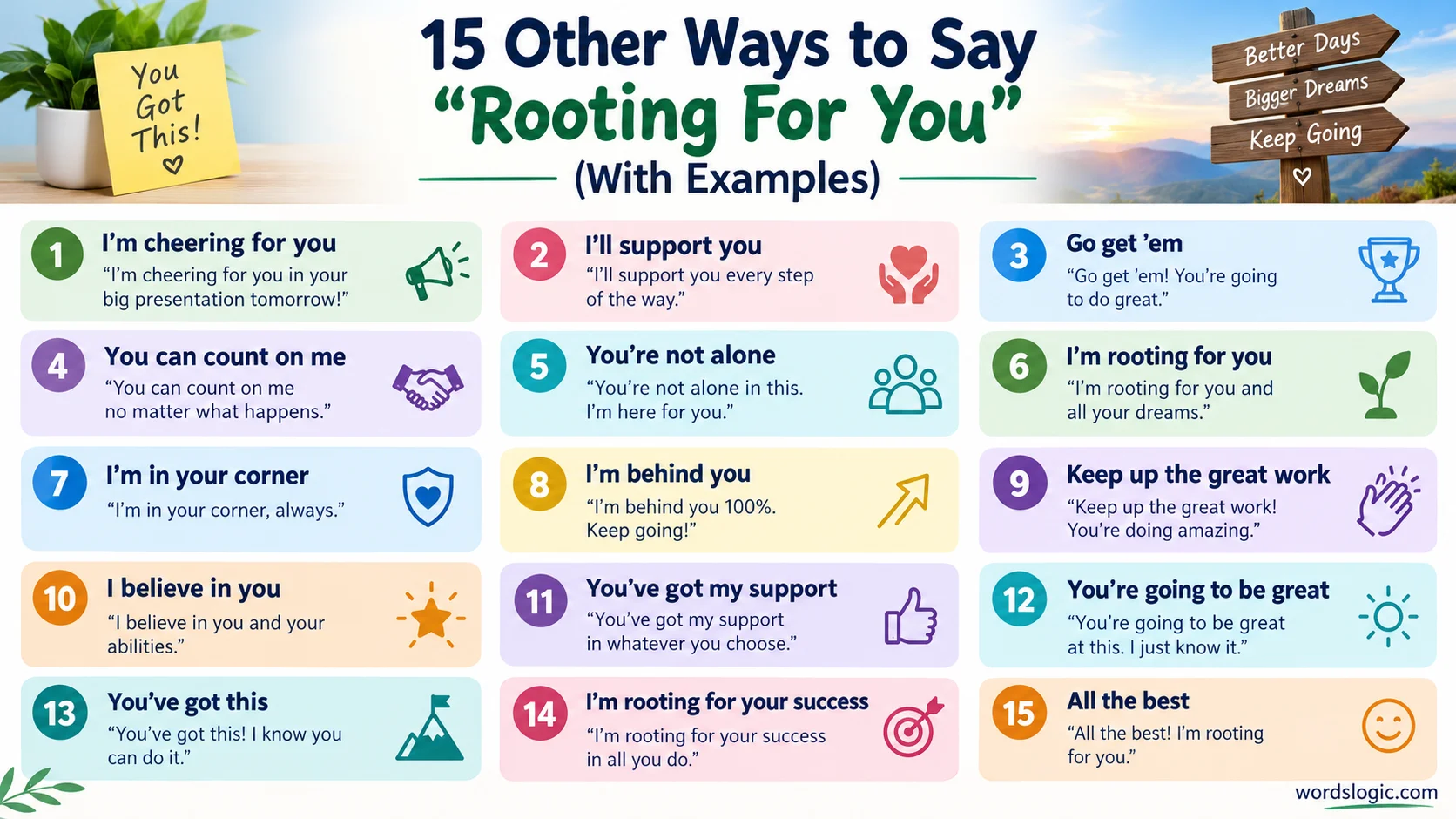
Other Ways to Say “Rooting For You” helps you express support, encouragement, and care in a more personal way.
“Rooting for you” is a small phrase that can make a meaningful difference in someone’s life. Whether you’re supporting a friend, colleague, teammate, or favorite team, it shows that you believe in their success and want them to keep moving forward. In daily life, a kind phrase can help someone who feels nervous or unsure feel stronger. This warm expression offers hope, confidence, and positive feelings, reminding people they’re not alone when facing a tough task, personal challenge, or new goal.
There are many ways to express support, from saying “I believe in you” to “Wishing you well.” These supportive words provide motivation, reassurance, and positive encouragement without making your message complicated. For example, a student preparing for an important exam, a colleague pursuing a promotion, or a loved one working on a project may appreciate a thoughtful message. In workplace communication, family relationships, and friendship, the right phrase can express loyalty, trust, kindness, and goodwill. Although these common expressions are widely understood, choosing different alternatives can make your message more thoughtful, memorable, and genuine. Match your words to the situation, whether you’re sending a motivational text, writing a professional email, or delivering a heartfelt speech.
What Does “Rooting For You” Mean?
“Rooting for you” means that you want someone to succeed and feel happy about their progress. It communicates encouragement, support, and a desire to see someone do well. People commonly use this informal expression when someone is working toward a goal, facing a challenge, or waiting for an important result. For example, telling a friend, “I’m rooting for you in your interview,” means you hope the interview goes well and want them to succeed. The phrase doesn’t necessarily mean you can directly help; it shows that you’re emotionally invested in their success. Depending on the situation, it can express friendship, affection, confidence, or simple goodwill.
Common Situations Where “Rooting For You” Is Used
People use “rooting for you” in many everyday situations when they want to encourage someone without putting pressure on them. A friend might say it before an exam, a partner might use it before a major career decision, or a family member might offer encouragement during a challenging period. It’s also common in text messages, social media comments, and personal conversations.
In the workplace, the phrase can help colleagues express support before a presentation, promotion interview, or important project deadline. At school, students can use it to encourage classmates before competitions or examinations. On social media, a short message such as “Rooting for you!” can show someone that their progress matters to others. When the situation calls for a more personal, specific, or formal message, an alternative can communicate the same supportive feeling with greater precision.
Is It Professional or Polite to Say “Rooting For You”?
Yes, “rooting for you” is generally friendly and polite, especially when you have a positive relationship with the recipient. It works well in casual workplace conversations, supportive messages to teammates, and informal professional emails. For example, “I’m rooting for you in your presentation today” sounds encouraging and approachable. However, the expression is relatively informal, so it may feel too conversational in a formal business letter or a message to someone you don’t know well. In those situations, wording such as “I wish you every success” or “I hope everything goes well” may sound more appropriate. The best choice depends on your relationship with the recipient, the seriousness of the situation, and the tone you want to convey.
Advantages and Disadvantages of Saying “Rooting For You”
Advantages
The phrase “rooting for you” is short, warm, and easy to understand. It communicates goodwill without sounding overly serious or putting pressure on the other person. Because it focuses on the recipient’s success, it can feel encouraging even when you cannot offer practical help. It also works in spoken conversations, text messages, and social media comments, making it a versatile expression for everyday communication.
Disadvantages
The expression can sound too casual for formal communication, particularly in official correspondence or messages to senior professionals with whom you have a distant relationship. It can also feel generic if you use it repeatedly without mentioning the person’s specific goal or challenge. In addition, rooting for someone expresses support but doesn’t necessarily promise practical assistance. If someone needs reassurance, hands-on help, or a clear statement of confidence, a more specific alternative may communicate your intentions better.
15 Alternatives to “Rooting For You”
- I’m cheering you on
- I believe in you
- You’ve got this
- I’m behind you all the way
- I’m wishing you the best
- I’m pulling for you
- I know you can do it
- I’m in your corner
- I’m hoping for the best for you
- You have my full support
- I’m confident you’ll do great
- I’ll be cheering you on
- I hope everything goes your way
- I’m sending you positive vibes
- I wish you every success
1. I’m Cheering You On
Meaning
“I’m cheering you on” means you’re actively encouraging someone and hoping they succeed. Like “rooting for you,” it shows enthusiasm and emotional support, but it can feel more energetic and celebratory.
Definition
A supportive expression that communicates enthusiasm for someone’s efforts and progress.
Detailed Explanation
This phrase is especially useful when someone is working hard toward a meaningful goal. It suggests that you’re paying attention to their efforts and want them to keep going. Compared with “rooting for you,” it often sounds more lively and encouraging. You can use it even when you cannot be physically present to support the person.
Scenario Examples
– Scenario: Your friend is preparing for a difficult exam.
Example: “You’ve studied so hard for this. I’m cheering you on!”
– Scenario: A colleague is presenting a new idea to management.
Example: “Good luck with your presentation tomorrow. I’m cheering you on!”
Best Use
Use this expression in friendly conversations, text messages, sports events, school activities, and workplace encouragement. It works particularly well when someone needs motivation to keep moving forward.
Tone
Tone: Enthusiastic, friendly, uplifting.
The wording creates a sense of excitement and makes the recipient feel that someone is celebrating their efforts.
2. I Believe in You
Meaning
“I believe in you” means you have confidence in someone’s abilities, judgment, or potential. Rather than simply wishing them success, you express trust in what they can accomplish.
Definition
A reassuring statement that communicates confidence in another person’s abilities.
Detailed Explanation
This expression feels more personal than “rooting for you” because it focuses on the person’s capabilities. It’s especially meaningful when someone doubts themselves or feels nervous about a difficult decision. The phrase can offer emotional reassurance without promising that everything will go perfectly. Use it when you want someone to recognize their own strengths and keep trying.
Scenario Examples
– Scenario: Your sibling feels nervous about starting a new job.
Example: “It’s normal to feel nervous on your first day. I believe in you.”
– Scenario: A friend worries that they aren’t ready to launch a creative project.
Example: “You’ve put so much thought into this idea. I believe in you and your work.”
Best Use
Choose this phrase for close friends, family members, partners, students, or colleagues who need confidence and reassurance. It’s particularly effective when self-doubt is the main obstacle.
Tone
Tone: Reassuring, sincere, personal.
It emphasizes faith in the individual rather than simply hoping for a positive result.
3. You’ve Got This
Meaning
“You’ve got this” means you have the ability to handle a situation or complete a task. It encourages someone to trust themselves and approach a challenge with confidence.
Definition
An informal expression that tells someone they can manage a challenge successfully.
Detailed Explanation
This phrase is short, direct, and easy to use in everyday conversations. Unlike “rooting for you,” which expresses your support, it focuses on the other person’s ability to succeed. It can be especially helpful when someone feels overwhelmed before an interview, examination, or important conversation. Although upbeat, it may feel too brief when someone needs a longer, more empathetic response.
Scenario Examples
– Scenario: Your friend is waiting outside an interview room.
Example: “Take a deep breath and be yourself. You’ve got this!”
– Scenario: A classmate is nervous before a final examination.
Example: “You’ve prepared well all semester. You’ve got this!”
Best Use
Use it in quick texts, casual conversations, motivational messages, and social media comments. It works best when the recipient needs a confidence boost rather than detailed advice.
Tone
Tone: Confident, upbeat, casual.
Its brief wording delivers encouragement quickly and makes a challenging moment feel more manageable.
4. I’m Behind You All the Way
Meaning
“I’m behind you all the way” means you fully support someone’s efforts, choices, or plans. It communicates loyalty and a willingness to stand by the person throughout their journey.
Definition
An expression of continued support and commitment to another person’s goals or decisions.
Detailed Explanation
This phrase can communicate stronger and more lasting support than “rooting for you.” It suggests that your encouragement won’t disappear after one difficult moment or disappointing result. It is especially useful when someone is making a significant life decision or pursuing a long-term ambition. However, because it can imply substantial personal commitment, use it when you genuinely mean to stand by the person.
Scenario Examples
– Scenario: Your partner is considering returning to university.
Example: “It’s a big decision, but I’m behind you all the way.”
– Scenario: A close friend wants to open a small business.
Example: “You’ve thought this through carefully, and I’m behind you all the way.”
Best Use
This expression fits close relationships, major personal decisions, long-term goals, and supportive conversations. It can also work professionally when you want to communicate clear backing for a colleague’s proposal.
Tone
Tone: Loyal, committed, reassuring.
The phrase emphasizes ongoing support rather than a simple wish for success.
5. I’m Wishing You the Best
Meaning
“I’m wishing you the best” means you sincerely hope things go well for someone. It expresses goodwill without necessarily suggesting that you know the person well or can provide practical assistance.
Definition
A polite expression that communicates good wishes for someone’s future or an upcoming event.
Detailed Explanation
This wording is slightly more reserved than “rooting for you.” It suits situations where you want to be kind without sounding overly familiar or emotionally intense. You can use it before an interview, during a career change, or when someone is beginning a new chapter. It expresses positive intentions, although it doesn’t communicate the same strong personal investment as “I believe in you.”
Scenario Examples
– Scenario: A former coworker is moving to another company.
Example: “It was great working with you. I’m wishing you the best in your new role.”
– Scenario: An acquaintance is preparing for a professional certification.
Example: “Good luck with the exam next week. I’m wishing you the best.”
Best Use
Choose this expression for polite messages, professional emails, acquaintances, career transitions, and personal milestones. It is useful when you want to sound supportive but measured.
Tone
Tone: Courteous, warm, respectful.
Its balanced wording communicates goodwill without implying a particularly close relationship.
6. I’m Pulling for You
Meaning
“I’m pulling for you” means you hope someone succeeds and are emotionally on their side. It is very close in meaning to “rooting for you” and is commonly used in informal American English.
Definition
An informal expression of support and hope for another person’s success.
Detailed Explanation
This phrase is one of the closest alternatives because both expressions convey encouragement and a desire to see someone succeed. It often sounds conversational and relaxed, making it suitable for friends, relatives, and familiar coworkers. You might use it when someone faces a competition, a difficult interview, or an uncertain outcome. Because it is idiomatic, it may be less immediately familiar to some English learners than simpler wording such as “I hope you succeed.”
Scenario Examples
– Scenario: Your friend is competing in a local music contest.
Example: “I heard your performance is tonight. I’m pulling for you!”
– Scenario: A teammate is waiting to hear about a promotion.
Example: “I know how much this opportunity means to you. I’m pulling for you.”
Best Use
Use this phrase in casual conversations, friendly texts, sports-related discussions, and situations involving uncertain results. It is particularly natural when you want an alternative that retains the original expression’s informal feel.
Tone
Tone: Casual, encouraging, supportive.
Its familiar, conversational style makes it sound like a natural expression of solidarity.
7. I Know You Can Do It
Meaning
“I know you can do it” communicates strong confidence that someone can complete a task or overcome a challenge. It combines encouragement with a direct statement of belief in their ability.
Definition
A motivational statement expressing confidence in someone’s ability to achieve a particular goal.
Detailed Explanation
This phrase is more specific and assertive than “rooting for you.” Instead of simply wishing someone well, you tell them that you believe they have what it takes. It can help when someone is nervous about a task they have prepared for or a challenge they have faced before. Still, if the situation is genuinely uncertain, avoid making the person feel that they must succeed to justify your confidence.
Scenario Examples
– Scenario: Your child is learning to ride a bicycle.
Example: “Keep practicing, and remember to look ahead. I know you can do it!”
– Scenario: A colleague is nervous about leading their first team meeting.
Example: “You’ve prepared the agenda carefully. I know you can do it.”
Best Use
Use it for skill-building, exams, presentations, new responsibilities, and personal challenges. It is especially effective when you have good reason to believe the person is capable.
Tone
Tone: Confident, motivating, reassuring.
The direct wording encourages the recipient to trust their preparation and abilities.
8. I’m in Your Corner
Meaning
“I’m in your corner” means you support someone and want them to do well. The expression draws on the image of a coach or supporter standing beside a competitor, offering encouragement and backing.
Definition
An idiom that communicates loyalty, advocacy, and personal support.
Detailed Explanation
This phrase can feel more personal than “rooting for you” because it suggests that you’re on the person’s side. It is useful when someone faces criticism, a difficult decision, or a situation in which they need reassurance. Depending on the context, it may also imply that you are willing to defend or advocate for them. It doesn’t automatically promise practical help, so clarify your offer if the person needs specific assistance.
Scenario Examples
– Scenario: Your friend feels discouraged after receiving negative feedback.
Example: “That feedback was hard to hear, but I’m in your corner while you work through it.”
– Scenario: A coworker is proposing a change that could improve the team’s workflow.
Example: “I support the direction you’re taking, and I’m in your corner when you present the proposal.”
Best Use
Choose this expression for close friendships, challenging workplace situations, personal setbacks, and conversations where loyalty matters. It can be particularly comforting when someone feels misunderstood or isolated.
Tone
Tone: Loyal, protective, supportive.
The expression highlights solidarity and makes the recipient feel that you are on their side.
9. I’m Hoping for the Best for You
Meaning
“I’m hoping for the best for you” means you sincerely want a positive outcome for someone. It communicates care and optimism, especially when the final result is uncertain.
Definition
A supportive statement expressing hope that another person’s situation will turn out well.
Detailed Explanation
This expression focuses more on the outcome than on the person’s abilities or your ongoing involvement. It can be appropriate when someone is waiting for medical test results, a job decision, or news about an important personal matter, although sensitive situations may call for more direct empathy. Compared with “rooting for you,” it can sound gentler and less energetic. It also avoids suggesting that success is guaranteed.
Scenario Examples
– Scenario: A friend is waiting to hear whether they have been accepted into a university.
Example: “I know you’ve been waiting anxiously. I’m hoping for the best for you.”
– Scenario: A relative is dealing with an uncertain housing situation.
Example: “I hope things become clearer soon. I’m hoping for the best for you.”
Best Use
Use it in personal messages, uncertain situations, supportive conversations, and moments when someone needs compassion rather than pressure.
Tone
Tone: Gentle, caring, hopeful.
It acknowledges uncertainty while communicating that you genuinely want things to improve.
10. You Have My Full Support
Meaning
“You have my full support” means you approve of or stand behind someone’s plans, efforts, or decisions. It can communicate a willingness to help, defend a proposal, or provide backing.
Definition
A direct statement of strong approval and support for another person’s actions or goals.
Detailed Explanation
This phrase is more formal and deliberate than “rooting for you.” It works well when encouragement needs to sound clear and dependable, particularly in professional or organizational settings. For example, a manager might use it to reassure an employee about a development plan, while a friend might say it when someone makes an important life decision. However, because it can imply meaningful backing, make sure the wording reflects the level of support you can genuinely provide.
Scenario Examples
– Scenario: An employee wants to take a course that could improve their skills.
Example: “Your development plan makes sense. You have my full support.”
– Scenario: A friend decides to return to work after a long break.
Example: “I’m glad you’re taking this step. You have my full support.”
Best Use
Choose this expression for professional communication, team leadership, important decisions, formal discussions, and serious personal commitments.
Tone
Tone: Professional, confident, supportive.
The wording communicates clear backing and can sound more substantial than a casual message of encouragement.
11. I’m Confident You’ll Do Great
Meaning
“I’m confident you’ll do great” means you expect someone to perform well or handle an upcoming challenge successfully. It communicates optimism grounded in your confidence in the person.
Definition
An encouraging statement expressing a strong expectation that someone will perform well.
Detailed Explanation
This expression works especially well before events where performance matters. It may sound more reassuring than “rooting for you” because it explicitly predicts a positive performance. You can use it when someone has prepared for a presentation, interview, audition, or examination. However, if the person is anxious about something beyond their control, a less outcome-focused message may feel more understanding.
Scenario Examples
– Scenario: Your friend is about to give their first public speech.
Example: “You’ve practiced your speech several times. I’m confident you’ll do great.”
– Scenario: A teammate is demonstrating a new product to a client.
Example: “Your preparation has been thorough. I’m confident you’ll do great in the meeting.”
Best Use
Use it for interviews, presentations, performances, examinations, and professional milestones where the recipient can prepare and demonstrate their abilities.
Tone
Tone: Optimistic, confident, encouraging.
The phrase emphasizes your positive expectations about the person’s performance.
12. I’ll Be Cheering You On
Meaning
“I’ll be cheering you on” means you intend to continue encouraging someone as they work toward a goal. It often suggests ongoing support during a future event or process.
Definition
A supportive expression that communicates a continuing intention to encourage someone’s efforts.
Detailed Explanation
The future tense makes this phrase slightly different from “I’m cheering you on.” It looks ahead to an upcoming challenge or a period when the person may need encouragement. It works well for long-term goals, competitions, training, and major transitions. The expression suggests continued goodwill, but it doesn’t necessarily mean you’ll attend an event or provide practical assistance.
Scenario Examples
– Scenario: Your friend is training for their first marathon.
Example: “Keep up your training, and take care of yourself. I’ll be cheering you on!”
– Scenario: Your younger cousin is preparing for university entrance exams.
Example: “You’ve put in a lot of effort this year. I’ll be cheering you on through exam season.”
Best Use
Choose it for upcoming events, long-term projects, personal milestones, competitions, and messages sent before a challenging period.
Tone
Tone: Warm, enthusiastic, encouraging.
The future-focused wording reassures the recipient that your support extends beyond the present moment.
13. I Hope Everything Goes Your Way
Meaning
“I hope everything goes your way” means you want circumstances to work out favorably for someone. It expresses goodwill when the outcome depends on several factors, not just personal effort.
Definition
A friendly expression of hope that events will develop in someone’s favor.
Detailed Explanation
This phrase focuses on circumstances and outcomes rather than directly expressing confidence in someone’s abilities. It can be especially appropriate before an important decision, a negotiation, or an event involving factors outside the person’s control. Compared with “rooting for you,” it may sound more like a good wish than an expression of active emotional involvement. It’s generally friendly, although it may feel less personal than a message that refers to the person’s specific efforts.
Scenario Examples
– Scenario: Your friend is negotiating the terms of a new job.
Example: “I hope the conversation goes smoothly and everything goes your way.”
– Scenario: A family member is trying to resolve a complicated travel issue.
Example: “Fingers crossed for you. I hope everything goes your way.”
Best Use
Use this expression for negotiations, applications, uncertain plans, important decisions, and situations where luck or external circumstances play a role.
Tone
Tone: Hopeful, friendly, optimistic.
It communicates positive intentions without claiming to know how events will unfold.
14. I’m Sending You Positive Vibes
Meaning
“I’m sending you positive vibes” means you’re offering good wishes, encouragement, or emotional warmth. It is often used to help someone feel more optimistic before an event or during a stressful period.
Definition
An informal expression of goodwill and positive encouragement.
Detailed Explanation
This phrase is more relaxed and emotionally expressive than “rooting for you.” It suits casual messages, social media comments, and friendships where playful or upbeat language feels natural. The wording communicates positive intentions rather than a concrete promise of assistance. Some people enjoy its lighthearted feel, while others may prefer more direct support, especially when facing a serious or painful situation.
Scenario Examples
– Scenario: Your friend is performing at an open-mic night.
Example: “Have fun up there tonight! I’m sending you positive vibes.”
– Scenario: A classmate is feeling nervous about an upcoming audition.
Example: “Take a breath and enjoy the experience. Sending you positive vibes for tomorrow!”
Best Use
Choose it for casual texting, friendly social media comments, creative events, and everyday encouragement. For serious situations, consider a more personal message that acknowledges what the person is experiencing.
Tone
Tone: Casual, upbeat, affectionate.
Its light and positive wording helps create a friendly atmosphere without sounding formal.
15. I Wish You Every Success
Meaning
“I wish you every success” means you sincerely hope someone achieves their goals. It is a polished expression that works particularly well when someone is starting a new professional or personal chapter.
Definition
A courteous expression conveying sincere wishes for someone’s success in future endeavors.
Detailed Explanation
This phrase is more formal than “rooting for you” and is especially useful in professional communication. You might use it when a colleague changes jobs, a business partner launches a new venture, or a student begins a significant academic program. It communicates respect and goodwill without the informal energy of phrases such as “You’ve got this.” Although it is warm, it can sound somewhat distant in an intimate conversation where more personal reassurance would be appropriate.
Scenario Examples
– Scenario: A colleague is leaving the company for a new opportunity.
Example: “Thank you for your contributions to the team. I wish you every success in your new role.”
– Scenario: A business acquaintance is opening a new office.
Example: “Congratulations on the expansion. I wish you every success with the new location.”
Best Use
Use this expression in professional emails, farewell messages, formal notes, business communication, and conversations with people you respect but may not know personally.
Tone
Tone: Formal, respectful, gracious.
Its polished wording makes it suitable for professional settings where warmth and courtesy should go together.
FAQs
What does “rooting for you” mean?
“Rooting for you” means you support someone and want them to succeed. It shows that you believe in their abilities and hope they achieve their goals. You can use it to offer encouragement, confidence, and emotional support during important moments.
What are some other ways to say “rooting for you”?
You can say “I believe in you,” “I’m cheering you on,” “You’ve got this,” “I’m behind you,” or “I’m wishing you success.” These alternatives express support and motivation while allowing you to choose words that fit your relationship and the situation.
Can I say “rooting for you” in a professional email?
Yes, you can use “rooting for you” in a friendly professional email, especially when encouraging a colleague before an interview, presentation, or promotion. For a more formal tone, try “I wish you every success” or “I’m confident you’ll do well.”
Is “rooting for you” a friendly expression?
Yes, it’s a friendly, positive, and supportive expression. People commonly use it with friends, family members, teammates, and coworkers. It communicates kindness, belief, and a genuine wish for someone to do well.
When should I use alternatives to “rooting for you”?
Use alternatives when you want your message to feel more personal, specific, or appropriate for the situation. For example, say “I’m cheering you on” before a game, “I believe in your abilities” before an interview, or “I’m here for you” when someone faces a difficult time.
Conclusion
Choosing other ways to say “rooting for you” helps you express support, kindness, and encouragement in a natural and meaningful way. Whether you’re talking to a friend, supporting a colleague, or encouraging a loved one, the right words can build confidence, strengthen relationships, and remind people that they aren’t alone. Simple expressions such as “I believe in you,” “You’ve got this,” and “I’m cheering you on” can make your message feel more personal and sincere.
The best phrase depends on your relationship, tone, and situation. Choose friendly words for everyday conversations, professional expressions for workplace messages, and heartfelt language when someone needs extra reassurance. Above all, make your message genuine. A few thoughtful words can provide motivation, recognize someone’s effort, and help them keep moving toward their goals with hope and confidence.













